Patricia DeMarco Ph.D.

"Live in harmony with nature."


A Moral Outrage: It may be legal, but it is not right!

Patricia M. DeMarco

     I sit in my sunroom at dawn this midsummer day listening to the insistent trill of the Carolina wren in the rose of Sharon bush just outside my door. The sight of Pasha Pussycat, safely behind the screen, is sending the apprehensive mother bird into a frenzy in fear of a threat to her nest in the niche above the doorway. It is natural for a creature to shriek at a threat in alarm and warning.As I attended  Reclamation! the 2025 Black Appalachian Coalition Storytelling and Policy Summit July 17 to 20, 2025, I heard many people share their experiences and their fears for the impact of the cuts to so many services. I wonder why we all are not shrieking in alarm and warning at the “One Big Beautiful Budget Act” that was signed into law on July 4th this year.

The major cuts to health care and food support will cast millions of Americans into poverty and even death. The major beneficiaries of this OBBBA are corporations whose taxes fall from 35% to 21%, and individuals with net income over $400,000 per year. The budget is the best representation of policy. This budget codifies a shift in values away from standards that long defined America. Here, greed and privilege displace equal opportunity and shared prosperity.

We must restore trust in each other and rebuild confidence in the representative democracy system of governance:

We must restore the sense of dignity and respect for people regardless of their income level, race, gender, religion, or even political affiliation.

We must recognize our responsibility to engage as active citizens.

We must commit to preserving a future for our children, and care for today’s children.

We must face the reality of climate change.  The laws of Nature are not negotiable. 

We must raise our voices in protest. Every Congressional Representative is up for election in 2026. The time to weigh in with them is NOW! 

We the People must take back the narrative of what this country is about. We do not judge our greatness by the number and fame of the billionaires but by how well the children, the elderly, the infirm and the poorest among us are doing. We can build a finer future that is people centered, not profit centered, and recognize that we live in a state of abundance. Shared prosperity will emerge when we shift our values to place priority on people above profits and planet health over the next quarter bottom line. This OBBBA makes a mockery of the message of the Statue of Liberty that has welcomed so many millions to our shores. Our diversity is our strength. We the People must raise our voices in moral outrage at what has become legal but is not right. 

See the full article below. I welcome your thoughts.

Patty


Leave a comment

Reality Check on the Big Beautiful Budget Proposal

As I look at the proposals coming through for the “Big Beautiful Budget” proposals, I am both shocked and horrified at the implications of this proposed action.  Programs and policies that help the climate transition, basic public health education and well-being as well as basic functions of government to track and monitor conditions are all under attack.  What are we thinking?!!!!

Under the initiative of “Department of Government Efficiency” and a barrage of Executive Orders, every agency of government is being slashed to curtail “diversity, equity and inclusion” initiatives, “climate change initiatives” emissions controls, arbitrarily and without consideration of due process. Further, government properties related to agencies that monitor or implement such programs are also being sold, lease terminated or privatized.

The progress to date on climate action to protect both land and people is being slowed or curtailed. This includes thousands of jobs already created under the Inflation Reduction Act in domestic manufacturing as well as investment stimulation from private sector initiatives.

Budget is policy. As debate continues in Congress for the budgetary implementation of these policies, we must call out the unintended, or perhaps cruelly intended, consequences of these actions. Our country is yielding its leadership position on climate adaptation. Willful denial and pushing the regulatory system to favor fossil resource extractive industries will only worsen the consequences for everyone, now and for our children. The laws of Nature are not negotiable, nor can they be rescinded or revoked.

Call your Representative and Senators and ask for restraint on destroying our life support system. https://www.congress.gov/members/find-your-member

Find the full article here:


Standing Up for Democracy- The Power of One Voice

by Patricia M. DeMarco

Senator Corey Booker has illustrated how we all need to stand up for democracy. Each of us has an obligation of citizenship to participate actively in the governance of our communities, our states and our country.  It is the value of each person’s voice that makes a representative democracy work.  The Constitution defines the rights of all citizens, but with those rights comes the obligation to adhere to the commonly accepted rule of law.  Our government operates by the consent of the governed.  Each citizen also inherently holds the obligation to participate. Active citizenship means we must vote in every election, every time.  So many people all around the world fight hard for this right, yet in America, many elections see less than 40% participation in national elections. Active citizenship also means we hold those elected to represent us accountable for their actions in office.

In 2024, a majority elected a President who has been throwing away the rule book, delving deep into archaic laws for justification for actions that define doctors and women seeking reproductive health care as criminals, and sweep entire segments of our population out of the country with no due process. Willful denial of reality like climate change will reduce the ability to prepare and respond to climate disasters. Willful elimination of Diversity, Equity and Inclusion policies as well as recognition of environmental justice needs will increase disparities and divisions based on race and gender. In the name of “efficiency,” entire Congressionally mandated agencies and operations are rescinded, dismissed and cruelly removed, in most cases, with no reason and no justification other than the temper of the President or the directive of unelected and unconfirmed civilians.

The function and purpose of government differs significantly from the functions and purpose of a corporation. While a corporation has obligations to its stockholders to generate profits measured by quarterly performance goals, government has the obligation to preserve and promote the safety and well -being of all citizens. Government exists to serve and protect all the people with the power to generate revenue to address needs. It is the obligation of government to meet the needs of the people and to generate revenue in a fair and equitable manner to meet those needs. In the public interest, some government functions may not be profitable when measured by strict corporate monetary standards. The public good has value in governance, while public benefits may not be a requirement for a corporation.  Applying strict corporate economic standards to government functions displaces the basic focus of government on achieving the public interest, and protecting the common good of the country as a whole. This includes public health and welfare, education, preserving natural resources such as parks and wildlife refuges, as well as defense and international relations.

We have the obligation as citizens to call out the authoritarian behavior displayed by the current administration. We have the obligation to stand up for the rule of law, the balance of powers among the branches of Government, and the due process put forth in the Constitution. We must hold our elected Senators and Representatives accountable for exercising their duties in providing oversight. We must call for public investigations and hearings to hold the Administration to account for actions that clearly defy logic and do not serve the public interest.

No American wants to see a return to the pollution of air and water and land that was rampant before enactment of the Clean Air Act, the Safe Drinking Water Act and the National Environmental Protection Act. No American wants to see children go to school hungry or have inadequate classroom support. No American wants to have health care denied to veterans, children, elderly or disabled people. No American wants to see prices on all commodities go up from vindictive and retaliatory tariffs. And no American wants to alienate our strong and loyal allies. 

We must recognize that until another election, we must brace for the consequences of reduced or eliminated services from the federal government. However, people will still require assistance, we will still need to address the effects of climate change in our communities, and we will still need to educate children, provide health care, and keep our communities safe and functioning. As the resources from the federal level are reduced or cut off, communities will need to work together. We will need to press the corporate entities that purportedly benefit from these changes to contribute more to support the common good. And we will need to become stronger as active citizens.

Local government forms the front line of democracy. People in the small towns of America will turn to their Mayors, their Borough Council and their municipal managers to meet their needs. The small towns of America can hold the line for democracy by engaging citizens, educating people on civic responsibilities, and empowering people to express their opinions where it matters. 

 Listening to citizens and hearing their needs and concerns lies at the heart of a democracy. Listening to the voices of people where they are and responding to their suggestions and helping to advance their ideas makes democracy actually work. As one example, the ReImagine Appalachia Blueprint, drawn from 45 listening sessions with over 1,000 people participating across four states (PA, KY, OH, WV), was incorporated into the Inflation Reduction Act, the CHIPS Act, and the Bipartisan Infrastructure and Jobs Act within two years.  Funds authorized by Congress under these laws flowed to communities across the country, with 80% of allocated funds going to Republican Congressional districts. This kind of local investment is accelerating the clean economy across the country.

Every citizen can act according to his or her own skill, talent and interest. I have taken a commitment to serve my community as a candidate for Mayor of the Borough of Forest Hills. With gratitude for the leadership and long service of Mayor Frank Porco, who has set an admirable example of service with 16 years on Borough Council and ten years as Mayor, I have agreed to try and fill his shoes. I am joined by a wonderful Tree City Team for Council: Angelo Baiocchi, An Lewis, Barb Martin and Tom Theilacker; and Tax Collector Nina Sowiski.  We are leading Forest Hills together into a future that carries forward our history of innovation, with a commitment to serve all the citizens of our community, to collaborate with our neighbors, and to keep Forest Hills affordable, safe and beautiful. See https://TreeCityTeam.com for the full platform.

We each do what we can with what we have where we are. The greatness of a country is not measured in the number and fame of its billionaires but by the well-being and prosperity of its children, the elderly and all working people. Write to your Senators and Representative today! And find a way to get involved with your local government. Be an engaged citizen. It is the only way a representative democracy can work FOR THE PEOPLE!


1 Comment

For 2025 A Call for Solidarity and Organizing in the Face of Tyranny

In this essay, I reflect on the 2024 election results, give some analysis of the situation we face, and some actions forward to create a better outcome. We need a better narrative of how we see the future as a nation of shared prosperity in a healthy, peaceful world. And we need to use the tools of the 21st century to communicate ideas and programs. We need to tell the success stories of taking paths of true and tested policies that support a return to an American Dream that includes everybody, not just the top 10 % of wealthy people.

For me, the solutions are at the community level, because communities- Mayors, Church leaders, civic leaders – we are on the front lines, regardless of what mayhem is cast out from federal policies. Basic institutions have failed everyday people. But tearing down the government does not solve the problems. Returning to the policies of the “Guilded Age” will assure a greater divide in the wealth gap, and leave even more people falling into poverty and despair. We need to build a narrative of inclusion, hope for a better future, and justice for people exploited by this devolution of our society. We must stand together and rethink our way forward from the bottom up. In the United States of America it is not OK for children to go to school hungry, for the maternal and infant mortality rates to fall among the level of underdeveloped countries, for people to work three jobs and still not make ends meet. We need to revive the sense of caring for each other, creating a culture of celebrating the dignity of each person and giving true opportunities for all to thrive together.

Going forward we must hold those in power accountable. If our goal is to build an America where shared prosperity in a healthy world is a reality, not a pipe dream subject to derision and mockery, we must build solidarity. We must re-learn the lessons of the unions that brought safe working conditions and living wages to millions of workers. We need to prepare for meaningful resistance and constructive redirection. We need to study the history of our country and avoid the descent into chaos.

Freedom is not free; democracy comes at the price of citizen responsibility and respect for the rule of law. Freedom without accountability yields chaos. We need to sharpen the tools of resistance to tyranny. We need to sharpen the tools of organizing collective action. Could we mount a general strike or a rolling series of strikes these days? Do consumers have the knowledge and tools to harness boycotts to bring polluters to heel? Do we have a communication system to support organized resistance to discrimination, racism and suppression of rights? We need to step onto our power and build a New American Dream that makes liberty and justice for all a reality.

I wish all of you my readers, colleagues and friends all the Blessings of this Christmas and Holiday Season. May we build a New Year for Peace in the world, with love in our lives, and Joy in our hearts.

Buon Natale!

Patricia DeMarco

23 December 2024

(Download the full essay below.)


1 Comment

2024 Petrochemical Lunch & Learn Series

Your Health and Your Environment

the Black Appalachian Coalition partnering with the Ohio River Valley Institute is continuing the Petrochemical Lunch & Learn Series in 2024. Archbishop Marcia Dinkins and Patricia DeMarco have collaborated in producing this series taking a deep dive in 2024 connecting the health of people with the health of the environment. We recognize that too many front line communities experience daily conditions of air, water and land pollution that seriously deteriorate the health of people, especially children and the elderly. We also recognize that the mainstream systems for health care often do not reach communities of color living in the shadow of industrial facilities.

This series of webinars proposes to arm people who live and work with frontline communities with information, resources and tools to understand the situations they face. We hope to provide connection by sharing lived experiences from people who have food solutions and are moving forward.

We believe that health is a human right, not a privilege for those who can buy enough health insurance. We believe that to have healthy people we must have clean air and water, land that provides safe, fresh food accessible to everybody, and free of contamination. We are working together to build connections among communities with common problems from the Appalachian region, to the Gulf South, to the industrial East Coast. We have a common vision of a better future we can build together.

We depend on the living Earth for fresh water, clean air fertile ground and the wonderful array of living things in the interconnected Web of Life, of which humans are but one part. If we preserve our Mother Earth, we will have all we need to survive and to thrive for generations and generations.

2024 Petrochemical Lunch & Learn:  Your Health and Your Environment Production

Archbishop Marcia Dinkins- Convenor and Welcome

Ben Hunkler- Ohio River Valley Institute -Technical support and evaluation surveys

Patricia DeMarco, Ph.D. – Research and Background

Kidest Gebre- BLAC Fellow – Communication and Coordination

Esther Baldwin- BLAC Fellow – Organizing and Support

The 2024 Petrochemical Lunch & Learn Series addressed these topics:

1. Health is a Human Right Feb 21, 2024 explored the connection between people and the environment; every person has the right to breathe clean air, have safe water and freedom from pollution

2. Air Pollution March 21, 2024- sources, health harms and mitigation

3. Water is Life– April 18, 2024 water pollution, health harms and mitigation

4. The Land Beneath Our Feet– May 16, 2024- abandoned mined lands, abandoned oil and gas wells- health effects, amelioration and reclamation

5. Forever Plastics- Everlasting Poisons June 20, 2024 Addressed plastics in our everyday life, avoiding and substitutes

6 When Disaster Strikes– Protecting Vulnerable Populations August 15, 2024

7. Environmental Justice and Building a Clean Energy Economy Sept. 19, 2024

8. Healthy Mothers and Children in a Healthy World Oct. 31, 2024

9. Action Strategy- November 21, 2024. Mobilizing and empowering people to hold polluters accountable. Freedom to Breathe Campaign

Here is a link to the Toolkit assembled by Ben Hunkler including recordings, all speaker presentations and resources for all of the sessions: https://docs.google.com/document/d/1FLSdlMwHfr20pow0Afqhj7llhDH1Mp3cfXkLC-IEIGo/edit?tab=t.0. You can select a single session at a time.

The programs reached over 1,500 registered attendees from 28 states and three countries. Clearly, there is much work yet to do in bringing frontline communities into a greater state of awareness and empowerment to take action against the chronic and damaging pollution that has become an accepted part of industrial might. This cannot be contiued at the expense of the health of millions of people exposed to toxic materials exposure through contaminated air, land and water.

As we look toward 2025, we will focus on moving from awareness to action. We will harness the power of informed citizens to hold the polluters accountable. BLAC launched the Right to Breathe Campaign at the end of this series. This will carry forward the momentum for health as a human right into the next year.

It has been my honor to be involved with this highly impactful series of programs. Archbishop Marcia Dinkins has inspired many discussions and brought hope to people enduring situations that cannot be considered normal and right, sometimes for generations. Ben Hunkler of the Ohio Valley Research Institute has kept the whole operation operating technically smoothly and has assembled and added to the resources in the Petrochemical Lunch & Learn Toolkit.


2024: A Pivotal Year for Action

This is a pivotal year in many ways, especially in the urgent need to make the policy U-turn from an extractive to a regenerative economy. Without the restructuring of our economy, and indeed our civilization, away from fossil fuel combustion within the next five or six years, the climate tipping point may be irreversibly crossed. 2023 was the hottest year in recorded history, with many regions experiencing unlivable conditions for at least part of this year. https://climate.copernicus.eu/copernicus-2023-hottest-year-record Conditions will only worsen if we continue the slow walk on climate action.

Engaged and informed citizen action has never been more important.

Growing from the Petrochemical Lunch and Learn Series of 2023, we saw great interest in further exploration of environmental-related health harms and how to address and prevent them. I am partnered with the Black Appalachian Coalition (BLAC) and with the Ohio River Valley Institute to dive deeper into the connection between environmental pollution and our health. https://blackappalachiancoalition.org/
Our first sessions of the series are:

  • February 15 – Health Is a Human Right
  • March 21 – Air Pollution: Sources, Health Harms, and Mitigation
  • April 18 – Water is Life
  • May 16 –  The Land Beneath Our Feet

This series of workshops empowers people with information and guidance for action, especially in communities affected by petrochemical and extractive industries. A healthy environment is necessary for healthy people; it is a human right for people to have clean air, water, and access to health care.

Register here: https://us02web.zoom.us/meeting/register/tZApcuqqrz0vGdSlxRBjkfkT4FusY64Cpz_2?blm_aid=0#/registration

Personal Focus for 2024:

I have ended my term as an elected official on December 31st 2023., and I have been appointed to the Forest Hills Community Alliance, the community development corporation for Forest HIlls.  To structure and organize my consulting activities,  I have joined The Main Street Associates in Braddock as a Principal Associate.https://www.themainst.org Work here includes developing Community Benefit Plans and Agreements required by grant recipients under the Inflation Reduction Act and the Bipartisan Infrastructure Law. I have a focus on the regulatory infrastructure necessary to promote and enable renewable energy systems to thrive in PA. Shifting from a central fossil fueled power station with distant customers must give way to a Distributed Energy System. We are working to build a shared prosperity for our communities.

I continue writing as a Pittsburgh centered author. ReImagine Appalachia- Healing the Land and Empowering the People is In Press now. I have two new writing projects. I am collecting stories and resources to develop the story of the Mon Valley- its past and its future as a journey from the industrial extractive era to the clean manufacturing era. With the passing of my Aunt Rosa, I received the mantle of Matriarch of our Family. With this honor, I will be collecting the multi-generational story of our family from the mountains of Campolieto Campobasso in the Abruzzi region of Italy to the interwoven branches across America.

This will be a year of challenges and trials. Our country seems painfully divided and polarized. But we can come together as a people affirming what is good and true in our culture; learning and sharing with those who bring tradition and wisdom to bear on our common problems, and restore the attribute of treating each person politely with dignity and respect. Without justice, there is no peace. Without compassion, there is no healing. We can build a shared prosperity, a better future, if we work together and respect the laws of Nature as a guide to our way forward.


The “Forever Chemicals” – What you need to know, and why it matters

Since the 1950s, man-made chemicals called PFAS have been used to make non-stick cookware, water-repellent clothing and consumer goods, fire retardant coatings, stain-resistant carpeting and furniture, some cosmetics, and products to resist grease and oil. The per-and polyfluoroalkyl substances (PFAS) are a group of chemicals used to make fluoropolymer coatings and products that resist heat, oil, stains, grease, and water. They are long polymers including Fluoride molecules (perfluorooctanoic acid (PFOA) and perfluorooctane sulfonic acid (PFOS). The next most commonly studied are perfluorohexane sulfonic acid (PFHxS), and perfluorononanoic acid (PFNA). PFOA and PFOS have been phased out of production and use in the United States, but other countries may still manufacture and use them.https://atsdr.cdc.gov/pfas/index.html

Forever Chemicals

This is one more category of man-made chemicals introduced into wide production and use in consumer products that have turned out to have unintended consequences for the environment, and for our health.

Now ubiquitous in fresh water bodies, in the ocean, even in raindrops collected in the Arctic, PFAS are also found in the bodies of most Americans.

PFAS- The Forever Chemicals now are global contaminants. Dr. Arlene Blum and her colleagues at the Green Science Policy Institute in Stamford University have studied these materials and explain why they are harmful and what you can do to protect yourself and your family from the worst of these chemicals. https://greensciencepolicy.org/harmful-chemicals/pfas/

For deeper information and publications on this subject see the excellent work of Dr. Arlene Blum and her colleagues here: https://greensciencepolicy.org/resources/publications/#white-papers

PFAS in Consumer Products

Here is a four minute introduction that will give you a good overview of this issue.

https://www.youtube.com/watch?v=jmZUJJ8keBE&t=15s

And here are some resources for consumers to help you avoid PFAS in your own home: https://greensciencepolicy.org/resources/consumer-resources/

~~~~~~~~~~~~~~~~~~~~~~~~~~~~~~~~~~~~~~~~~~~~~~~~~~~~~~~~~~~~~~~~~~~~~~~~~~Arlene Blum is also author of mountain adventures documenting her incredible journeys to the heights of the earth. “Annapurna- A Woman’s Place” is my favorite of her mountaineering adventures. I thank her for permission to post this material on my blog this month. You can learn more about her here https://www.arleneblum.com


Reaching “Energy Independence” – The Reality under the Mirage

By Patricia M. DeMarco, Ph.D.

May 1, 2022

Land Acknowledgment: I write from Pittsburgh, which occupies ancestral lands of the Haudenosaunee, Lenape, Osage, and Shawnee peoples.

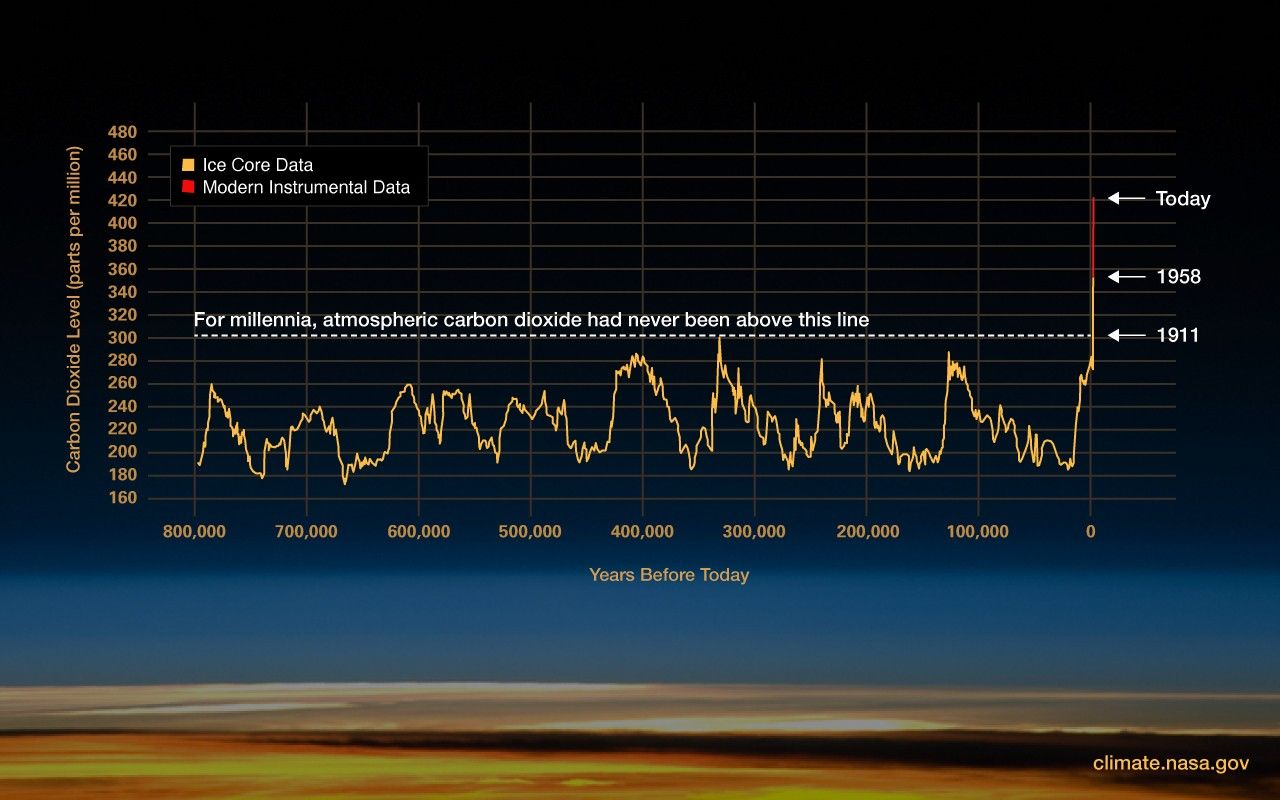
For most of human history, people struggled to survive and thrive against the forces of nature, as is the case with most other species on the planet. Discovering and harnessing fossil resources to use as fuel released human civilization from the constraints of nature. The Industrial Revolution rested on coal, then petroleum to allow people to conquer seasonal weather challenges, nighttime darkness, travel and industrial operations beyond the scope of human or animal power and bio-based fuels such as wood and whale oil. Burning fossil fuels to support almost all human enterprises has now breached the limits of the natural ecosystems in which we live and upon which we depend for survival.[1]

Humans have surpassed the Earth’s capacity to support us:

However, even as the calls of alarm for the rapid pace of global warming become more urgent, the Russian invasion of Ukraine has become the latest excuse to defer the energy system transformation to a renewable base. As noted by the Council on Foreign Relations:

The United States’ dependence on oil has long influenced its foreign policy. U.S. oil development spans three major periods: the rise of oil as a commodity, beginning in 1850; the post–World War II age of geopolitical competition; and the post–Cold War era of deregulation and diversification. Most recently, Russia’s war with Ukraine has aggravated geopolitical tensions and revived the debate about U.S. energy independence.[2]

Calls for relaxing restrictions on drilling and increasing production for export set back policy momentum for reaching the necessary reductions in greenhouse gas emissions. The increases in gasoline prices illustrate how interdependent the U.S. is on the global market which sets the price of petroleum. U.S. energy policy has long been driven by the concept of cheap gas at the pump. People have become accustomed to using the gas price as a barometer of our energy security. In fact, this is just another signal of our vulnerability.

Energy independence is a term of political manipulation with several definitions, all contested by economists and energy analysts. Those who define energy independence as exporting more than we import fail to acknowledge that even when exporting oil, the U.S. still imports oil.[3] In 2021, the United States exported about 8.63 million barrels per day (b/d) and imported about 8.47 million b/d of petroleum, making the United States an annual total petroleum net exporter for the second year in a row since at least 1949.[4]

As long as the U.S. participates in an international marketplace where the price of the commodity is determined by global geo-political forces, the concept of energy independence has no real meaning. Even renewable energy systems are interdependent in the global marketplace, as is evident in the arguments over tariffs on imports of solar panels from China[5], and the sourcing and trade of rare earth materials such as lithium.[6]

Rather than seek an unachievable goal of “energy independence,” we can seek to reduce our vulnerability. It is critical to recognize that failing to reduce greenhouse gas emissions from burning fossil fuels to zero, at least by 2050, will be catastrophic for our economy and for the viability of the planet.[7] The laws of Nature are NOT negotiable – the laws that support continued use of fossil fuels must change immediately.

Natural History Museum. Biodiversity Loss[8]

Technology is not a barrier to achieving 100% renewable energy system in the U.S. by 2050. A  2015 analysis  conducted by researchers at Stanford University and the University of California at Berkeley found that 100% wind and solar power — in conjunction with energy efficiency, energy storage and other advances to complement renewables — could provide electricity to the continental U.S. more reliably than the current system by 2050, and at lower projected costs.[9]

The political will to move the legal and regulatory infrastructure to support this goal has not been mobilized, even though most Americans see climate change as an important issue. Three-quarters of Americans say that human activity, such as the burning of fossil fuels, contributes to climate change at least some, with 46% saying it contributes a great deal.[10]However, opinions are sharply divided on partisan lines. Democrats say human activity contributes a great deal to climate change (71%), while just 17% of Republicans say the same.[11] Major policy changes will be needed to achieve the necessary transformation of. Our energy system, but as the last session of Congress has illustrated, political conditions are unlikely to achieve the necessary level of action.

The complexity of climate change issues and the diversity of impact even within the U.S. complicates mobilization around climate action. A recent study by the Allegheny Conference Energy Task Force in Pittsburgh has chosen a middle of the road path, even though it recognizes that this approach will not meet the climate goal of limiting global warming to 1.5°C by 2050.[12] The principal focus area for funding identified in this report relies on continued production of natural gas from hydraulic fracturing to produce “blue hydrogen” as an industrial fuel source, and applying carbon capture and sequestration technologies to control emissions.[13] This approach locks in dependence on fossil fuels for another two or three decades. 

People fear the loss of jobs in the energy sector, without recognizing that the skills and capabilities of workers in this sector are readily transferable to the clean energy economy. A federal investment package with annual average allocations of $11.3 billion to Pennsylvania, from 2021 to 2030, along with an additional $19.7 billion in private investments would generate approximately 243,000 jobs in Pennsylvania— enough to bring Pennsylvania’s high unemployment rate back down towards 4 percent.[14]  

The burden of immediate action has fallen to local governments to act. At the local level, people see the immediate effects of climate change vulnerability. In coastal areas, local governments have to address higher tides and more severe storm surges which have been highly dramatized in the media coverage of hurricane damage. Usually there is little or no discussion of the connection of larger, more severe and longer lasting storm systems to global warming and its effects on storm formation. Inland areas see drought and flood damage as well as landslides and stormwater damage. Federal assistance only comes when disastrous levels of infrastructure damage occur, such as in Hurricane Katrina or Hurricane Sandy.  

For the gradual increase of climate effects, local governments have been adopting climate action plans individually[15]and as regions.[16] In all cases, local climate action plans will require federal and state policy support by at least 2030 to support the goals established. For example, in the Forest Hills Climate Action Plan, the predominant sector is Residential. Shifting the heating systems of most houses from natural gas to high efficiency heat pumps will require policy support as well as financial assistance in the form of tax incentives or grants. Local governments have not organized well to pressure state and federal levels of government to respond to these needs.

Forest Hills Borough net zero energy -Volpatt photo

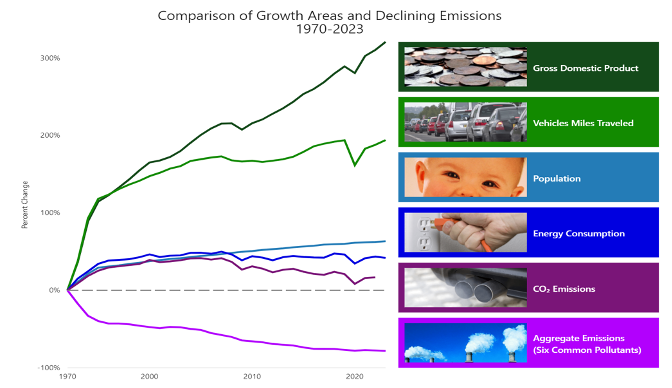
The assumption that reducing energy consumption cuts economic productivity was reinforced by the COVID-19 pandemic. Energy consumption did fall as pandemic restrictions limited travel and other activities.[17] However, decoupling energy use from the economic productivity has occurred in many countries already. It is certainly plausible to decouple primary energy consumption growth from meeting the planet’s energy needs. For example, Denmark has 30 years of proven history in reducing the energy intensity of its economy.[18]  

It is important to recognize that we need to make a transformation of the energy system, not simply substitute renewable fuels for fossil fuels.  The entire approach changes when we focus on supplying the work necessary to meet the needs for people, agriculture, and industry in a different way. There are at least three points here:

  1. primary energy consumption automatically goes down when switching from fossil fuels to wind, solar and hydroelectricity, because they have no conversion losses according to the usual definition of primary energy; 
  2. living standards can be maintained while increasing energy efficiency; 
  3. renewables-based systems avoid the significant energy usage of mining, transporting and refining fossil fuels and uranium.[19]

Ultimately, reducing our vulnerability to energy disruptions comes down to building energy systems that are in harmony with the laws of nature. We must change the dynamic of the conversation about climate change. It is critical for the survival of our planet and for the immediate well-being of every person to move rapidly to a sustainable energy system. 

It is time to recognize the reality of our interdependence as human species to preserve the biodiversity of the planet and to restore the health of the ecosystems we depend on for our survival. Fresh water, clean air, and fertile ground support life on Earth as we know it. If we continue on this path, driven by greed and adherence to a fossil fueled economy, we will destroy ourselves, and all of the living Earth. I close with this reflection from Rachel Carson:

Mankind has gone very far into an artificial world of his own creation. He has sought to insulate himself, with steel and concrete, from the realities of earth and water. Perhaps he is intoxicated with his own power, as he goes farther and farther into experiments for the destruction of himself and his world. For this unhappy trend there is no single remedy – no panacea. But I believe that the more clearly we can focus our attention on the wonders and realities of the universe about us, the less taste we shall have for destruction.[20]

Citations


[1] IPCC, 2021: Summary for Policymakers. In: Climate Change 2021: The Physical Science Basis. Contribution of Working Group I to the Sixth Assessment Report of the Intergovernmental Panel on Climate Change [Masson- Delmotte, V., P. Zhai, A. Pirani, S.L. Connors, C. Péan, S. Berger, N. Caud, Y. Chen, L. Goldfarb, M.I. Gomis, M. Huang, K. Leitzell, E. Lonnoy, J.B.R. Matthews, T.K. Maycock, T. Waterfield, O. Yelekçi, R. Yu, and B. Zhou (eds.)]. Cambridge University Press. 

[2] Council on Foreign Relations. Oil Dependence and U.S. Foreign Relations- Timeline 1850 -2022. April 2022. https://www.cfr.org/timeline/oil-dependence-and-us-foreign-policy

[3] Robert Rapier. “What Is Energy Independence?” Forbes. March 9, 2022. https://www.forbes.com/sites/rrapier/2022/03/09/what-is-energy-independence/?sh=29f94867730a

[4]  U.S. Energy Information Administration. Petroleum and Other Liquids. U.S. Net Imports of Crude Oil and Petroleum Products 1975-2021 https://www.eia.gov/dnav/pet/hist/LeafHandler.ashx?n=pet&s=mttntus2&f=a

[5] David Stanway. “China says U.S. tariff extension on solar products hurts new energy trade.” Reuters February 7, 2022. https://www.reuters.com/business/energy/china-says-us-tariff-extension-solar-products-hurts-new-energy-trade-2022-02-05/

[6] Gregory M. LaRocca. “Global Value Chains: Lithium in Lithium-ion Batteries for Electric Vehicles.” U.S. International trade Commission, Office of Industries Working Paper No. 069. July 2020.   https://www.usitc.gov/publications/332/working_papers/no_id_069_gvc_lithium-ion_batteries_electric_vehicles_final_compliant.pdf

[7]  IPCC, 2022: Summary for Policymakers [H.-O. Pörtner, D.C. Roberts, E.S. Poloczanska, K. Mintenbeck, M. Tignor, A. Alegría, M. Craig, S. Langsdorf, S. Löschke, V. Möller, A. Okem (eds.)]. In: Climate Change 2022: Impacts, Adaptation, and Vulnerability. Contribution of Working Group II to the Sixth Assessment Report of the Intergovernmental Panel on Climate Change [H.-O. Pörtner, D.C. Roberts, M. Tignor, E.S. Poloczanska, K. Mintenbeck, A. Alegría, M. Craig, S. Langsdorf, S. Löschke, V. Möller, A. Okem, B. Rama (eds.)]. Cambridge University Press. In Press.   https://www.ipcc.ch/report/ar6/wg2/

[8] Yvonne DaSilve. Major study shows biodiversity losses can be reversed. Natural History Museum https://www.nhm.ac.uk/discover/news/2015/april/major-study-shows-biodiversity-losses-can-be-reversed.htmlYvonne

[9] Mark Z. Jacobson, Mark A. Delucchi, Mary A. Camerona and Bethany A. Frew. “Low-cost solution to the grid reliability problem with 100% penetration of intermittent wind, water, and solar for all purposes.” PNAS. December 8, 2015. vol. 112 no. 49   www.pnas.org/cgi/doi/10.1073/pnas.1510028112

[10] Alec Tyson, Cary Funk and Brian Kennedy. “Americans Largely Favor U.S. Taking Steps to Become Carbon Neutral by 2050.” Pew Research Center.March 1, 2022. https://www.pewresearch.org/science/2022/03/01/americans-largely-favor-u-s-taking-steps-to-become-carbon-neutral-by-2050/

[11] Katherine Schaeffer. “For Earth Day, key facts about Americans’ view of climate change and renewable energy.” Pew Research Center. April 22, 2022.   https://www.pewresearch.org/fact-tank/2022/04/22/for-earth-day-key-facts-about-americans-views-of-climate-change-and-renewable-energy/

[12] Allegheny Conference Energy Task Force. “Our Region’s Energy Future – A strategy for accelerating decarbonization, investment and inclusive growth in the Pittsburgh region.” April 2022.  https://www.alleghenyconference.org/wp-content/uploads/2022/04/2022_EnergyReport_D.pdf

[13]  Ibid. Page 12. https://www.alleghenyconference.org/wp-content/uploads/2022/04/2022_EnergyReport_D.pdf

[14] Robert Pollin, Jeannette Wicks-Lin, Shouvik Chakraborty and Gregor Semieniuk. Impacts of the ReImagine Appalachia & Clean Energy Transition Programs for Pennsylvania – Job Creation, Economic Recovery, and Long-term Sustainability. University of Massachusetts Amherst, Political Economy Research Institute. January 2021.  https://reimagineappalachia.org/wp-content/uploads/2021/01/Pollin-et-al-PA-Final-Report-1-22-21.pdf

See also https://patriciademarco.com/2022/03/20/%EF%BF%BC-patricia-demarco-%EF%BF%BCenergy-independence-means-good-union-jobs-in-clean-energy%EF%BF%BC/

 [15]  Borough of Forest Hills Climate Action Plan. December 16, 2020. https://files.dep.state.pa.us/Energy/Office%20of%20Energy%20and%20Technology/OETDPortalFiles/ClimateChange/Local_Climate_Action/Final_Forest_Hills_Climate_Action_Plan-12-17-2020.pdf

[16]  Congress of Neighboring Communities. Infrastructure and Utilities Coordination Working Group.  CONNECT Climate Action Plan. May 2022 (In Press)   https://www.connect.pitt.edu/working-groups/infrastructure-utilities-coordination-working-group

[17] Peng Jiang, Yee Van Fan and Jiri Jaromir Klemes. “Impacts of COVID-19 on energy demand and consumption: lessons and emerging opportunities.” Applied Energy. March 1, 2021. https://www.ncbi.nlm.nih.gov/pmc/articles/PMC7834155/#__ffn_sectitle

[18]  T.W.Brown, T.Bischof-Niemz, K.Blok, C.Breyer, H.LundB.V.Mathiesen .  Response to ‘Burden of proof: A comprehensive review of the feasibility of 100% renewable-electricity systems.’ Renewable and Sustainable Energy ReviewsVolume 92, September 2018, Pages 834-847.  https://doi.org/10.1016/j.rser.2018.04.113   See also article to which this response is directed:https://www.utilitydive.com/news/why-100-renewables-isnt-feasible-by-2050/560918/

[19] T.W.Brown, T.Bischof-Niemz, K.Blok, C.Breyer, H.Lund, B.V.Mathiesen .  Response to ‘Burden of proof: A comprehensive review of the feasibility of 100% renewable-electricity systems.’ Renewable and Sustainable Energy ReviewsVolume 92, September 2018, Pages 834-847.  https://doi.org/10.1016/j.rser.2018.04.113   See also article to which this response is directed:https://www.utilitydive.com/news/why-100-renewables-isnt-feasible-by-2050/560918/

[20] Rachel L. Carson. “The Real World Around Us.” In Linda J. Lear (Ed.) Lost Woods – The Discovered Writing of Rachel Carson. Beacon Press. Boston 1998. Page 163.


1 Comment

 Patricia DeMarco: Energy independence means good union jobs in clean energy

PATRICIA DEMARCO | Wednesday, March 16, 2022 11:00 a.m.

AP Framed by the Manhattan skyline, electricians install solar panels on top of a garage at LaGuardia Airport in New York Nov. 9.

The Russian invasion of Ukraine has renewed calls for energy independence and increased domestic production of oil and gas. However, the call for “energy independence” is nothing more than a distraction, a disinformation campaign propagated by the fossil-fuel industry with the intentions of profiting off this crisis. Despite what they say, the answer isn’t at the bottom of a well. Drilling more oil and gas will only put more money in their pockets. Rather, the surest path to security is to fully ramp up our transition to clean energy.

Here in the U.S., domestic oil and gas production is already at record levels. Meanwhile, clean energy, like wind, solar and other renewable sources, creates good-paying jobs here in the U.S. and is homegrown — so we don’t need to import it and it’s not subject to the wild fluctuations of the global fossil-fuel markets and supply-chain disruptions. Clean energy is how we can achieve greater security, economic stability and a healthier future.

Of course, moving toward clean energy not only creates jobs and decouples the U.S. from its reliance on foreign oil, but also helps solve the climate crisis. There is no time to waste here. Just last month, another dire warning; the United Nations Intergovernmental Panel on Climate Change (IPCC) released a report that confirms that climate change is wreaking havoc on our communities and causing dangerous, widespread disruptions to life as we know it. Many ecosystems have already been irreversibly damaged.

Here in Pennsylvania, we have seen more frequent and severe extreme weather events. Just last month, floods in Western Pennsylvania forced many to evacuate their homes as others needed to be rescued. As flooding continues to worsen, the more damage there will be to our homes and businesses, and more lives will be put at risk.

As the IPCC report makes clear, delaying action will only make things worse. By 2050, the number of dangerous heat days Pennsylvanians experience per year is expected to triple. This is a major concern for all Pennsylvanians, but especially for the more than 310,000 people here who are especially vulnerable to extreme heat. To make matters worse, summer droughts are projected to increase in severity by 50% by 2050.

Tackling climate change in Pennsylvania must start with working to reduce our pollution. Pennsylvania is the 12th most polluted state in the nation. A study conducted in Allegheny County found that children who live near steel mills, power plants and other sources of pollution have three times the risk of developing asthma. In communities of color and low-wealth communities, which disproportionately live near these sources of pollution, over 22% of children suffer from asthma. To put that in perspective, the national average is 8%.

In 2021, the U.S. House of Representatives took bold action by passing $555 billion in investments in climate action, clean energy, justice and jobs. In his State of the Union address earlier this month, President Biden called for the Senate to push these investments through as well. If passed, these investments will be of great benefit to Pennsylvania. We can be a leader in driving the transformation to a low-carbon energy economy. With a strong manufacturing tradition, skilled workforce, and existing infrastructure, Pennsylvania is primed to lead in replacing fossil fuels with solar energy and wind systems made here as well as advanced battery technology, fuel cells and electric grid upgrades for load management through artificial intelligence technology.

The window for making the transformation to a low-carbon future is closing rapidly. This is the time for people of vision and courage to stand together and demand our leaders act on behalf of our children and their grandchildren to assure a sustainable future for our nation and our world. Congress and Biden must immediately work together to get these climate investments over the finish line so that Pennsylvania can thrive like never before.

Patricia DeMarco is a senior scholar at Chatham University and is vice president of Forest Hills Borough Council.

https://triblive.com/opinion/patricia-demarco-energy-independence-means-good-union-jobs-in-clean-energy/

Categories: Featured Commentary | Opinion


Standing with the Mon Valley Steelworkers and Communities

This article published in the Post-Gazette on February 23, 2022 was crafted by a strong coalition of labor, environmental and community leaders: Even though all authors were not published in the piece, very special credit goes to Matt Mehalik of the Breathe Project who has been working tirelessly for the Clairton air quality and environmental justice issues, and Mike Stout, a tireless organizer and author of steel valley history.

This is an important call for accountability and action, not patronizing assurances of “we are working on it” ENOUGH! We need to step up the pace on planning for a sustainable, just, equitable and robust future for the Mon Valley, the steelworkers who have given it their blood, sweat and tears for generations, and the communities that have borne the burden.

“We know the importance of good-paying union jobs. We support community and worker health, clean air, clean water and a clean environment — not just for us, but for our children and future generations.

U.S. Steel’s actions feel like calculated, abusive manipulation setting the stage for further abandonment, all facilitated by silent cynical “leadership.”

It’s time to go in a different direction. We want investments in the Mon Valley and its world-class, highly skilled workforce. We support high-tech manufacturing for the future. And we are proposing a plan that unites workers and communities can build from. (See the full article below to read the proposals for a better future.)

Here is the whole Team that has called for a strong response to US Steel’s continued pattern of betrayal to the Mon Valley:

Rose Bezy – Clairton Steelworker, USW Local 1557

Willard Jones, Clairton Steelworker, USW Local 1557

Matthew MehalikBreathe Project Director, descendant of 3 generations of Mon Valley steelworkers

Mike Stout– Former Grievance Chair, USWA 1397, Homestead Works, President, Izaak Walton League of America, Allegheny County Chapter

Patricia M. DeMarco, Ph.D. – Steelworkers daughter and veteran father and mother in AFT and Allegheny Administrators Union; and granddaughter of the UE and PA RR unions

Mark Fallon, former Clairton Steelworker, Steel Valley teacher

https://www.post-gazette.com/opinion/Op-Ed/2022/02/24/Rosemary-Bezy-and-Patricia-M-DeMarco-Who-will-stand-with-Mon-Valley-steelworkers-and-communities/stories/202202240017