
Patricia DeMarco Ph.D.

"Live in harmony with nature."


Rebuilding Environmental Protection: Lessons from Rachel Carson

In consideration of Women’s History Month, I am reflecting on Rachel Carson and her message of precaution in protecting the living earth.

Rachel Carson’s challenge. Rachel Carson lived and wrote in a time before pollution was regulated at the federal level. Her work at the Bureau of Fisheries and in the Fish and Wildlife service documented the value of preserving natural places, enshrined in the National Wildlife Refuges and in the Endangered Species Act. Rachel Carson advocated for preserving all the parts of natural ecosystems and using the tools of natural systems for pest control and resource management. She wrote often of the need to take precaution in the broadscale dispersion of man-made chemicals. She wrote, in the formal language of the 1950s, of the trend of our society towards destruction:

Mankind has gone very far into an artificial world of his own creation. He has sought to insulate himself, in his cities of steel and concrete, from the realities of earth and water and the growing seed. Intoxicated with his own power, he seems to be going farther and farther into more experiments for the destruction of himself and his world.               Rachel Carson. Speech on receiving the John Burrows Medal. April 1952.[i]

This describes the condition we face today. We see all around us the cumulative effects of pollution from burning fossil fuels to plastic waste, and forever chemicals created to control pests or for enhancements like “no-stick” pans. Rachel Carson raised concerns about the chemical stew resulting from the accumulation of materials from multiple sources and through concentration up the food chain. She documented how materials introduced into the environment migrate to unintended locations through the action of wind and water. Silent Springwas all about taking caution.[ii]

But we have not taken caution. We have conducted a massive experiment upon ourselves and our children with no controls, and no anticipation of how to redress the harm. Rachel Carson perceived this potential for harm long before the voluminous scientific documentation of health harms of pollution mounted in evidence.[iii] She wrote from a deep knowledge of the delicate intricacies of the interconnected web of life. She knew in her bones of the absolute dependence of humankind upon the smooth functioning of the ecosystems that provide fresh water, oxygen-rich air and fertile ground. Our life support system depends on these natural systems, evolved over millennia, and stable for thousands of years. But that stability also depends on respecting the laws of nature and preserving the living systems that sustain us.[iv]

The regulatory approach to controlling pollution has rested on the concept of mitigating risk to
the public and protecting the quality of air water and land from contamination. The level of total
risk is defined as the combination of inherent hazard, or how toxic a substance is to living plants,
animals and humans, and the amount of exposure.

RISK = {HAZARD X EXPOSURE}

Consequences: total toxic emissions and health harms. In spite of the voluminous regulations, pollution is increasing not only in the US but globally. Because dispersion by wind and water makes it impossible to isolate contaminants to a specific location, contamination crosses all political boundaries. Even as Rachel Carson pointed out so many years ago, we now see contamination worldwide. The public health implications of this proliferation of toxic contaminants are impossible to escape. (See full article for details.)

Although environmental regulation has improved the quality of air and water overall since before enacting the regulations under the EPA, the results have not kept up with the challenges of modern industrial chemical contamination, nor have they prevented the effects of accumulation of man-made chemicals in the environment. The expectation and complaints from industry that environmental regulation hurts the economy has not been documented. In fact, economic growth has continued even as environmental controls have been enacted and enforced.
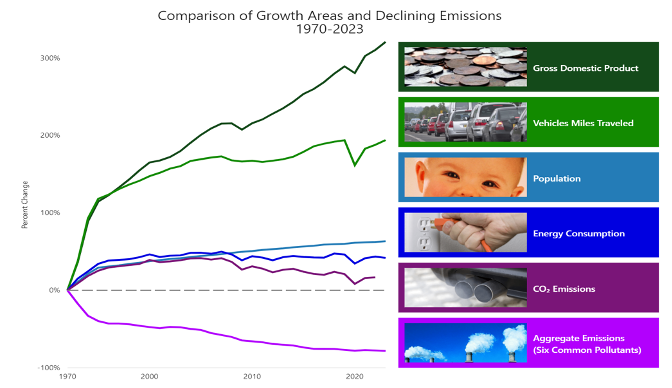
De-construction of environmental protections. Today we see the unravelling of the complex tapestry of regulatory controls on pollution, from Executive Orders granting absolution to 41 industries from emission constraints to laws rescinding critical portions of the Clean Air Act.[ii] The EPA under the Trump Administration has rescinded 31 regulations that protect water, air and land from industrial pollution and chemical contamination, challenging Safe Drinking Water and Clean Water Act requirements, and curtailing enforcement actions. Rulemaking to control forever chemicals (PFAS) has been delayed or abandoned. The Supreme Court has removed the science-based expert authority of regulatory agencies requiring a strict and narrow interpretation of authorizations stated in the enabling legislation. The EPA revoked the Endangerment Finding of 2009 which put greenhouse gas emissions control under the Clean Air Act, effectively eliminating climate action controls. The EPA has also declared that costs of health harms and deaths from pollution will no longer be calculated in the analysis of regulatory action on air emissions. Challenges to these actions have had some success in federal courts, including the declaration that rescinding congressionally approved grants for renewable energy are illegal.
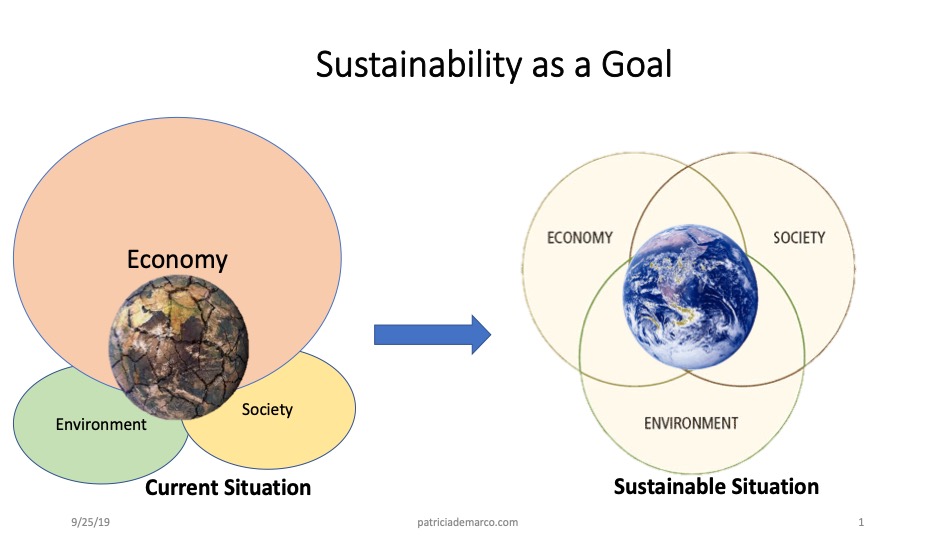
Rebuild Environmental Protection with Regenerative Thinking. The long-term implications of these policy changes alarm environmental organizations and people concerned with the health of communities who are looking toward a change of administration to correct the harms. But, at this point, simply reversing the actions taken so far will not address the underlying issues. Of all the environmental regulations adopted to date, only the Pollution Prevention Act of 1990 addresses the concept of designing to prevent pollution and encouraging recycling. We can take lessons from the regulatory approach of the last 56 years and improve the outcome going forward. This is the opportunity to move our system of laws and regulations through a transformation from an extractive fossil-based economy to a regenerative renewable resourced economy. There are at least five elements to this process.

1. REACH: The first lesson would be to adopt the precautionary principle as the basis for evaluating the introduction of new man-made materials into large scale production.

2. Green Chemistry: Second, adopt a regulatory framework that emphasizes reduction or elimination of the inherent hazard, rather than computing the “safe” amount of toxicity for individual contaminants. 

3. Empower Renewable Resources. Third, adopt the regulatory infrastructure to empower distributed renewable energy systems.

4. Heal damaged lands. Beyond preventing future pollution and damage, lies the responsibility to repair the scars and harms of legacy industries. 

5. Remove fossil industry subsidies. The federal subsidies currently lavished on the fossil extractive industries can be shifted directly to fund the sustainable energy system.

A shared prosperity. It is time for bold action. It is time to recognize that the laws of nature are not negotiable, nor can they be rescinded by executive order or wishful thinking. The condition of our life support system requires both reduction in the levels and types of pollution as well as strong support for the known and available technical solutions. Burning fossil resources as the base for the economy drives the global warming that will make the planet uninhabitable to life as we know it.[i] By creating a new regulatory framework based on regenerative thinking and protection for our life support system, we can establish the conditions for a shared prosperity and sustainable growth within the constraints of our living earth.Those who contemplate the beauty of the earth shall find reserves of strength that will endure as long as life lasts. Rachel Carson.

See the full analysis, with citations, of our way forward here: Rebuilding Environmental Protection PDF



[


1 Comment

2024 Petrochemical Lunch & Learn Series

Your Health and Your Environment

the Black Appalachian Coalition partnering with the Ohio River Valley Institute is continuing the Petrochemical Lunch & Learn Series in 2024. Archbishop Marcia Dinkins and Patricia DeMarco have collaborated in producing this series taking a deep dive in 2024 connecting the health of people with the health of the environment. We recognize that too many front line communities experience daily conditions of air, water and land pollution that seriously deteriorate the health of people, especially children and the elderly. We also recognize that the mainstream systems for health care often do not reach communities of color living in the shadow of industrial facilities.

This series of webinars proposes to arm people who live and work with frontline communities with information, resources and tools to understand the situations they face. We hope to provide connection by sharing lived experiences from people who have food solutions and are moving forward.

We believe that health is a human right, not a privilege for those who can buy enough health insurance. We believe that to have healthy people we must have clean air and water, land that provides safe, fresh food accessible to everybody, and free of contamination. We are working together to build connections among communities with common problems from the Appalachian region, to the Gulf South, to the industrial East Coast. We have a common vision of a better future we can build together.

We depend on the living Earth for fresh water, clean air fertile ground and the wonderful array of living things in the interconnected Web of Life, of which humans are but one part. If we preserve our Mother Earth, we will have all we need to survive and to thrive for generations and generations.

2024 Petrochemical Lunch & Learn:  Your Health and Your Environment Production

Archbishop Marcia Dinkins- Convenor and Welcome

Ben Hunkler- Ohio River Valley Institute -Technical support and evaluation surveys

Patricia DeMarco, Ph.D. – Research and Background

Kidest Gebre- BLAC Fellow – Communication and Coordination

Esther Baldwin- BLAC Fellow – Organizing and Support

The 2024 Petrochemical Lunch & Learn Series addressed these topics:

1. Health is a Human Right Feb 21, 2024 explored the connection between people and the environment; every person has the right to breathe clean air, have safe water and freedom from pollution

2. Air Pollution March 21, 2024- sources, health harms and mitigation

3. Water is Life– April 18, 2024 water pollution, health harms and mitigation

4. The Land Beneath Our Feet– May 16, 2024- abandoned mined lands, abandoned oil and gas wells- health effects, amelioration and reclamation

5. Forever Plastics- Everlasting Poisons June 20, 2024 Addressed plastics in our everyday life, avoiding and substitutes

6 When Disaster Strikes– Protecting Vulnerable Populations August 15, 2024

7. Environmental Justice and Building a Clean Energy Economy Sept. 19, 2024

8. Healthy Mothers and Children in a Healthy World Oct. 31, 2024

9. Action Strategy- November 21, 2024. Mobilizing and empowering people to hold polluters accountable. Freedom to Breathe Campaign

Here is a link to the Toolkit assembled by Ben Hunkler including recordings, all speaker presentations and resources for all of the sessions: https://docs.google.com/document/d/1FLSdlMwHfr20pow0Afqhj7llhDH1Mp3cfXkLC-IEIGo/edit?tab=t.0. You can select a single session at a time.

The programs reached over 1,500 registered attendees from 28 states and three countries. Clearly, there is much work yet to do in bringing frontline communities into a greater state of awareness and empowerment to take action against the chronic and damaging pollution that has become an accepted part of industrial might. This cannot be contiued at the expense of the health of millions of people exposed to toxic materials exposure through contaminated air, land and water.

As we look toward 2025, we will focus on moving from awareness to action. We will harness the power of informed citizens to hold the polluters accountable. BLAC launched the Right to Breathe Campaign at the end of this series. This will carry forward the momentum for health as a human right into the next year.

It has been my honor to be involved with this highly impactful series of programs. Archbishop Marcia Dinkins has inspired many discussions and brought hope to people enduring situations that cannot be considered normal and right, sometimes for generations. Ben Hunkler of the Ohio Valley Research Institute has kept the whole operation operating technically smoothly and has assembled and added to the resources in the Petrochemical Lunch & Learn Toolkit.


2024: A Pivotal Year for Action

This is a pivotal year in many ways, especially in the urgent need to make the policy U-turn from an extractive to a regenerative economy. Without the restructuring of our economy, and indeed our civilization, away from fossil fuel combustion within the next five or six years, the climate tipping point may be irreversibly crossed. 2023 was the hottest year in recorded history, with many regions experiencing unlivable conditions for at least part of this year. https://climate.copernicus.eu/copernicus-2023-hottest-year-record Conditions will only worsen if we continue the slow walk on climate action.

Engaged and informed citizen action has never been more important.

Growing from the Petrochemical Lunch and Learn Series of 2023, we saw great interest in further exploration of environmental-related health harms and how to address and prevent them. I am partnered with the Black Appalachian Coalition (BLAC) and with the Ohio River Valley Institute to dive deeper into the connection between environmental pollution and our health. https://blackappalachiancoalition.org/
Our first sessions of the series are:

  • February 15 – Health Is a Human Right
  • March 21 – Air Pollution: Sources, Health Harms, and Mitigation
  • April 18 – Water is Life
  • May 16 –  The Land Beneath Our Feet

This series of workshops empowers people with information and guidance for action, especially in communities affected by petrochemical and extractive industries. A healthy environment is necessary for healthy people; it is a human right for people to have clean air, water, and access to health care.

Register here: https://us02web.zoom.us/meeting/register/tZApcuqqrz0vGdSlxRBjkfkT4FusY64Cpz_2?blm_aid=0#/registration

Personal Focus for 2024:

I have ended my term as an elected official on December 31st 2023., and I have been appointed to the Forest Hills Community Alliance, the community development corporation for Forest HIlls.  To structure and organize my consulting activities,  I have joined The Main Street Associates in Braddock as a Principal Associate.https://www.themainst.org Work here includes developing Community Benefit Plans and Agreements required by grant recipients under the Inflation Reduction Act and the Bipartisan Infrastructure Law. I have a focus on the regulatory infrastructure necessary to promote and enable renewable energy systems to thrive in PA. Shifting from a central fossil fueled power station with distant customers must give way to a Distributed Energy System. We are working to build a shared prosperity for our communities.

I continue writing as a Pittsburgh centered author. ReImagine Appalachia- Healing the Land and Empowering the People is In Press now. I have two new writing projects. I am collecting stories and resources to develop the story of the Mon Valley- its past and its future as a journey from the industrial extractive era to the clean manufacturing era. With the passing of my Aunt Rosa, I received the mantle of Matriarch of our Family. With this honor, I will be collecting the multi-generational story of our family from the mountains of Campolieto Campobasso in the Abruzzi region of Italy to the interwoven branches across America.

This will be a year of challenges and trials. Our country seems painfully divided and polarized. But we can come together as a people affirming what is good and true in our culture; learning and sharing with those who bring tradition and wisdom to bear on our common problems, and restore the attribute of treating each person politely with dignity and respect. Without justice, there is no peace. Without compassion, there is no healing. We can build a shared prosperity, a better future, if we work together and respect the laws of Nature as a guide to our way forward.


3 Comments

Earth Day 2020: Re-Imagine America In Harmony With Nature

April 22, 2020

Patricia M.DeMarco,Ph.D.

As the world reflects on the 50th celebration of Earth Day, we are in a state of emergency.

The world faces not only the COVID-19 pandemic but also the ongoing and escalating existential crises of global warming and global pollution, especially from plastics. Solving this trio of global crises will require collaboration, community and a sense of commitment to the future. Our country is deeply divided and out of balance in response to any single crisis, totally rudderless and struggling to address these overlapping issues. But sometimes, addressing a constellation of crises together brings solutions closer. This is especially true when the underlying causes overlap, and so do the solutions. The story of modern civilization since the Industrial Revolution has rested on subjugating nature through resource extraction, commercial agriculture exploiting the land, and piecemeal implementation of mitigation strategies. This moment in time offers an opportunity to re-set our trajectory. We can re-imagine America in a path that flows in harmony with Nature.Our leaders, businesses and citizens can come together to Re-Imagine America in Harmony with Nature to restore hope for a better future.