
Patricia DeMarco Ph.D.

"Live in harmony with nature."


Rebuilding Environmental Protection: Lessons from Rachel Carson

In consideration of Women’s History Month, I am reflecting on Rachel Carson and her message of precaution in protecting the living earth.

Rachel Carson’s challenge. Rachel Carson lived and wrote in a time before pollution was regulated at the federal level. Her work at the Bureau of Fisheries and in the Fish and Wildlife service documented the value of preserving natural places, enshrined in the National Wildlife Refuges and in the Endangered Species Act. Rachel Carson advocated for preserving all the parts of natural ecosystems and using the tools of natural systems for pest control and resource management. She wrote often of the need to take precaution in the broadscale dispersion of man-made chemicals. She wrote, in the formal language of the 1950s, of the trend of our society towards destruction:

Mankind has gone very far into an artificial world of his own creation. He has sought to insulate himself, in his cities of steel and concrete, from the realities of earth and water and the growing seed. Intoxicated with his own power, he seems to be going farther and farther into more experiments for the destruction of himself and his world.               Rachel Carson. Speech on receiving the John Burrows Medal. April 1952.[i]

This describes the condition we face today. We see all around us the cumulative effects of pollution from burning fossil fuels to plastic waste, and forever chemicals created to control pests or for enhancements like “no-stick” pans. Rachel Carson raised concerns about the chemical stew resulting from the accumulation of materials from multiple sources and through concentration up the food chain. She documented how materials introduced into the environment migrate to unintended locations through the action of wind and water. Silent Springwas all about taking caution.[ii]

But we have not taken caution. We have conducted a massive experiment upon ourselves and our children with no controls, and no anticipation of how to redress the harm. Rachel Carson perceived this potential for harm long before the voluminous scientific documentation of health harms of pollution mounted in evidence.[iii] She wrote from a deep knowledge of the delicate intricacies of the interconnected web of life. She knew in her bones of the absolute dependence of humankind upon the smooth functioning of the ecosystems that provide fresh water, oxygen-rich air and fertile ground. Our life support system depends on these natural systems, evolved over millennia, and stable for thousands of years. But that stability also depends on respecting the laws of nature and preserving the living systems that sustain us.[iv]

The regulatory approach to controlling pollution has rested on the concept of mitigating risk to
the public and protecting the quality of air water and land from contamination. The level of total
risk is defined as the combination of inherent hazard, or how toxic a substance is to living plants,
animals and humans, and the amount of exposure.

RISK = {HAZARD X EXPOSURE}

Consequences: total toxic emissions and health harms. In spite of the voluminous regulations, pollution is increasing not only in the US but globally. Because dispersion by wind and water makes it impossible to isolate contaminants to a specific location, contamination crosses all political boundaries. Even as Rachel Carson pointed out so many years ago, we now see contamination worldwide. The public health implications of this proliferation of toxic contaminants are impossible to escape. (See full article for details.)

Although environmental regulation has improved the quality of air and water overall since before enacting the regulations under the EPA, the results have not kept up with the challenges of modern industrial chemical contamination, nor have they prevented the effects of accumulation of man-made chemicals in the environment. The expectation and complaints from industry that environmental regulation hurts the economy has not been documented. In fact, economic growth has continued even as environmental controls have been enacted and enforced.
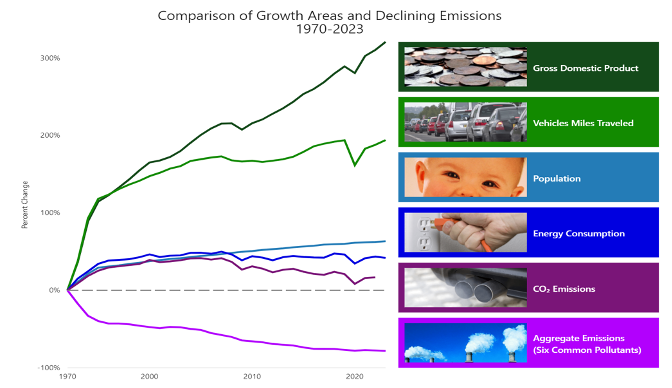
De-construction of environmental protections. Today we see the unravelling of the complex tapestry of regulatory controls on pollution, from Executive Orders granting absolution to 41 industries from emission constraints to laws rescinding critical portions of the Clean Air Act.[ii] The EPA under the Trump Administration has rescinded 31 regulations that protect water, air and land from industrial pollution and chemical contamination, challenging Safe Drinking Water and Clean Water Act requirements, and curtailing enforcement actions. Rulemaking to control forever chemicals (PFAS) has been delayed or abandoned. The Supreme Court has removed the science-based expert authority of regulatory agencies requiring a strict and narrow interpretation of authorizations stated in the enabling legislation. The EPA revoked the Endangerment Finding of 2009 which put greenhouse gas emissions control under the Clean Air Act, effectively eliminating climate action controls. The EPA has also declared that costs of health harms and deaths from pollution will no longer be calculated in the analysis of regulatory action on air emissions. Challenges to these actions have had some success in federal courts, including the declaration that rescinding congressionally approved grants for renewable energy are illegal.
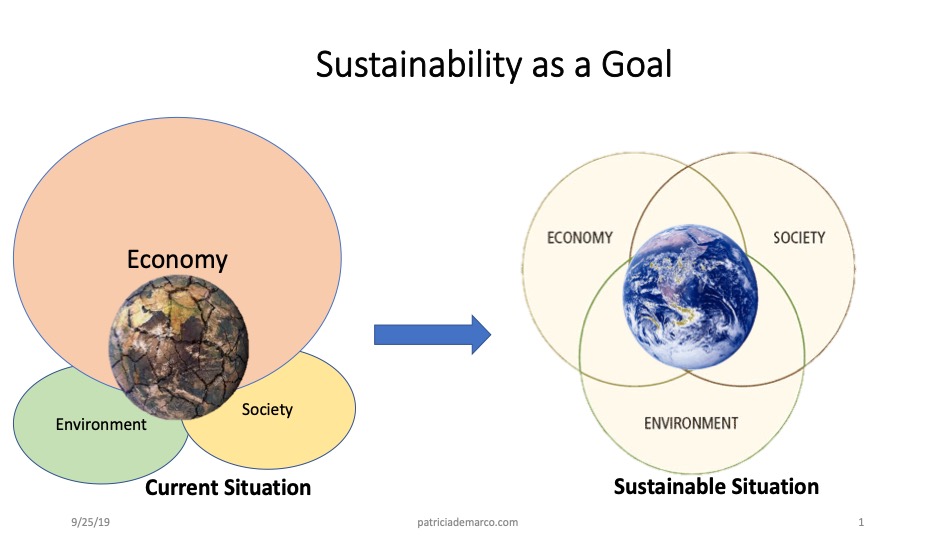
Rebuild Environmental Protection with Regenerative Thinking. The long-term implications of these policy changes alarm environmental organizations and people concerned with the health of communities who are looking toward a change of administration to correct the harms. But, at this point, simply reversing the actions taken so far will not address the underlying issues. Of all the environmental regulations adopted to date, only the Pollution Prevention Act of 1990 addresses the concept of designing to prevent pollution and encouraging recycling. We can take lessons from the regulatory approach of the last 56 years and improve the outcome going forward. This is the opportunity to move our system of laws and regulations through a transformation from an extractive fossil-based economy to a regenerative renewable resourced economy. There are at least five elements to this process.

1. REACH: The first lesson would be to adopt the precautionary principle as the basis for evaluating the introduction of new man-made materials into large scale production.

2. Green Chemistry: Second, adopt a regulatory framework that emphasizes reduction or elimination of the inherent hazard, rather than computing the “safe” amount of toxicity for individual contaminants. 

3. Empower Renewable Resources. Third, adopt the regulatory infrastructure to empower distributed renewable energy systems.

4. Heal damaged lands. Beyond preventing future pollution and damage, lies the responsibility to repair the scars and harms of legacy industries. 

5. Remove fossil industry subsidies. The federal subsidies currently lavished on the fossil extractive industries can be shifted directly to fund the sustainable energy system.

A shared prosperity. It is time for bold action. It is time to recognize that the laws of nature are not negotiable, nor can they be rescinded by executive order or wishful thinking. The condition of our life support system requires both reduction in the levels and types of pollution as well as strong support for the known and available technical solutions. Burning fossil resources as the base for the economy drives the global warming that will make the planet uninhabitable to life as we know it.[i] By creating a new regulatory framework based on regenerative thinking and protection for our life support system, we can establish the conditions for a shared prosperity and sustainable growth within the constraints of our living earth.Those who contemplate the beauty of the earth shall find reserves of strength that will endure as long as life lasts. Rachel Carson.

See the full analysis, with citations, of our way forward here: Rebuilding Environmental Protection PDF



[


4 Comments

Empowering the Sustainable Energy System of the 21st Century

It is time for a new National Energy Policy to support a clean, modern energy system. The energy sector is the largest contributor to emissions of greenhouse gases that are causing climate change.[i] Consumers see rising prices for electricity and hear industry complaints about onerous regulations and government curtailment.[ii] Utility companies struggle to address reliability of service requirements and universal service standards even as data centers and AI applications add intense demands for electricity.[iii] Much of the focus on climate action involves shifting to electricity for buildings, transportation and even industry. If the country is to meet climate goals, the shift from burning coal, natural gas and petroleum for power generation must occur much more rapidly.[iv]

Transforming the nation’s energy system to one based on renewable and sustainable resources is a critical element in responding to climate change mitigation and adaptation. Unfortunately, practitioners in the renewable energy systems space currently encounter significant regulatory and institutional barriers to rapid and efficient implementation of new technologies and practices.[v]  National energy policy is needed, including an update to the energy industry’s regulatory framework, to advance the modernization of our country’s electricity delivery system.  

The current regulatory framework is built around centralized energy generation from utility monopolies that deliver electricity to customers residing across a wide geographical territory. Under the National Energy Act of 1992, partial deregulation of the nation’s electricity system took place, leaving a patchwork quilt of conditions in place across the country: 17 states are fully competitive with customer choice for electricity generation and gas supplies; 9 are deregulated for gas suppliers only; and 23 remain fully regulated for electricity and gas.

Data Source: US EPA    https://www.epa.gov/greenpower/understanding-electricity-market-frameworks-policies

Modernizing the nation’s electrical grid system means moving away from this current model of centralized energy generation towards generating energy on site or nearer to the consumer. In this emerging, more distributed energy system, customers may also be generators of the power they consume, they may have on-site storage for all or part of their demand, and buildings can even become virtual power plants by generating excess electricity that can be shared with others in need of that energy. This empirically straightforward approach that is technically feasible, economically beneficial and widely available unfortunately faces enormous difficulties when put into practice.  For example, in a Pittsburgh community three municipal buildings adjacent to each other – the volunteer fire department, public works garage and storage shed and emergency management service – cannot share a common battery storage installation or share the solar photovoltaic electricity generated on three of the four roofs because a “public way” divides the space, and the buildings are wired to three different distribution grids, but not to each other.  The cost to re-wire was more than the cost of installing all of the solar arrays! There is no standard interconnection protocol, and no tariff that fairly allocates costs and benefits. Grid-interactive Efficient Buildings are technically feasible.[i],[ii] We need to clear the regulatory hurdles to expand deployment to make buildings perform as virtual power plants.

Manufacturers and large-scale energy users explore the increasing benefits of co-generation, combined heat and power operations, and on-site storage. New high energy intensity operations like data centers and AI operations could benefit from co-locating efficient power generation on site and piping excess heat to neighboring facilities in need of that heat.[iii] A new regulatory system that accommodates customer generation can accelerate the necessary large- scale advance of renewable energy systems. However, there are few models for regulatory interface among producers and users of steam plus electricity, or waste heat and power.  Such arrangements usually involve complicated business negotiations and are unique to each project.  If distributed energy systems are to become mainstream and accessible to a multitude of energy system configurations, a regulatory system that defines the relationships and possibly new utility services and functions can expedite and streamline such transactions.

Major existing regulatory and institutional barriers

The regulatory system has accumulated policies and practices over decades, proving resistant to change even as technology advances have accelerated.[iv] The most significant regulatory and institutional barriers to modernization include:

  • Policy fragmentation across jurisdictions. Federal, state, and local jurisdictions have differing and sometimes conflicting requirements making national markets difficult to pursue. To correct policy fragmentation, we need more standardization of methods and processes in a systems-oriented approach to regulatory infrastructure modernization.
  • Permitting complexity. Multiple agencies require differing and overlapping permit requirements, poorly sequenced with no clear path among multiple authorities. Grid integration challenges face transmission and distribution capacity constraints, as well as interconnection and Regional Transmission Organization  [AW1] market rules, that pose barriers to renewable energy implementation, in modern utility operations, and impede net-zero greenhouse gas emissions outcomes.
  • Grid integration challenges. Utility systems have capacity constraints as well as a lack of interconnection infrastructure to support “two-way traffic” among customer/generators with or without on-site storage.
  • Lack of uniformly recognized guidelines for RECs. There is no standard framework for defining Renewable Energy Certification (REC) credits that track and verify demand reduction or customer renewable energy generation across jurisdictions. Different states, and sometimes different utilities within states, have differing definitions, pricing and verification methods applied to RECs.
  • Erratic and unstable incentives. Production tax credits, investment tax credits, subsidies, land use allocations for federal land are subject to change with budget cycles unless established in law. The unstable incentives send the wrong pricing signals to the economy and foster inefficient choices for decades, impeding the progress to market transformation and decarbonization.

The current electricity system was designed for one-way flow of electricity from central power generation stations to distant residential, commercial and industrial customers.  Now, several categories of customers also have the opportunity to generate electricity, and send it back into the electric grid.  The electricity system, and the rules that govern it , are not designed for this two-way travel of electrons. In addition, standard interconnection procedures are needed for 1) virtual community power plants with or without storage; 2) standards regarding energy storage, steam/heat distribution or sale from combined heat and power operations, whether by a utility or a non-regulated entity; and 3) demand side management tied to time of use cost savings.[v] The integration of such services into the electric grid would benefit from innovations in communication technology and AI for real-time synchronization of both supply and demand side resources over daily and seasonal cycles.[vi] Many states have explored various approaches to regulatory incentives for renewable energy which provides a good place to begin to assemble the best practices across the country.[vii]

Opportunity for legislative action on national energy policy:

Three federal legislative initiatives will be pending over the next two years and could be legislative vehicles for the adoption of a national energy policy: 

  • Reauthorization of Tax Reform Act of 2017
  • Regulatory Modernization and Permitting (especially shortening timelines)
  • Funding decarbonization and electrification initiatives from the Inflation Reduction Act
  • Budget authorization for programs under the Bipartisan Infrastructure and Jobs act and the Inflation Reduction Act.

Updating a National Energy Policy to address the urgency of climate action as well as the complexity imposed by the accumulated regulatory fabric of past decades offers a unique opportunity to a new Administration.  It is important for the next President to address a forward-looking energy policy that empowers and accelerates the critically necessary modernization of the energy system.  Every citizen is affected every day by how cost-efficient, safe and reliable the energy system serves daily needs. Resolving the regulatory quagmire will pave the way for a clean and sustainable energy future.


[i] National Association of Regulated Utility Commissioners and National Association of State Energy Officials https://www.naseo.org/issues/buildings/naseo-naruc-geb-working-group

[ii] National GEB Roadmap: U.S. DOE, A National Roadmap for Grid-interactive Efficient Buildings (May 2021)

[iii] U.S. DOE. Office of Energy Efficiency and Renewable Energy.  Connected Communities presentation December 2, 2021.https://www.naseo.org/data/sites/1/documents/tk-news/connected-communities-for-geb-working-group.pdf    

[iv] Seetharaman, Krishna Moorthy, Nitin Patwa, Saravanan, and  Yash Gupta. Breaking barriers in deployment of renewable energy. Heliyon 5 (2019) e01166. doi: 10.1016/j.heliyon.2019. e01166 

[v] G. Olabi, Khaled Alsaid, Khaled Obaideen, Mohammad Ali Abdelkareem, Hegazy Rezek, Tabbi Wilberforce, Hussein M. Maghrabi, Enas Taha Sayed. Renewable Energy Systems: Comparisons, challenges and barriers, sustainability indicators, and the contribution to UN sustainable development goals. International Journal of Thermofluids. 20(2023) 100498.  www.sciencedirect.com/journal/international-journal-of-thermofluids

[vi] NASEO, “Demand Flexibility and Grid-interactive Efficient Buildings 101” (September 2022) and “Grid-interactive Efficient Buildings: State Briefing Paper” (October 2019)

[vii] Database of State Incentives for Renewables and Efficiency. https://www.dsireusa.org


 [AW1]Spell out acronyms


[i] United States Environmental Protection Agency. Sources of Greenhouse Gas Emissions. Total U. S. Greenhouse Gas Emissions by Sector in 2022. https://www.epa.gov/ghgemissions/sources-greenhouse-gas-emissions%20Accessed%20September%2022    Accessed September 21,2024.

[ii] Robert Walton. “State Officials Blame Federal Regulators for Higher Energy Prices: ‘Consumers are getting hurt!’” Utility Dive. February 15, 2024. https://www.utilitydive.com/news/state-officials-blame-federal-policy-higher-energy-prices-EPA/707608/   Accessed September 20, 2024.

[iii] North American Electric Reliability Corporation (NERC), Electricity Supply and Demand Data, 2023; Energy Information Administration (EIA) Monthly Energy Review; National Renewable Energy Laboratory (NREL) Pathways to 100% Clean Electricity, 2022. Note that electricity demand includes transmission losses and direct use.  https://www.energy.gov/policy/articles/clean-energy-resources-meet-data-center-electricity-demand   Accessed September 20, 2024.

[iv] Simon Black, Ian Perry, Nate Vernon-Lin. Fossil Fuel Subsidies Surged to $7 Trillion. International Monetary Fund Blog. August 24, 2023. https://www.imf.org/en/Blogs/Articles/2023/08/24/fossil-fuel-subsidies-surged-to-record-7-trillion

[v] Enerdatics. Addressing Policy and Regulatory Challenges in Renewable Energy Projects. July 6, 2023. https://enerdatics.com/blog/addressing-policy-and-regulatory-challenges-in-renewable-energy-projects/   Accessed September 20, 2024.