Patricia DeMarco Ph.D.

"Live in harmony with nature."


EPA Reconsideration of 2009 Endangerment Finding and Vehicle Efficiency Standards

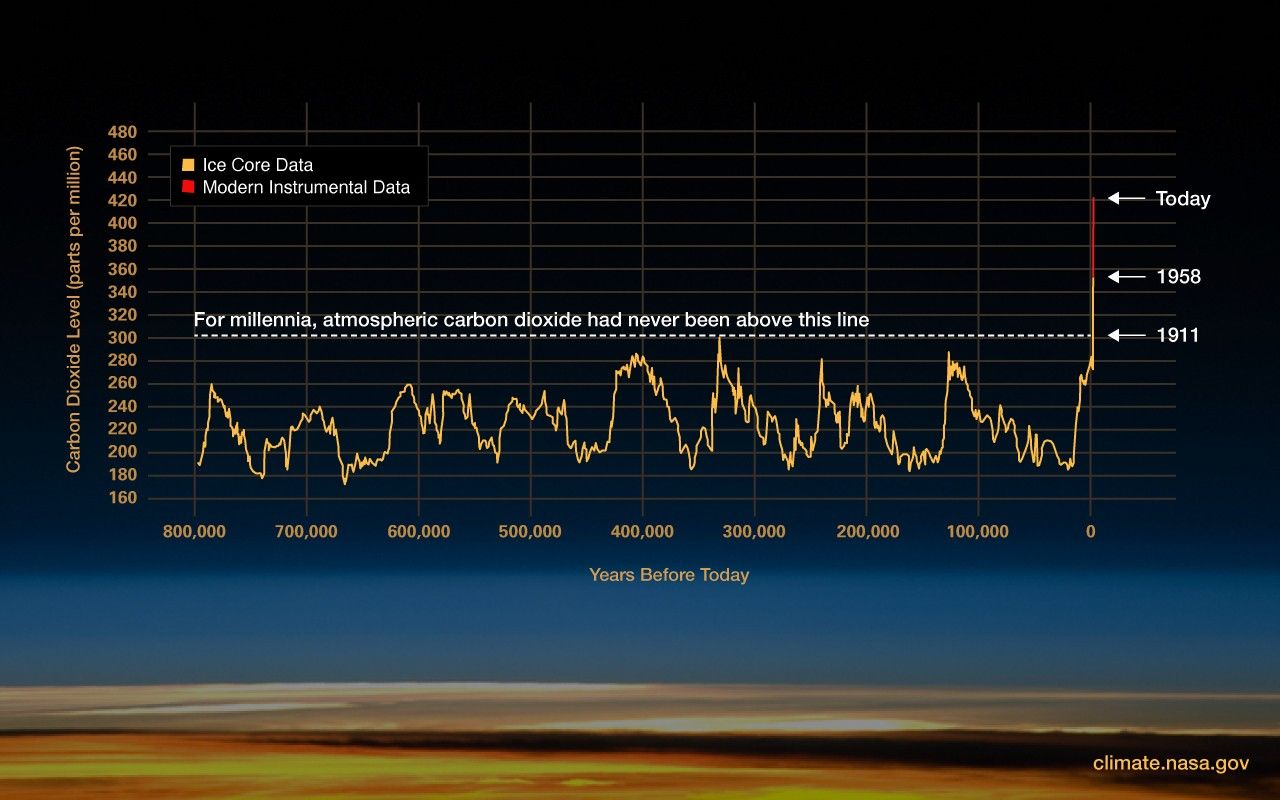
The EPA is currently holding public hearings on its proposed reconsideration of the 2009 Endangerment Finding and Vehicle Efficiency Standards that authorized action to curtail greenhouse gases that cause climate change.
Eliminating this regulatory authority will nullify climate change actions to control emissions from power plants, vehicles and industrial operations. EPA is accepting comments until Sept 22,2025. Please consider filing a statement.

Reconsideration of 2009 Endangerment Finding and Greenhouse Gas Vehicle Standards
AGENCY: Environmental Protection Agency (EPA).
Docket ID No. EPA–HQ–OAR–2025–0194
https://www.regulations.gov/docket/EPA-HQ-OAR-2025-0194

My testimony is here:


A Moral Outrage: It may be legal, but it is not right!

Patricia M. DeMarco

     I sit in my sunroom at dawn this midsummer day listening to the insistent trill of the Carolina wren in the rose of Sharon bush just outside my door. The sight of Pasha Pussycat, safely behind the screen, is sending the apprehensive mother bird into a frenzy in fear of a threat to her nest in the niche above the doorway. It is natural for a creature to shriek at a threat in alarm and warning.As I attended  Reclamation! the 2025 Black Appalachian Coalition Storytelling and Policy Summit July 17 to 20, 2025, I heard many people share their experiences and their fears for the impact of the cuts to so many services. I wonder why we all are not shrieking in alarm and warning at the “One Big Beautiful Budget Act” that was signed into law on July 4th this year.

The major cuts to health care and food support will cast millions of Americans into poverty and even death. The major beneficiaries of this OBBBA are corporations whose taxes fall from 35% to 21%, and individuals with net income over $400,000 per year. The budget is the best representation of policy. This budget codifies a shift in values away from standards that long defined America. Here, greed and privilege displace equal opportunity and shared prosperity.

We must restore trust in each other and rebuild confidence in the representative democracy system of governance:

We must restore the sense of dignity and respect for people regardless of their income level, race, gender, religion, or even political affiliation.

We must recognize our responsibility to engage as active citizens.

We must commit to preserving a future for our children, and care for today’s children.

We must face the reality of climate change.  The laws of Nature are not negotiable. 

We must raise our voices in protest. Every Congressional Representative is up for election in 2026. The time to weigh in with them is NOW! 

We the People must take back the narrative of what this country is about. We do not judge our greatness by the number and fame of the billionaires but by how well the children, the elderly, the infirm and the poorest among us are doing. We can build a finer future that is people centered, not profit centered, and recognize that we live in a state of abundance. Shared prosperity will emerge when we shift our values to place priority on people above profits and planet health over the next quarter bottom line. This OBBBA makes a mockery of the message of the Statue of Liberty that has welcomed so many millions to our shores. Our diversity is our strength. We the People must raise our voices in moral outrage at what has become legal but is not right. 

See the full article below. I welcome your thoughts.

Patty


Interview with Logan Crawford- on my book “In the Footsteps of Rachel Carson”

Join us for an inspiring conversation with Patricia M. DeMarco, Ph.D, author of “In the Footsteps of Rachel Carson: Harnessing Earth’s Healing Power”. Discover how you can break free from old patterns, overcome trauma, and reclaim your life through authenticity, healing, and a deep connection to nature. This powerful interview explores the blueprint to becoming your true self — the author of your own story. Don’t miss this transformative dialogue on personal empowerment and ecological wisdom. https://www.youtube.com/watch?v=vfxRwsrpyGw

#globalbooknetwork#gbn#authors#books#PatriciaMDeMarco#InTheFootstepsOfRachelCarson#HealingJourney#TraumaRecovery#AuthenticSelf#NatureHealing#RachelCarsonLegacy#PersonalGrowth#MentalHealth#Empowerment#AuthorInterview#BookTalk#SpiritualAwakening#RewriteYourStory#beyourselfgamer Learn more: https://www.amazon.com/Footsteps-Rach…

About Logan Crawford: Emmy-winning broadcaster and actor who brings authors and storytellers to the spotlight on the Global Book Network.


Leave a comment

Reality Check on the Big Beautiful Budget Proposal

As I look at the proposals coming through for the “Big Beautiful Budget” proposals, I am both shocked and horrified at the implications of this proposed action.  Programs and policies that help the climate transition, basic public health education and well-being as well as basic functions of government to track and monitor conditions are all under attack.  What are we thinking?!!!!

Under the initiative of “Department of Government Efficiency” and a barrage of Executive Orders, every agency of government is being slashed to curtail “diversity, equity and inclusion” initiatives, “climate change initiatives” emissions controls, arbitrarily and without consideration of due process. Further, government properties related to agencies that monitor or implement such programs are also being sold, lease terminated or privatized.

The progress to date on climate action to protect both land and people is being slowed or curtailed. This includes thousands of jobs already created under the Inflation Reduction Act in domestic manufacturing as well as investment stimulation from private sector initiatives.

Budget is policy. As debate continues in Congress for the budgetary implementation of these policies, we must call out the unintended, or perhaps cruelly intended, consequences of these actions. Our country is yielding its leadership position on climate adaptation. Willful denial and pushing the regulatory system to favor fossil resource extractive industries will only worsen the consequences for everyone, now and for our children. The laws of Nature are not negotiable, nor can they be rescinded or revoked.

Call your Representative and Senators and ask for restraint on destroying our life support system. https://www.congress.gov/members/find-your-member

Find the full article here:


55th Celebration of Earth Day

My Dear Colleagues and Friends.
The passion for preserving our life support system – the living earth – runs as an elixir of inspiration through our work as teachers, guides and models of living in harmony with Nature. Regardless of any pronouncements or Executive Orders, the laws of Nature are not negotiable.

Earth Day has marked annual community clean-up days, opening farmer’s markets, flower displays and recycling events. But really in this year where the EPA Administrator gleefully proposed rolling back 31 environmental protection regulations that were intended to curtail toxic air emissions like mercury and proliferation of forever chemical materials like PFOS, we need more than one-time reminders and displays. We need to take the issue of actively protecting our life support system seriously. That means addressing climate change with leadership and courage. That means curtailing pollution from man-made materials, especially plastics. And that means looking at our own lifestyle for ways to live with less burden on the earth.

On this Earth Day I share with you Rachel Carson’s words:
“…man, far from being the overlord of all creation, is himself part of nature, subject to the same cosmic forces that control all other life. Man’s future welfare and probably even his survival depend upon his learning to live in harmony, rather than in combat, with these forces.” {From Rachel Carson’s essay on Biological Sciences for the National Council of Teachers. In Lost Woods- the Discovered Writing of Rachel Carson. Linda J. Lear (Ed.)Beacon Press. Boston. 1998.Page 165.}


As we celebrate this 55th Earth Day, may we remember that the greatness of a nation is not determined by the number and fame of its billionaires but by the well-being and shared prosperity of its children, the elderly, the infirm and the poorest among us. We cannot have healthy people in a polluted environment. We must offer leadership and give voice to the 73% of Americans, of both parties, who want more direct action on climate change. We who know cannot remain silent in defense of the Living Earth that provides fresh water, oxygen-rich air, fertile ground and the millions of species that constitute the great web of life, of which we humans are but one part.

On this Earth Day re-dedicate yourself to stand as a strong advocate for preserving our living earth…every day! Call you Senators and Congressional Representative today and remind them that our quality of life, indeed our survival, depend on preserving and restoring a healthy environment.

One tulip spared by the rabbits and deer!

Here is the link to my presentation for Earth Day at the Duquesne University Law School

and my interview with Dr. Dana Noescue.
4-22-2025Duquesne_Law-Earth_Day.pptx
 (11054 kB)
Healing the Land and Empowering the People: A Message for Earth Day

DKLL LEGAL TALK SERIES Patricia Demarco-Event.pdf  (255 kB)
Event Sponsored by DKLL and the 2025 Students of Climate Change Law, Research, and Writing

The interview with Dr. Dana Neascu can be found here.

https://dsc.duq.edu/law-dcli-speakers/10/


Standing Up for Democracy- The Power of One Voice

by Patricia M. DeMarco

Senator Corey Booker has illustrated how we all need to stand up for democracy. Each of us has an obligation of citizenship to participate actively in the governance of our communities, our states and our country.  It is the value of each person’s voice that makes a representative democracy work.  The Constitution defines the rights of all citizens, but with those rights comes the obligation to adhere to the commonly accepted rule of law.  Our government operates by the consent of the governed.  Each citizen also inherently holds the obligation to participate. Active citizenship means we must vote in every election, every time.  So many people all around the world fight hard for this right, yet in America, many elections see less than 40% participation in national elections. Active citizenship also means we hold those elected to represent us accountable for their actions in office.

In 2024, a majority elected a President who has been throwing away the rule book, delving deep into archaic laws for justification for actions that define doctors and women seeking reproductive health care as criminals, and sweep entire segments of our population out of the country with no due process. Willful denial of reality like climate change will reduce the ability to prepare and respond to climate disasters. Willful elimination of Diversity, Equity and Inclusion policies as well as recognition of environmental justice needs will increase disparities and divisions based on race and gender. In the name of “efficiency,” entire Congressionally mandated agencies and operations are rescinded, dismissed and cruelly removed, in most cases, with no reason and no justification other than the temper of the President or the directive of unelected and unconfirmed civilians.

The function and purpose of government differs significantly from the functions and purpose of a corporation. While a corporation has obligations to its stockholders to generate profits measured by quarterly performance goals, government has the obligation to preserve and promote the safety and well -being of all citizens. Government exists to serve and protect all the people with the power to generate revenue to address needs. It is the obligation of government to meet the needs of the people and to generate revenue in a fair and equitable manner to meet those needs. In the public interest, some government functions may not be profitable when measured by strict corporate monetary standards. The public good has value in governance, while public benefits may not be a requirement for a corporation.  Applying strict corporate economic standards to government functions displaces the basic focus of government on achieving the public interest, and protecting the common good of the country as a whole. This includes public health and welfare, education, preserving natural resources such as parks and wildlife refuges, as well as defense and international relations.

We have the obligation as citizens to call out the authoritarian behavior displayed by the current administration. We have the obligation to stand up for the rule of law, the balance of powers among the branches of Government, and the due process put forth in the Constitution. We must hold our elected Senators and Representatives accountable for exercising their duties in providing oversight. We must call for public investigations and hearings to hold the Administration to account for actions that clearly defy logic and do not serve the public interest.

No American wants to see a return to the pollution of air and water and land that was rampant before enactment of the Clean Air Act, the Safe Drinking Water Act and the National Environmental Protection Act. No American wants to see children go to school hungry or have inadequate classroom support. No American wants to have health care denied to veterans, children, elderly or disabled people. No American wants to see prices on all commodities go up from vindictive and retaliatory tariffs. And no American wants to alienate our strong and loyal allies. 

We must recognize that until another election, we must brace for the consequences of reduced or eliminated services from the federal government. However, people will still require assistance, we will still need to address the effects of climate change in our communities, and we will still need to educate children, provide health care, and keep our communities safe and functioning. As the resources from the federal level are reduced or cut off, communities will need to work together. We will need to press the corporate entities that purportedly benefit from these changes to contribute more to support the common good. And we will need to become stronger as active citizens.

Local government forms the front line of democracy. People in the small towns of America will turn to their Mayors, their Borough Council and their municipal managers to meet their needs. The small towns of America can hold the line for democracy by engaging citizens, educating people on civic responsibilities, and empowering people to express their opinions where it matters. 

 Listening to citizens and hearing their needs and concerns lies at the heart of a democracy. Listening to the voices of people where they are and responding to their suggestions and helping to advance their ideas makes democracy actually work. As one example, the ReImagine Appalachia Blueprint, drawn from 45 listening sessions with over 1,000 people participating across four states (PA, KY, OH, WV), was incorporated into the Inflation Reduction Act, the CHIPS Act, and the Bipartisan Infrastructure and Jobs Act within two years.  Funds authorized by Congress under these laws flowed to communities across the country, with 80% of allocated funds going to Republican Congressional districts. This kind of local investment is accelerating the clean economy across the country.

Every citizen can act according to his or her own skill, talent and interest. I have taken a commitment to serve my community as a candidate for Mayor of the Borough of Forest Hills. With gratitude for the leadership and long service of Mayor Frank Porco, who has set an admirable example of service with 16 years on Borough Council and ten years as Mayor, I have agreed to try and fill his shoes. I am joined by a wonderful Tree City Team for Council: Angelo Baiocchi, An Lewis, Barb Martin and Tom Theilacker; and Tax Collector Nina Sowiski.  We are leading Forest Hills together into a future that carries forward our history of innovation, with a commitment to serve all the citizens of our community, to collaborate with our neighbors, and to keep Forest Hills affordable, safe and beautiful. See https://TreeCityTeam.com for the full platform.

We each do what we can with what we have where we are. The greatness of a country is not measured in the number and fame of its billionaires but by the well-being and prosperity of its children, the elderly and all working people. Write to your Senators and Representative today! And find a way to get involved with your local government. Be an engaged citizen. It is the only way a representative democracy can work FOR THE PEOPLE!


1 Comment

For 2025 A Call for Solidarity and Organizing in the Face of Tyranny

In this essay, I reflect on the 2024 election results, give some analysis of the situation we face, and some actions forward to create a better outcome. We need a better narrative of how we see the future as a nation of shared prosperity in a healthy, peaceful world. And we need to use the tools of the 21st century to communicate ideas and programs. We need to tell the success stories of taking paths of true and tested policies that support a return to an American Dream that includes everybody, not just the top 10 % of wealthy people.

For me, the solutions are at the community level, because communities- Mayors, Church leaders, civic leaders – we are on the front lines, regardless of what mayhem is cast out from federal policies. Basic institutions have failed everyday people. But tearing down the government does not solve the problems. Returning to the policies of the “Guilded Age” will assure a greater divide in the wealth gap, and leave even more people falling into poverty and despair. We need to build a narrative of inclusion, hope for a better future, and justice for people exploited by this devolution of our society. We must stand together and rethink our way forward from the bottom up. In the United States of America it is not OK for children to go to school hungry, for the maternal and infant mortality rates to fall among the level of underdeveloped countries, for people to work three jobs and still not make ends meet. We need to revive the sense of caring for each other, creating a culture of celebrating the dignity of each person and giving true opportunities for all to thrive together.

Going forward we must hold those in power accountable. If our goal is to build an America where shared prosperity in a healthy world is a reality, not a pipe dream subject to derision and mockery, we must build solidarity. We must re-learn the lessons of the unions that brought safe working conditions and living wages to millions of workers. We need to prepare for meaningful resistance and constructive redirection. We need to study the history of our country and avoid the descent into chaos.

Freedom is not free; democracy comes at the price of citizen responsibility and respect for the rule of law. Freedom without accountability yields chaos. We need to sharpen the tools of resistance to tyranny. We need to sharpen the tools of organizing collective action. Could we mount a general strike or a rolling series of strikes these days? Do consumers have the knowledge and tools to harness boycotts to bring polluters to heel? Do we have a communication system to support organized resistance to discrimination, racism and suppression of rights? We need to step onto our power and build a New American Dream that makes liberty and justice for all a reality.

I wish all of you my readers, colleagues and friends all the Blessings of this Christmas and Holiday Season. May we build a New Year for Peace in the world, with love in our lives, and Joy in our hearts.

Buon Natale!

Patricia DeMarco

23 December 2024

(Download the full essay below.)


4 Comments

Empowering the Sustainable Energy System of the 21st Century

It is time for a new National Energy Policy to support a clean, modern energy system. The energy sector is the largest contributor to emissions of greenhouse gases that are causing climate change.[i] Consumers see rising prices for electricity and hear industry complaints about onerous regulations and government curtailment.[ii] Utility companies struggle to address reliability of service requirements and universal service standards even as data centers and AI applications add intense demands for electricity.[iii] Much of the focus on climate action involves shifting to electricity for buildings, transportation and even industry. If the country is to meet climate goals, the shift from burning coal, natural gas and petroleum for power generation must occur much more rapidly.[iv]

Transforming the nation’s energy system to one based on renewable and sustainable resources is a critical element in responding to climate change mitigation and adaptation. Unfortunately, practitioners in the renewable energy systems space currently encounter significant regulatory and institutional barriers to rapid and efficient implementation of new technologies and practices.[v]  National energy policy is needed, including an update to the energy industry’s regulatory framework, to advance the modernization of our country’s electricity delivery system.  

The current regulatory framework is built around centralized energy generation from utility monopolies that deliver electricity to customers residing across a wide geographical territory. Under the National Energy Act of 1992, partial deregulation of the nation’s electricity system took place, leaving a patchwork quilt of conditions in place across the country: 17 states are fully competitive with customer choice for electricity generation and gas supplies; 9 are deregulated for gas suppliers only; and 23 remain fully regulated for electricity and gas.

Data Source: US EPA    https://www.epa.gov/greenpower/understanding-electricity-market-frameworks-policies

Modernizing the nation’s electrical grid system means moving away from this current model of centralized energy generation towards generating energy on site or nearer to the consumer. In this emerging, more distributed energy system, customers may also be generators of the power they consume, they may have on-site storage for all or part of their demand, and buildings can even become virtual power plants by generating excess electricity that can be shared with others in need of that energy. This empirically straightforward approach that is technically feasible, economically beneficial and widely available unfortunately faces enormous difficulties when put into practice.  For example, in a Pittsburgh community three municipal buildings adjacent to each other – the volunteer fire department, public works garage and storage shed and emergency management service – cannot share a common battery storage installation or share the solar photovoltaic electricity generated on three of the four roofs because a “public way” divides the space, and the buildings are wired to three different distribution grids, but not to each other.  The cost to re-wire was more than the cost of installing all of the solar arrays! There is no standard interconnection protocol, and no tariff that fairly allocates costs and benefits. Grid-interactive Efficient Buildings are technically feasible.[i],[ii] We need to clear the regulatory hurdles to expand deployment to make buildings perform as virtual power plants.

Manufacturers and large-scale energy users explore the increasing benefits of co-generation, combined heat and power operations, and on-site storage. New high energy intensity operations like data centers and AI operations could benefit from co-locating efficient power generation on site and piping excess heat to neighboring facilities in need of that heat.[iii] A new regulatory system that accommodates customer generation can accelerate the necessary large- scale advance of renewable energy systems. However, there are few models for regulatory interface among producers and users of steam plus electricity, or waste heat and power.  Such arrangements usually involve complicated business negotiations and are unique to each project.  If distributed energy systems are to become mainstream and accessible to a multitude of energy system configurations, a regulatory system that defines the relationships and possibly new utility services and functions can expedite and streamline such transactions.

Major existing regulatory and institutional barriers

The regulatory system has accumulated policies and practices over decades, proving resistant to change even as technology advances have accelerated.[iv] The most significant regulatory and institutional barriers to modernization include:

  • Policy fragmentation across jurisdictions. Federal, state, and local jurisdictions have differing and sometimes conflicting requirements making national markets difficult to pursue. To correct policy fragmentation, we need more standardization of methods and processes in a systems-oriented approach to regulatory infrastructure modernization.
  • Permitting complexity. Multiple agencies require differing and overlapping permit requirements, poorly sequenced with no clear path among multiple authorities. Grid integration challenges face transmission and distribution capacity constraints, as well as interconnection and Regional Transmission Organization  [AW1] market rules, that pose barriers to renewable energy implementation, in modern utility operations, and impede net-zero greenhouse gas emissions outcomes.
  • Grid integration challenges. Utility systems have capacity constraints as well as a lack of interconnection infrastructure to support “two-way traffic” among customer/generators with or without on-site storage.
  • Lack of uniformly recognized guidelines for RECs. There is no standard framework for defining Renewable Energy Certification (REC) credits that track and verify demand reduction or customer renewable energy generation across jurisdictions. Different states, and sometimes different utilities within states, have differing definitions, pricing and verification methods applied to RECs.
  • Erratic and unstable incentives. Production tax credits, investment tax credits, subsidies, land use allocations for federal land are subject to change with budget cycles unless established in law. The unstable incentives send the wrong pricing signals to the economy and foster inefficient choices for decades, impeding the progress to market transformation and decarbonization.

The current electricity system was designed for one-way flow of electricity from central power generation stations to distant residential, commercial and industrial customers.  Now, several categories of customers also have the opportunity to generate electricity, and send it back into the electric grid.  The electricity system, and the rules that govern it , are not designed for this two-way travel of electrons. In addition, standard interconnection procedures are needed for 1) virtual community power plants with or without storage; 2) standards regarding energy storage, steam/heat distribution or sale from combined heat and power operations, whether by a utility or a non-regulated entity; and 3) demand side management tied to time of use cost savings.[v] The integration of such services into the electric grid would benefit from innovations in communication technology and AI for real-time synchronization of both supply and demand side resources over daily and seasonal cycles.[vi] Many states have explored various approaches to regulatory incentives for renewable energy which provides a good place to begin to assemble the best practices across the country.[vii]

Opportunity for legislative action on national energy policy:

Three federal legislative initiatives will be pending over the next two years and could be legislative vehicles for the adoption of a national energy policy: 

  • Reauthorization of Tax Reform Act of 2017
  • Regulatory Modernization and Permitting (especially shortening timelines)
  • Funding decarbonization and electrification initiatives from the Inflation Reduction Act
  • Budget authorization for programs under the Bipartisan Infrastructure and Jobs act and the Inflation Reduction Act.

Updating a National Energy Policy to address the urgency of climate action as well as the complexity imposed by the accumulated regulatory fabric of past decades offers a unique opportunity to a new Administration.  It is important for the next President to address a forward-looking energy policy that empowers and accelerates the critically necessary modernization of the energy system.  Every citizen is affected every day by how cost-efficient, safe and reliable the energy system serves daily needs. Resolving the regulatory quagmire will pave the way for a clean and sustainable energy future.


[i] National Association of Regulated Utility Commissioners and National Association of State Energy Officials https://www.naseo.org/issues/buildings/naseo-naruc-geb-working-group

[ii] National GEB Roadmap: U.S. DOE, A National Roadmap for Grid-interactive Efficient Buildings (May 2021)

[iii] U.S. DOE. Office of Energy Efficiency and Renewable Energy.  Connected Communities presentation December 2, 2021.https://www.naseo.org/data/sites/1/documents/tk-news/connected-communities-for-geb-working-group.pdf    

[iv] Seetharaman, Krishna Moorthy, Nitin Patwa, Saravanan, and  Yash Gupta. Breaking barriers in deployment of renewable energy. Heliyon 5 (2019) e01166. doi: 10.1016/j.heliyon.2019. e01166 

[v] G. Olabi, Khaled Alsaid, Khaled Obaideen, Mohammad Ali Abdelkareem, Hegazy Rezek, Tabbi Wilberforce, Hussein M. Maghrabi, Enas Taha Sayed. Renewable Energy Systems: Comparisons, challenges and barriers, sustainability indicators, and the contribution to UN sustainable development goals. International Journal of Thermofluids. 20(2023) 100498.  www.sciencedirect.com/journal/international-journal-of-thermofluids

[vi] NASEO, “Demand Flexibility and Grid-interactive Efficient Buildings 101” (September 2022) and “Grid-interactive Efficient Buildings: State Briefing Paper” (October 2019)

[vii] Database of State Incentives for Renewables and Efficiency. https://www.dsireusa.org


 [AW1]Spell out acronyms


[i] United States Environmental Protection Agency. Sources of Greenhouse Gas Emissions. Total U. S. Greenhouse Gas Emissions by Sector in 2022. https://www.epa.gov/ghgemissions/sources-greenhouse-gas-emissions%20Accessed%20September%2022    Accessed September 21,2024.

[ii] Robert Walton. “State Officials Blame Federal Regulators for Higher Energy Prices: ‘Consumers are getting hurt!’” Utility Dive. February 15, 2024. https://www.utilitydive.com/news/state-officials-blame-federal-policy-higher-energy-prices-EPA/707608/   Accessed September 20, 2024.

[iii] North American Electric Reliability Corporation (NERC), Electricity Supply and Demand Data, 2023; Energy Information Administration (EIA) Monthly Energy Review; National Renewable Energy Laboratory (NREL) Pathways to 100% Clean Electricity, 2022. Note that electricity demand includes transmission losses and direct use.  https://www.energy.gov/policy/articles/clean-energy-resources-meet-data-center-electricity-demand   Accessed September 20, 2024.

[iv] Simon Black, Ian Perry, Nate Vernon-Lin. Fossil Fuel Subsidies Surged to $7 Trillion. International Monetary Fund Blog. August 24, 2023. https://www.imf.org/en/Blogs/Articles/2023/08/24/fossil-fuel-subsidies-surged-to-record-7-trillion

[v] Enerdatics. Addressing Policy and Regulatory Challenges in Renewable Energy Projects. July 6, 2023. https://enerdatics.com/blog/addressing-policy-and-regulatory-challenges-in-renewable-energy-projects/   Accessed September 20, 2024.