Patricia DeMarco Ph.D.

"Live in harmony with nature."


The Special Power of Women in Shaping Good Governance

Presented to Three Rivers Democratic Women, Pittsburgh
November 20, 2025.

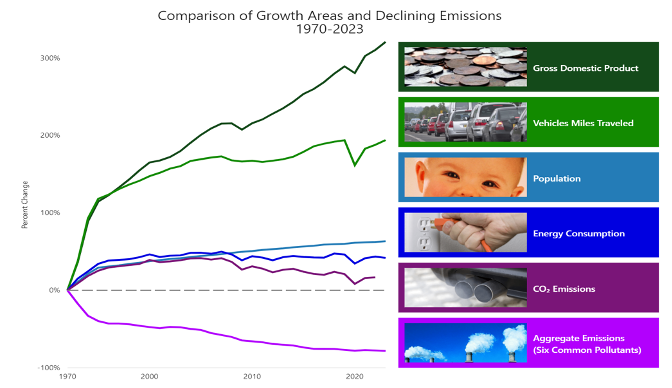
We close 2025 in the waves of disruption and distress from the re-alingment of the federal government under President Trump. Maintaining focus in the face of the Trump administration retrenchment on climate, environmental protections, civil liberties and common decency has been a challenge for most of us in the battle for a sustainable future.  I take hope from the continued advance of regenerative practice at the level of state and local governments across the country and around the world.

Women have the power to bring compassion, balance, dignity and joy to processes of governance too often mired in petty politics and power struggles over ego. It is time for women to stand together and call for a return to a government of compassion and caring; a government of shared prosperity and improved quality of life for all citizens; a government of moral alignment with basic human rights and dignity. It is time for women to step forward and lead from the heart of our nation.

     As we face this New Year, I find hope and sustenance from the many bonds of friendship and community around me.  People need each other, most especially in times of tribulation.  The greatness of our nation is not measured by the number and notoriety of its billionaires but by the wellbeing of the least among us- the children, the elderly, the infirm. We do not yield to hatred and anger but rather embrace the many opportunities to care for each other and for our Mother Earth. Extending dignity and respect to each person we meet reflects joy back and amplifies the sense of belonging to a common purpose.  We build toward a shared prosperity based on regenerative systems for food, energy, and infrastructure. We preserve and strengthen our life support system: clean air, fresh water, fertile ground and the vast diversity of species that constitute the great Web of Life. We are stronger together and together we rise.

     I wish the blessings of this Season of Hope and Joy for you and your families.

Buon Natalé!


EPA Reconsideration of 2009 Endangerment Finding and Vehicle Efficiency Standards

The EPA is currently holding public hearings on its proposed reconsideration of the 2009 Endangerment Finding and Vehicle Efficiency Standards that authorized action to curtail greenhouse gases that cause climate change.
Eliminating this regulatory authority will nullify climate change actions to control emissions from power plants, vehicles and industrial operations. EPA is accepting comments until Sept 22,2025. Please consider filing a statement.

Reconsideration of 2009 Endangerment Finding and Greenhouse Gas Vehicle Standards
AGENCY: Environmental Protection Agency (EPA).
Docket ID No. EPA–HQ–OAR–2025–0194
https://www.regulations.gov/docket/EPA-HQ-OAR-2025-0194

My testimony is here:


Leave a comment

Reality Check on the Big Beautiful Budget Proposal

As I look at the proposals coming through for the “Big Beautiful Budget” proposals, I am both shocked and horrified at the implications of this proposed action.  Programs and policies that help the climate transition, basic public health education and well-being as well as basic functions of government to track and monitor conditions are all under attack.  What are we thinking?!!!!

Under the initiative of “Department of Government Efficiency” and a barrage of Executive Orders, every agency of government is being slashed to curtail “diversity, equity and inclusion” initiatives, “climate change initiatives” emissions controls, arbitrarily and without consideration of due process. Further, government properties related to agencies that monitor or implement such programs are also being sold, lease terminated or privatized.

The progress to date on climate action to protect both land and people is being slowed or curtailed. This includes thousands of jobs already created under the Inflation Reduction Act in domestic manufacturing as well as investment stimulation from private sector initiatives.

Budget is policy. As debate continues in Congress for the budgetary implementation of these policies, we must call out the unintended, or perhaps cruelly intended, consequences of these actions. Our country is yielding its leadership position on climate adaptation. Willful denial and pushing the regulatory system to favor fossil resource extractive industries will only worsen the consequences for everyone, now and for our children. The laws of Nature are not negotiable, nor can they be rescinded or revoked.

Call your Representative and Senators and ask for restraint on destroying our life support system. https://www.congress.gov/members/find-your-member

Find the full article here:


4 Comments

Empowering the Sustainable Energy System of the 21st Century

It is time for a new National Energy Policy to support a clean, modern energy system. The energy sector is the largest contributor to emissions of greenhouse gases that are causing climate change.[i] Consumers see rising prices for electricity and hear industry complaints about onerous regulations and government curtailment.[ii] Utility companies struggle to address reliability of service requirements and universal service standards even as data centers and AI applications add intense demands for electricity.[iii] Much of the focus on climate action involves shifting to electricity for buildings, transportation and even industry. If the country is to meet climate goals, the shift from burning coal, natural gas and petroleum for power generation must occur much more rapidly.[iv]

Transforming the nation’s energy system to one based on renewable and sustainable resources is a critical element in responding to climate change mitigation and adaptation. Unfortunately, practitioners in the renewable energy systems space currently encounter significant regulatory and institutional barriers to rapid and efficient implementation of new technologies and practices.[v]  National energy policy is needed, including an update to the energy industry’s regulatory framework, to advance the modernization of our country’s electricity delivery system.  

The current regulatory framework is built around centralized energy generation from utility monopolies that deliver electricity to customers residing across a wide geographical territory. Under the National Energy Act of 1992, partial deregulation of the nation’s electricity system took place, leaving a patchwork quilt of conditions in place across the country: 17 states are fully competitive with customer choice for electricity generation and gas supplies; 9 are deregulated for gas suppliers only; and 23 remain fully regulated for electricity and gas.

Data Source: US EPA    https://www.epa.gov/greenpower/understanding-electricity-market-frameworks-policies

Modernizing the nation’s electrical grid system means moving away from this current model of centralized energy generation towards generating energy on site or nearer to the consumer. In this emerging, more distributed energy system, customers may also be generators of the power they consume, they may have on-site storage for all or part of their demand, and buildings can even become virtual power plants by generating excess electricity that can be shared with others in need of that energy. This empirically straightforward approach that is technically feasible, economically beneficial and widely available unfortunately faces enormous difficulties when put into practice.  For example, in a Pittsburgh community three municipal buildings adjacent to each other – the volunteer fire department, public works garage and storage shed and emergency management service – cannot share a common battery storage installation or share the solar photovoltaic electricity generated on three of the four roofs because a “public way” divides the space, and the buildings are wired to three different distribution grids, but not to each other.  The cost to re-wire was more than the cost of installing all of the solar arrays! There is no standard interconnection protocol, and no tariff that fairly allocates costs and benefits. Grid-interactive Efficient Buildings are technically feasible.[i],[ii] We need to clear the regulatory hurdles to expand deployment to make buildings perform as virtual power plants.

Manufacturers and large-scale energy users explore the increasing benefits of co-generation, combined heat and power operations, and on-site storage. New high energy intensity operations like data centers and AI operations could benefit from co-locating efficient power generation on site and piping excess heat to neighboring facilities in need of that heat.[iii] A new regulatory system that accommodates customer generation can accelerate the necessary large- scale advance of renewable energy systems. However, there are few models for regulatory interface among producers and users of steam plus electricity, or waste heat and power.  Such arrangements usually involve complicated business negotiations and are unique to each project.  If distributed energy systems are to become mainstream and accessible to a multitude of energy system configurations, a regulatory system that defines the relationships and possibly new utility services and functions can expedite and streamline such transactions.

Major existing regulatory and institutional barriers

The regulatory system has accumulated policies and practices over decades, proving resistant to change even as technology advances have accelerated.[iv] The most significant regulatory and institutional barriers to modernization include:

  • Policy fragmentation across jurisdictions. Federal, state, and local jurisdictions have differing and sometimes conflicting requirements making national markets difficult to pursue. To correct policy fragmentation, we need more standardization of methods and processes in a systems-oriented approach to regulatory infrastructure modernization.
  • Permitting complexity. Multiple agencies require differing and overlapping permit requirements, poorly sequenced with no clear path among multiple authorities. Grid integration challenges face transmission and distribution capacity constraints, as well as interconnection and Regional Transmission Organization  [AW1] market rules, that pose barriers to renewable energy implementation, in modern utility operations, and impede net-zero greenhouse gas emissions outcomes.
  • Grid integration challenges. Utility systems have capacity constraints as well as a lack of interconnection infrastructure to support “two-way traffic” among customer/generators with or without on-site storage.
  • Lack of uniformly recognized guidelines for RECs. There is no standard framework for defining Renewable Energy Certification (REC) credits that track and verify demand reduction or customer renewable energy generation across jurisdictions. Different states, and sometimes different utilities within states, have differing definitions, pricing and verification methods applied to RECs.
  • Erratic and unstable incentives. Production tax credits, investment tax credits, subsidies, land use allocations for federal land are subject to change with budget cycles unless established in law. The unstable incentives send the wrong pricing signals to the economy and foster inefficient choices for decades, impeding the progress to market transformation and decarbonization.

The current electricity system was designed for one-way flow of electricity from central power generation stations to distant residential, commercial and industrial customers.  Now, several categories of customers also have the opportunity to generate electricity, and send it back into the electric grid.  The electricity system, and the rules that govern it , are not designed for this two-way travel of electrons. In addition, standard interconnection procedures are needed for 1) virtual community power plants with or without storage; 2) standards regarding energy storage, steam/heat distribution or sale from combined heat and power operations, whether by a utility or a non-regulated entity; and 3) demand side management tied to time of use cost savings.[v] The integration of such services into the electric grid would benefit from innovations in communication technology and AI for real-time synchronization of both supply and demand side resources over daily and seasonal cycles.[vi] Many states have explored various approaches to regulatory incentives for renewable energy which provides a good place to begin to assemble the best practices across the country.[vii]

Opportunity for legislative action on national energy policy:

Three federal legislative initiatives will be pending over the next two years and could be legislative vehicles for the adoption of a national energy policy: 

  • Reauthorization of Tax Reform Act of 2017
  • Regulatory Modernization and Permitting (especially shortening timelines)
  • Funding decarbonization and electrification initiatives from the Inflation Reduction Act
  • Budget authorization for programs under the Bipartisan Infrastructure and Jobs act and the Inflation Reduction Act.

Updating a National Energy Policy to address the urgency of climate action as well as the complexity imposed by the accumulated regulatory fabric of past decades offers a unique opportunity to a new Administration.  It is important for the next President to address a forward-looking energy policy that empowers and accelerates the critically necessary modernization of the energy system.  Every citizen is affected every day by how cost-efficient, safe and reliable the energy system serves daily needs. Resolving the regulatory quagmire will pave the way for a clean and sustainable energy future.


[i] National Association of Regulated Utility Commissioners and National Association of State Energy Officials https://www.naseo.org/issues/buildings/naseo-naruc-geb-working-group

[ii] National GEB Roadmap: U.S. DOE, A National Roadmap for Grid-interactive Efficient Buildings (May 2021)

[iii] U.S. DOE. Office of Energy Efficiency and Renewable Energy.  Connected Communities presentation December 2, 2021.https://www.naseo.org/data/sites/1/documents/tk-news/connected-communities-for-geb-working-group.pdf    

[iv] Seetharaman, Krishna Moorthy, Nitin Patwa, Saravanan, and  Yash Gupta. Breaking barriers in deployment of renewable energy. Heliyon 5 (2019) e01166. doi: 10.1016/j.heliyon.2019. e01166 

[v] G. Olabi, Khaled Alsaid, Khaled Obaideen, Mohammad Ali Abdelkareem, Hegazy Rezek, Tabbi Wilberforce, Hussein M. Maghrabi, Enas Taha Sayed. Renewable Energy Systems: Comparisons, challenges and barriers, sustainability indicators, and the contribution to UN sustainable development goals. International Journal of Thermofluids. 20(2023) 100498.  www.sciencedirect.com/journal/international-journal-of-thermofluids

[vi] NASEO, “Demand Flexibility and Grid-interactive Efficient Buildings 101” (September 2022) and “Grid-interactive Efficient Buildings: State Briefing Paper” (October 2019)

[vii] Database of State Incentives for Renewables and Efficiency. https://www.dsireusa.org


 [AW1]Spell out acronyms


[i] United States Environmental Protection Agency. Sources of Greenhouse Gas Emissions. Total U. S. Greenhouse Gas Emissions by Sector in 2022. https://www.epa.gov/ghgemissions/sources-greenhouse-gas-emissions%20Accessed%20September%2022    Accessed September 21,2024.

[ii] Robert Walton. “State Officials Blame Federal Regulators for Higher Energy Prices: ‘Consumers are getting hurt!’” Utility Dive. February 15, 2024. https://www.utilitydive.com/news/state-officials-blame-federal-policy-higher-energy-prices-EPA/707608/   Accessed September 20, 2024.

[iii] North American Electric Reliability Corporation (NERC), Electricity Supply and Demand Data, 2023; Energy Information Administration (EIA) Monthly Energy Review; National Renewable Energy Laboratory (NREL) Pathways to 100% Clean Electricity, 2022. Note that electricity demand includes transmission losses and direct use.  https://www.energy.gov/policy/articles/clean-energy-resources-meet-data-center-electricity-demand   Accessed September 20, 2024.

[iv] Simon Black, Ian Perry, Nate Vernon-Lin. Fossil Fuel Subsidies Surged to $7 Trillion. International Monetary Fund Blog. August 24, 2023. https://www.imf.org/en/Blogs/Articles/2023/08/24/fossil-fuel-subsidies-surged-to-record-7-trillion

[v] Enerdatics. Addressing Policy and Regulatory Challenges in Renewable Energy Projects. July 6, 2023. https://enerdatics.com/blog/addressing-policy-and-regulatory-challenges-in-renewable-energy-projects/   Accessed September 20, 2024.


Community Benefit ReImagined and Refined

Reposted from ReImagine Appalachia is this article written with Amanda Woodrum


See the full article here:
https://reimagineappalachia.org/community-benefits-reimagined-and-refined/


1 Comment

2024 Petrochemical Lunch & Learn Series

Your Health and Your Environment

the Black Appalachian Coalition partnering with the Ohio River Valley Institute is continuing the Petrochemical Lunch & Learn Series in 2024. Archbishop Marcia Dinkins and Patricia DeMarco have collaborated in producing this series taking a deep dive in 2024 connecting the health of people with the health of the environment. We recognize that too many front line communities experience daily conditions of air, water and land pollution that seriously deteriorate the health of people, especially children and the elderly. We also recognize that the mainstream systems for health care often do not reach communities of color living in the shadow of industrial facilities.

This series of webinars proposes to arm people who live and work with frontline communities with information, resources and tools to understand the situations they face. We hope to provide connection by sharing lived experiences from people who have food solutions and are moving forward.

We believe that health is a human right, not a privilege for those who can buy enough health insurance. We believe that to have healthy people we must have clean air and water, land that provides safe, fresh food accessible to everybody, and free of contamination. We are working together to build connections among communities with common problems from the Appalachian region, to the Gulf South, to the industrial East Coast. We have a common vision of a better future we can build together.

We depend on the living Earth for fresh water, clean air fertile ground and the wonderful array of living things in the interconnected Web of Life, of which humans are but one part. If we preserve our Mother Earth, we will have all we need to survive and to thrive for generations and generations.

2024 Petrochemical Lunch & Learn:  Your Health and Your Environment Production

Archbishop Marcia Dinkins- Convenor and Welcome

Ben Hunkler- Ohio River Valley Institute -Technical support and evaluation surveys

Patricia DeMarco, Ph.D. – Research and Background

Kidest Gebre- BLAC Fellow – Communication and Coordination

Esther Baldwin- BLAC Fellow – Organizing and Support

The 2024 Petrochemical Lunch & Learn Series addressed these topics:

1. Health is a Human Right Feb 21, 2024 explored the connection between people and the environment; every person has the right to breathe clean air, have safe water and freedom from pollution

2. Air Pollution March 21, 2024- sources, health harms and mitigation

3. Water is Life– April 18, 2024 water pollution, health harms and mitigation

4. The Land Beneath Our Feet– May 16, 2024- abandoned mined lands, abandoned oil and gas wells- health effects, amelioration and reclamation

5. Forever Plastics- Everlasting Poisons June 20, 2024 Addressed plastics in our everyday life, avoiding and substitutes

6 When Disaster Strikes– Protecting Vulnerable Populations August 15, 2024

7. Environmental Justice and Building a Clean Energy Economy Sept. 19, 2024

8. Healthy Mothers and Children in a Healthy World Oct. 31, 2024

9. Action Strategy- November 21, 2024. Mobilizing and empowering people to hold polluters accountable. Freedom to Breathe Campaign

Here is a link to the Toolkit assembled by Ben Hunkler including recordings, all speaker presentations and resources for all of the sessions: https://docs.google.com/document/d/1FLSdlMwHfr20pow0Afqhj7llhDH1Mp3cfXkLC-IEIGo/edit?tab=t.0. You can select a single session at a time.

The programs reached over 1,500 registered attendees from 28 states and three countries. Clearly, there is much work yet to do in bringing frontline communities into a greater state of awareness and empowerment to take action against the chronic and damaging pollution that has become an accepted part of industrial might. This cannot be contiued at the expense of the health of millions of people exposed to toxic materials exposure through contaminated air, land and water.

As we look toward 2025, we will focus on moving from awareness to action. We will harness the power of informed citizens to hold the polluters accountable. BLAC launched the Right to Breathe Campaign at the end of this series. This will carry forward the momentum for health as a human right into the next year.

It has been my honor to be involved with this highly impactful series of programs. Archbishop Marcia Dinkins has inspired many discussions and brought hope to people enduring situations that cannot be considered normal and right, sometimes for generations. Ben Hunkler of the Ohio Valley Research Institute has kept the whole operation operating technically smoothly and has assembled and added to the resources in the Petrochemical Lunch & Learn Toolkit.


Made In America- Made to Last

Earth Day 2024 – A reflection from Earth Day in 1970

by Patricia DeMarco

This Earth Day 2024 places a spotlight on plastic – a man-made counterpoint to the wonders of the natural world. Plastic brought apparent convenience and inexpensive goods to America, but the consequences resonate for hundreds of years in global pollution from often toxic synthetic materials. The shared sense that the living world has intrinsic value critical to the health of all interconnected living beings gave common ground in the first Earth Day in 1970, but has been eroded and even derided today.

If people are to thrive together on a finite planet, we must adjust our consumption patterns to be more sustainable. We must restore the central value of preserving the health of the environment- air, water and land that support all of the ecosystem services we depend on. Manufacturers accountability legislation has been introduced in the Senate by Senator Jeff Merkley as The Break Free From Plastic Pollution Act of 2021. We can start by passing this important initiative .

For more information and a fuller argument for Breaking Free From Plastic in our lives, download the full paper:


Topics included in the full paper:

Earth Day 1970- a Retrospective

Earth Day 2024 Parallels and Contrasts

There is no longer a national bipartisan consensus for the value of environmental and climate policy.

Three Existential Crises: Global warming, global biodiversity loss; global pollution

Global Pollution- Plastic Everywhere!

System Solutions:

  1. Accelerate the transformation to a renewable energy resource system.
  2. Regenerative agriculture and restorative land use
  3. Circular Materials management from non-fossil feedstocks

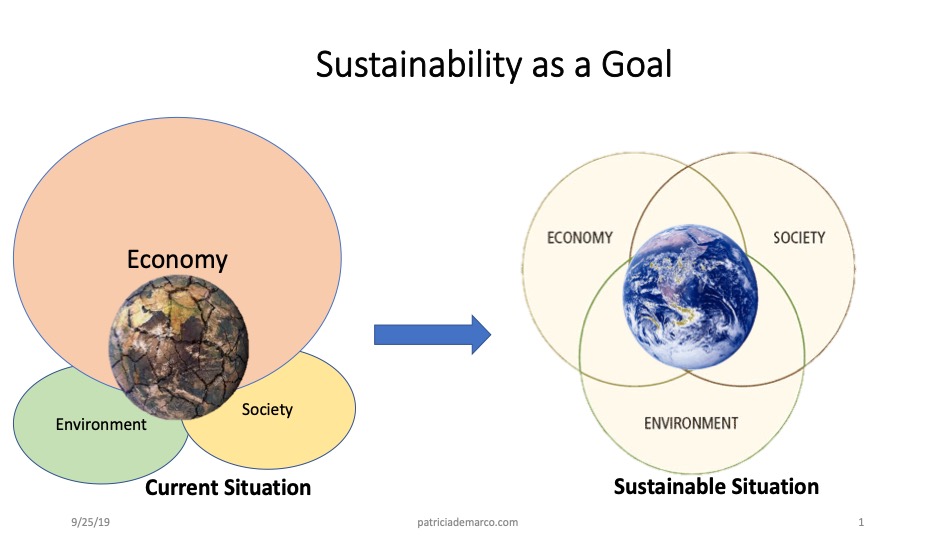
Call to Action: Sustainability as a Goal

First, manufacturers must be held accountable: Break Free From Plastic Pollution Act of 2021

Second, Test for health effects before commercial production.

Third, educate chemists, engineers and industrial manufacturers about living systems.

Finally, be an active citizen. We can all act as empowered consumers. Americans discard 33.6 million tons of plastic a year average of 286 pounds of waste per person per year.  Use your consumer power more wisely:

  • Refuse-single-use items
  • Reduce– Buy in bulk, substitute recyclable and non-toxic materials for non-recyclable
  • Reuse– select refillable products; buy recycled materials-replace single-use items with reusable items-exchange toys, clothing, household décor
  • Recycle– know the rules in your area and separate clean items
  • Rot– compost food waste and organic material

Use your voice as an engaged citizen. Advocate for policies that will address these issues directly in your community, in your state legislature and with your Congressional Senators and Representatives. Your vote is your voice, and you have a responsibility as a citizen to hold the people who purport to represent you to account. Apathy is our enemy.

On this Earth Day 2024, I savor the beauty of the world around me now, and I pray again in my old age for the surge of care and concern for the Living Earth and for our future that will override partisan politics and corporate greed.


2024: A Pivotal Year for Action

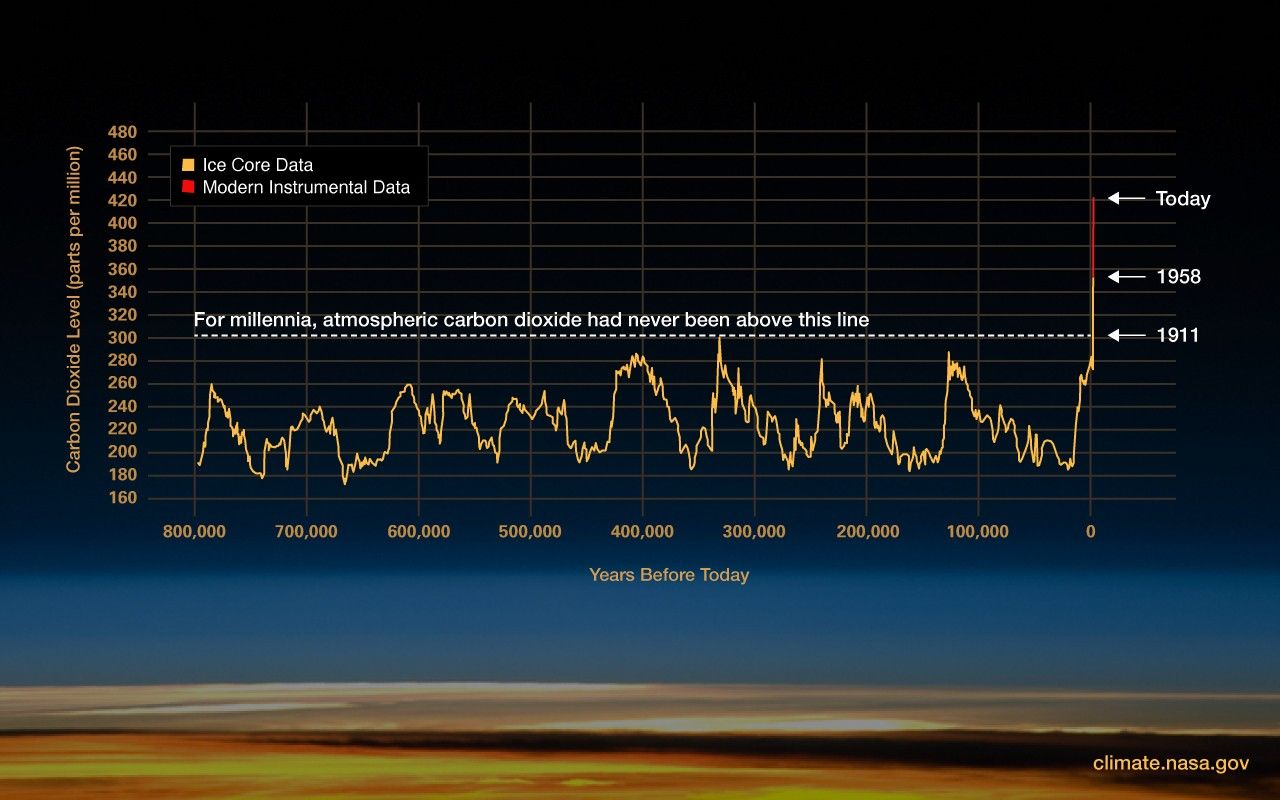
This is a pivotal year in many ways, especially in the urgent need to make the policy U-turn from an extractive to a regenerative economy. Without the restructuring of our economy, and indeed our civilization, away from fossil fuel combustion within the next five or six years, the climate tipping point may be irreversibly crossed. 2023 was the hottest year in recorded history, with many regions experiencing unlivable conditions for at least part of this year. https://climate.copernicus.eu/copernicus-2023-hottest-year-record Conditions will only worsen if we continue the slow walk on climate action.

Engaged and informed citizen action has never been more important.

Growing from the Petrochemical Lunch and Learn Series of 2023, we saw great interest in further exploration of environmental-related health harms and how to address and prevent them. I am partnered with the Black Appalachian Coalition (BLAC) and with the Ohio River Valley Institute to dive deeper into the connection between environmental pollution and our health. https://blackappalachiancoalition.org/
Our first sessions of the series are:

  • February 15 – Health Is a Human Right
  • March 21 – Air Pollution: Sources, Health Harms, and Mitigation
  • April 18 – Water is Life
  • May 16 –  The Land Beneath Our Feet

This series of workshops empowers people with information and guidance for action, especially in communities affected by petrochemical and extractive industries. A healthy environment is necessary for healthy people; it is a human right for people to have clean air, water, and access to health care.

Register here: https://us02web.zoom.us/meeting/register/tZApcuqqrz0vGdSlxRBjkfkT4FusY64Cpz_2?blm_aid=0#/registration

Personal Focus for 2024:

I have ended my term as an elected official on December 31st 2023., and I have been appointed to the Forest Hills Community Alliance, the community development corporation for Forest HIlls.  To structure and organize my consulting activities,  I have joined The Main Street Associates in Braddock as a Principal Associate.https://www.themainst.org Work here includes developing Community Benefit Plans and Agreements required by grant recipients under the Inflation Reduction Act and the Bipartisan Infrastructure Law. I have a focus on the regulatory infrastructure necessary to promote and enable renewable energy systems to thrive in PA. Shifting from a central fossil fueled power station with distant customers must give way to a Distributed Energy System. We are working to build a shared prosperity for our communities.

I continue writing as a Pittsburgh centered author. ReImagine Appalachia- Healing the Land and Empowering the People is In Press now. I have two new writing projects. I am collecting stories and resources to develop the story of the Mon Valley- its past and its future as a journey from the industrial extractive era to the clean manufacturing era. With the passing of my Aunt Rosa, I received the mantle of Matriarch of our Family. With this honor, I will be collecting the multi-generational story of our family from the mountains of Campolieto Campobasso in the Abruzzi region of Italy to the interwoven branches across America.

This will be a year of challenges and trials. Our country seems painfully divided and polarized. But we can come together as a people affirming what is good and true in our culture; learning and sharing with those who bring tradition and wisdom to bear on our common problems, and restore the attribute of treating each person politely with dignity and respect. Without justice, there is no peace. Without compassion, there is no healing. We can build a shared prosperity, a better future, if we work together and respect the laws of Nature as a guide to our way forward.


Metamorphosis- A model for our way forward

Metamorphosis

August 2019

The monarch butterfly has become an iconic emblem of the need to preserve the environment.  As insect populations decline from loss of habitat due to climate change and from broad use of pesticides and herbicides that are acutely toxic to pollinators, people have become more concerned. Pleas for help now fall on deaf ears at the EPA where industry influence has constrained controls on wide use of neonicotinoids, glyphosate, and dicamba.  Pollinator populations are crashing, with terrible consequences for food production. A world without insects would be dreary and uninhabitable as these creatures are essential parts to many food chains and essential ecosystems.

Barb Martin at the Sunny Plot

It is encouraging that individual efforts can make a significant difference in the outcome of this sad story.  In my home town of Forest Hills PA, Barbara Martin and the Late Bloomers Garden Club made a deliberate effort to increase the habitat for pollinators in the public gardens the club maintains.  Individual members also began planting specifically for pollinator-friendly gardens. Milkweed cultivation became very popular.  We all send pictures around celebrating the latest development- Monarch egg- laying, caterpillar sightings, chrysalis formation! We await the first emergence to be documented as a new generation of adult butterflies joins the hopefully growing throng. We share the small tragedies of caterpillars killed by stinkbugs or cadis fly attacks. The gardens are now scenes of high drama, not just places of colorful attraction.

Second instar Monarch caterpillar eating milkweed in Patty DeMarco's garden
Third instar Monarch caterpillar on milkweed in Linda Hyde’s garden
Monarch chrysalis photographed by Barb Martin in her garden
Monarch adult emergent in Barbara Martin’s garden

Metamorphosis thus tracked and observed is revealed as one of the wonders of nature. Metamorphosis is the process through which insects, such as butterflies, develop from the egg to caterpillars, which molt two or three times as they grow, to pupate in a chrysalis, and then emerge in a totally different form as a butterfly. All of the fuel and resources necessary for the final adult butterfly form are contained in the caterpillar.  You can think of the caterpillar as an eating machine devoted to storing fat, and a butterfly as a flying machine devoted to reproduction. The special cells that become the organs and parts of the butterfly are clustered behind the head in the caterpillar- small “imaginal discs” of specialized cells that grow slightly, but wait until the chrysalis forms to become active. During pupation, the stored resources the caterpillar made become the fuel for growth and development of the organs that will be evident in the butterfly. It is an elegant manifestation of nature!

Metamorphosis is also a good descriptor for the changes our civilization is facing with the existential challenges of climate change and global pollution. We have grown our industrial age on the resources extracted from the Earth – coal, oil, and natural gas – and consumed them with explosive effect on the capacity of the economy to support growth…at least for a while.  Now, after roughly 100 years since the beginning of the industrial revolution, we are hitting the limits of growth.  Not growth as usually defined in economic terms, but growth in terms of keeping the balance of the life forces of the Earth.  Unlike the caterpillar, human society has no signal to trigger the transformation to the next stage. We must listen to the voice of the Earth warning of the limits to growth in its current mode. The way forward cannot pursue the same path as the past.  Just as the munching caterpillar is transformed into a flying creature, we need to transform our civilization from a rapacious converter of raw material into trash into a civilization devoted to preserving and sustaining the life support system the living Earth has provided to us.

The tools and resources necessary for the transformation to a sustainable civilization are at hand. This is not a technology issue. It is an issue of values and ethics, of recognizing that we have reached, perhaps even exceeded the limits of growth in this mode.  I share here the wisdom of Donella Meadows, one of the authors of The Limits to Growth.

People don’t need enormous cars; they need respect. They don’t need a closetful of clothes; they need to feel attractive and they need excitement, variety and beauty. People need identity, community, challenge, acknowledgment, love, joy. To try to fulfill these needs with material things is to set up an unquenchable appetite for false solutions to real and never-satisfied problems.[1]

If we really look at the way nature manages healthy systems, we see the balances among growth and decomposition and reconstitution.  In the great cycles of life, nothing is wasted and every part is interconnected with other parts to make a complex system that changes and evolves in succession. Human civilizations in past times have sustained a harmonious existence in nature for thousands of years, as the indigenous populations in many diverse parts of the world have illustrated. Modernizing such cultures has rarely achieved a similar balance.

The elegance of natural systems and the absolute economy of resource cycles in nature can inspire our future ways. As the monarch flutters through the milkweed in the garden, I am thankful for the efforts of my friends and of so many people from Mexico to Canada who are stepping forward to provide sanctuary for these amazing wanderers. Because their life cycle spans a continent, the healthy presence of monarch butterflies gives hope that we can restore the health of our own life support system for our children and the children yet to be born in the 21stcentury.


[1]L. Hunter Lovins et.al. A Finer Future – Creating an Economy in Service to Life. New Society Publishers. B.C. Canada. 2018. Page 27


1 Comment

AESS Wlliam Freudenburg Lifetime Achievement Award Acceptance- Moving from Awareness to Action


Association for Environmental Studies and Sciences Meeting, Tuscon, AZ, June 23, 2017

Patricia M. DeMarco, Ph.D. Visiting Researcher and Writer, Carnegie Mellon University, Senior Scholar at Chatham University and Council Member of Forest Hills Borough Council, 2016-2020 was given the 2017  William Freudenburg Lifetime Achievement Award.

Moving from Awareness to Action

It is with great humility and gratitude that I accept this award made in honor of AESS founder William Freudenburg. I did not have the pleasure of knowing him, but in looking at his work, I recognize a kindred spirit in the battle to connect the systems thinking of ecology and the problems of society.


Receiving this award has surprised me because mine has not been a traditional academic career. Indeed, a promising beginning in the early days of molecular genetics was derailed when I stepped off the tenure track for four years to have two children in close succession. Then I found out that there was no way to go back. Receiving a doctorate in biology prepared a person to expect a career in research and teaching where merit is determined by the number of peer-reviewed publications, the size of research grants received and the number and prestige of graduate students mentored. All of that was suddenly closed to me. I was supposed to become a nice doctor’s wife doing good works and keeping a place in society. Right! I was looking through the newspaper for jobs and came across a small advertisement in the Hartford Courant: ”Vacuuming- $3,000 per hour” from Northeast Utilities. It turned out to be a call for people to be trained to vacuum up radioactive spills at Millstone power plant, and I was deemed unqualified. So I sent a neighbor’s 20 year-old son to collect all the paperwork and SIGN NOTHING, and I took the whole thing up to the Connecticut Legislature Energy and Commerce Committee and asked for an investigation. As a newly minted Ph.D. in genetics, I held my own with the Northeast Utilities lawyers, and legislation was passed for nuclear power plant workers protection.

William Freudenburg Lifetime Achievement Award

I finally found my place in society: as a translator between lawyers, engineers and economists; as a citizens voice for policy to protect workers and communities; as a policy analyst bringing science to weigh on energy, environmental, and social justice actions. The skills acquired through a thorough liberal arts education and the discipline of achieving a doctorate, post-doctoral research position and fellowship in biology turned out to be transferable to a wide array of non-academic pursuits. I struggled throughout my career to maintain connections to the academic world I love.

If I have been successful in these endeavors at all, it is because of the roots of my training. First, I inherited my Father’s poet heart and understanding of the power of well-chosen words; from my Mother, the spirit of rebellion to stand for those without voice and the value of organizing. Most critically, I was raised in an environment that encouraged curiosity and discovery under the tutelage of my wise Nona whose lessons in patience, generosity and compassion crossed generations. Hers was the lesson that sustained my course when roadblocks loomed: “The men may rule, but women govern,” she told me. I watched how all the major decisions of the family took place over the dinner table on Sundays, my Pop decreed, but my Nona guided the discussion that shaped his pronouncement.

I want to comment for a moment on the importance of role models and the inspiration for young women to enter sciences as a lifelong pursuit. The role models of my life were first Rachel Carson whose book Silent Spring I received as a high school graduation present. I had read The Sea Around Us years before when traveling by ship from Brazil to New York. Her words resonated so deeply because we had often lived by the sea as my Father’s job in the diplomatic service took him around the world. As I graduated from high school, Rachel Carson’s success flickered in my mind as a beacon. Second, I was inspired by Eleanore Roosevelt. I had met her briefly as a seventh grade student when my Father took me to hear her speak at the University of Pittsburgh. Later in my time of despair after losing my academic path, I took heart from her courage in speaking out to the world. Her biography moved me to develop my own voice as a speaker and as a public figure. Finally, Connecticut Governor Ella Tambussi Grasso showed me the tough, hard edge of public policy. As one of her technical staff in the Office of Policy and Management, I learned the importance of listening to the voices of the people. She liked to hold “public hearings” on the call-in radio talk shows, to the great consternation of the lawyers: “but Your Honor, this will not be on the record!” to which she replied “How do I know what matters “on the record” if I don’t know what the people think?” She sent me to the National Governors Association deliberations on the low level nuclear waste compact with her staff attorney and in sending me off she said, “Being female is a fact of life. What you do with it is up to you. Cut your hair, get out of those high heels, buy a red suit, and get a briefcase. And be sure you ask the toughest questions in a loud strong voice.”

In receiving this award I have puzzled over my connection to the academic world. While Will Freudenburg made great efforts from within academe to reach into society, my problem has been the reverse. I have been immersed in society, bringing academic training to the problems encountered, and have had to reach into the academic world to remain connected. Of the many colleagues I have worked with over the years, Dave Hassenzahl while Dean at Chatham University and Terry Collins, the Theresa Heinz Professor of Green Chemistry at Carnegie Mellon University have helped me in bridging this divide. Mark Collins at the University of Pittsburgh gave me an adjunct teaching position for a course on directed study in science, ethics and public policy, which became the basis for my book.

The situation of the world today has never needed more advocates and systems thinkers to address the confluence of problems humanity has wrought upon itself and upon the whole living Earth. I believe that we who study ecosystems and sustainability have a unique capacity to shape a new direction toward solutions.

In a world wildly out of balance from the ideal of sustainability where environment, economics and culture are mutually supportive, the economic parameters dominate all else. The problems of our time derived from human enterprise – global warming and global pollution with synthetic materials – are not technology problems, for many of the solutions are well known and within reach. We are facing an ethics problem.

I would like to share a paragraph from the opening chapter of my book, Pathways to Our Sustainable Future -A Global Perspective from Pittsburgh:

“The complex interconnections among living things form Earth’s life support system, necessary for all of today’s creatures and for future generations – fresh air, clean water, fertile ground and the biodiversity of species that comprise the interconnected web of life. The challenges of climate change and chemical contamination present a call to preserve the living Earth. It is a call to temper the prowess of technology with wisdom and precaution to protect Earth’s living systems. It is a plea for justice for those who will be most acutely affected, the non-humans and the unborn whose voices are not included in the debate, and those who are disproportionately vulnerable. It is a plea for accountability in the way people have used the natural resources of the earth for short-term benefits. It is a plea for life to exist.”

It is time for us in the sustainability profession to move from awareness to action. Our path cannot remain within the academy, safe in the halls of universities and colleges. Communicating important findings about the state of the living systems of the Earth must reach beyond the peer-reviewed journals that are the currency of the academic realm. In a political atmosphere charged with “fake news” the line between reality and fiction has blurred. But the laws of Nature are not negotiable. Chemistry, physics and biology will prevail regardless of political declarations or legislated stupidity.

We as scientists have a tremendous task to bring facts to the front of the discussion, to engage the conversation not only in the classroom but also in the living rooms where families gather, in the churches and social gatherings, in the union halls, in the neighborhoods where people talk to each other. Climate change is one of the most pressing issues of our time, but it is not discussed. We need to break it down so it is less intimidating. We can begin to understand how to preserve the gifts of this living Earth for another generation.

There are four ways to move from awareness to action effectively.

  1. Set an example, and talk about it. We are facing global challenges of climate change and pollution, so people think their own efforts are too insignificant to matter. It all matters. Every plastic bottle dropped on the street can end up in the great plastic gyres of the oceans. Use your own non-plastic bags, and give the little homily to the vendor. Decline the BPA laced receipt, and ask the vendor to wear gloves to protect their own exposure. You can imagine millions of ways to do this. Street theater works! Make it OK for successful white guys in business suits to bring a recyclable bag to the store. When building new campus or municipal facilities, use a net zero energy design and include citizen information in the lobby. Inspired by the Phipps Conservatory Living Building and the Chatham University Eden Hall Campus, my town of Forest Hills Borough is building a net zero energy municipal building. So far, four other communities have come to us asking for ideas.
  2. Build common ground. The Yale Climate project described six Americas response to climate change and environmental issues. But in spite of differences in attitude and perception of risks, all people share a need for fresh water, oxygen rich air, and access to safe and nourishing food. All have a care for their children’s future at some level. Find ways to reach across the dividing gulf of political ideology and reach common concerns. My colleague Kirsi Jansa, a film maker and journalist from Finland, has developed 12 Sustainability Pioneers episodes as 10 to 12 minute videos. We combined our efforts into a five-session course called “Sustainability Pioneers-Climate Conversations” given as an adult education class in the OSHER Life Long Learning Institute at Pitt and Carnegie Mellon University. Each session has a short discussion of facts, followed by a video then a class exercise where the participants did role modeling. And we sent them off to practice and report back how the conversations went. By the end of five sessions, nearly every student had some success in having a climate conversation as part of a daily routine. You can find the Sustainability Pioneers videos and the class for free on my web site https://patriciademarco.com/sustainability-pioneers-community-conversations-class/ or on Kirsi’s web site sustainabilitypioneers.com
  3. Reach out to those who are not at the table. The environmental NGOs are mostly headed by white men, and the environment movement in general has been characterized as the domain of left-leaning, spoiled, white, rich people, mired in 1970s thinking. But all around us, the environmental justice issues and the social justice issues involve much broader communities. The people affected by a shift from fossil based energy and commodity production hold a disdain for “tree huggers” and “snail lovers.” The “Shoot, shovel and shut up” approach to endangered species is alive and thriving. This divide was never clearer to me than at the demonstrations around the EPA hearing on the Clean Power Plan in Pittsburgh. 3,500 United Mine Workers sent off by Governor Corbett flooded the street in waves with uniform T-shirts and pre-printed signs chanting in cadence with a sound truck. Clustered on one corner of Grant and Sixth, were a motley gathering of about 300 environmental activists, mothers with toddlers in strollers, Buddhists giving out free ice cream, and Mayor Peduto urging a view to the future. I stood on the coal miner’s corner with my friend, labor historian Charlie McCollester who held a sign that said, “When Blue collar workers fight clean earth health we are all doomed.” Following that dramatic day, I sat down with Charlie, and we discerned together that what the miners are protesting is not against the environment, because they are indeed the most viciously affected victims of the effects of mountaintop removal mining. They are protesting out of fear for their future. What becomes of their pensions when no more coal miners pay into the system? How will they support their families? What will become of them when they get sick, as they inevitably will from being in the mines? We hatched a plan to help working people visualize what a transition can look like to a more sustainable future with a radio program called “Just Transitions- Labor, Environment and Health.” On the Union Edge- Labor’s Talk Radio Station twice a month I bring guests to talk about how communities are making transitions, about environmental and health issues, like reducing exposure of workers to BPA in the workplace, or fracking fluid contamination. After a year of this, we kept running out of time in the 30 minute format, and I wanted to take on more complex issues that would help people visualize what a sustainable future would look like. So, we launched The New American Economy program, which airs every Wednesday from 1:00 to 2:00 Pm EST. Here we talk about emerging issues in energy, food and water, manufacturing and supply chain and transportation. You can find both programs attheunionedge.com We reach 300,000 people a week in 33 cities and have 15,000 to 20,000 podcast downloads a month. If you want to carry the program on your campus radio, or if you have something exciting you would like to share with a working families audience, let me know. Union working people, coal miners, farmers, beauty shop operators, store keepers are highly unlikely to come to a class, presentation or lecture about climate change, environmental health or endangered species. But, they listen to the radio, they send questions, and they talk about it later.
  4. Engage with the community you are in. Ultimately, all of politics is local. Whether large cities like Pittsburgh or small boroughs like Forest Hills, communities need the expertise and engagement of the sustainability academic community. There are many ways to be involved and make a difference. Go to your local governing council meeting and find out what issues they are coping with. It is mostly mundane stuff- police contracts, fire service, swimming pool management, garbage. But some issues are really important- storm water management and meeting health and safety standards, establishing an environmental review for new developments, how pest control is managed, how transportation access and recreational open space are managed, strategic plans for land use, education of children. Democracy is not a spectator sport. Get involved yourself and empower your students with the tools to participate in the public policy process. Take them to a public hearing; teach them about stakeholders and power brokers. Consider running for office yourself.

Know that public policy management is not the same as business management. The public interest goes beyond economic profit. Governing in the public interest must reach the wellness of the community, the collective well-being of people living together in a community of care. Governing in the public interest preserves and maintains the robust functions of the ecosystem that hosts the community. It attends to the needs of the youngest, the oldest and the most needy of the community and preserves fairness and justice but with compassion and kindness to neighbors we see every day and know. It must look to the future and anticipate the needs of those yet unborn whose lives are affected by decisions made today.

We as Americans still think of ourselves as the defenders of “Freedom,” but freedom is not free. Freedom without responsibility yields chaos. And Freedom without accountability yields tyranny. I will close with Rachel Carson’s admonishment to the Garden Club of America: “We must be very clear about what our cause is. What do we oppose? What do we stand for?” Those of us who know have the obligation to speak. Those of us who know have the obligation to lead. Thank you.