
Patricia DeMarco Ph.D.

"Live in harmony with nature."


2 Comments

WE Are the Clean Energy Revolution

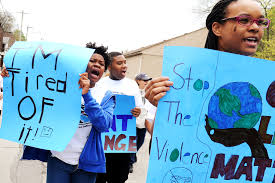
June 24, 2016. The March for a Clean Energy Revolution filled the streets of Philadelphia from City Hall to Independence Hall with about 10,000 people from across the country marching and chanting about the issues surrounding climate change on the eve of the Democratic National Convention. The anger and frustration with a political system that has ignored or opposed actions to reverse climate change rose in waves of passionate demands: “Stop Fracking Now!” “We Are the Revolution- Go Solar Now!” “Stop fracking wealth and protect public health!” People gave voice and testimony through their presence to their outrage over laws that protect corporations’ interests over workers’ health, profit multinational corporations while destroying communities’ water, land and air, and subsidize fossil fuels while placing roadblocks for renewable energy systems.

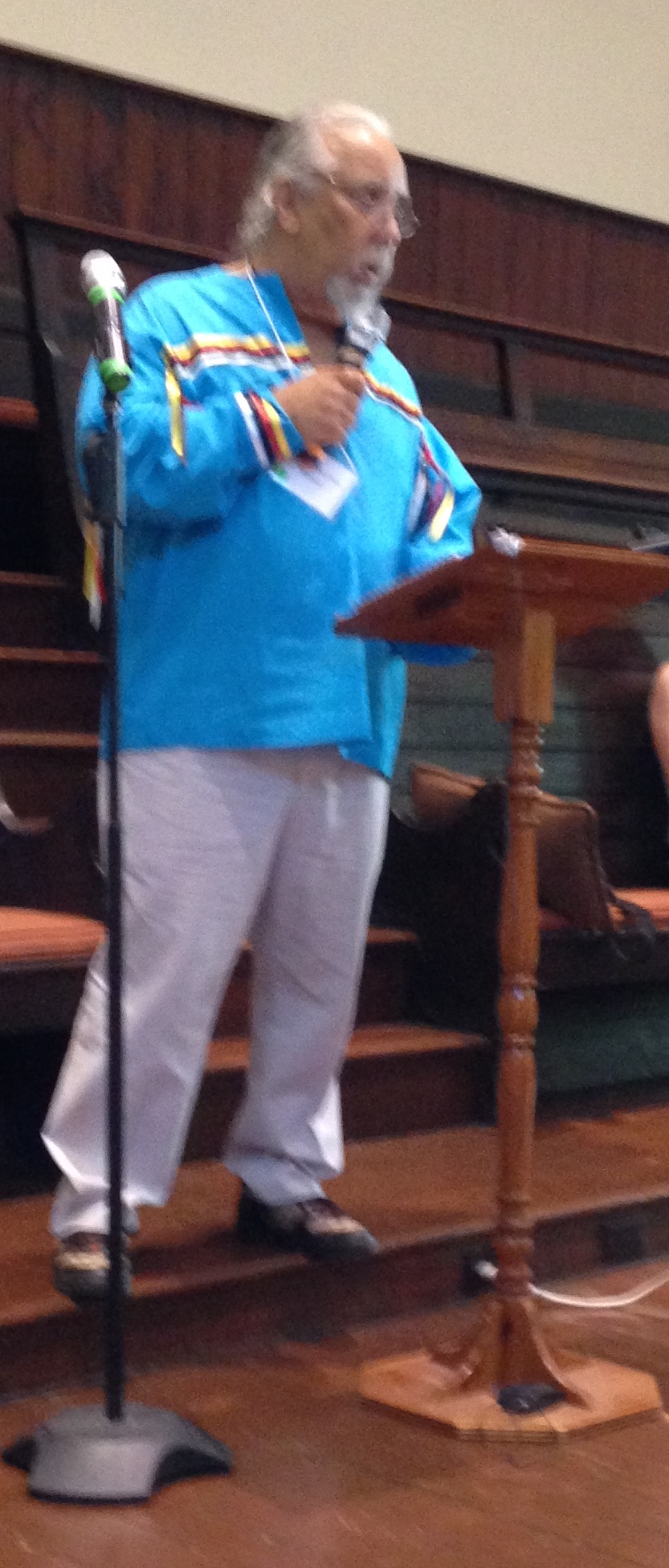
Many of the marchers spent the previous day at the Summit for a Clean Energy Revolution at the Friends Center. Chief Perry of the Ramapough Lunaape Nation set the tone of the whole day by lifting up the pleas of over 200 indigenous peoples for all people to return to the old ways based on an ethic of respect for “our Father Sky and our Mother Earth.”

Chief Perry, Ramapaugh Lunaape Nation opens the Summit for a Clean Energy Revolution, July 23, 2016

Chief Perry, Ramapaugh Lunaape Nation opens the Summit for a Clean Energy Revolution, July 23, 2016

Powerful stories punctuated the day:

  • Robert Nehman told of the effects of sand mining that destroys formations over one million years old to grind into sand for the fracking fields in states distant from Iowa and has workers suffering from silicosis.
  •  Ashley McCray, Absentee Shawnee Tribe-Ogala Lakota Nation, spoke of her decade of protests against the threat from gas pipelines and the infrastructure of fracking that had shaken her lands for ten years with earthquakes, pipeline spills, and the noise, air and water pollution that fracking brings – protests only recognized when richer white neighborhoods were affected also.
  • Diane D’Arrigo, of the Nuclear Information Research Service, described the environmental injustice associated with nuclear power from uranium mining through the enrichment process to power plant operations and fuel management –all steps of the process produce radioactive wastes that fall disproportionately on Navaho lands, and on people in disadvantaged communities.
  • Sandra Steingraber  documented the health effects of fracking noting that 15 million Americans live within a mile of fracking operations and that incidences of asthma in these areas is four times higher than background levels. (All of the presentations will be posted by Food and Water Watch – Summit for a Clean Energy Revolution)

The Clean Energy Revolution Summit: Breakout Session #3- A Visionary Ambitious Transition Plan – with Arjun Makhijani, Russell Greene, Micah Gold-Markel and Patricia DeMarco.

Remarks of Patricia DeMarco:

Climate change is the existential issue of our time. The fact that the earth’s climate is changing rapidly in response to human actions since the Industrial Revolution presents a series of ethical and moral challenges. This Clean Energy Revolution is not a technology problem… it is an ethical problem. The laws of nature – chemistry, physics, and biology – are NOT negotiable. It is we who must change our behavior to adapt the way we interface with the natural world. The pace of change accelerates as warming of the atmosphere and increasing acidity of the oceans change the geochemistry of the Earth. We must move quickly to reverse greenhouse gas production, or life as we know it will not survive.

The technology for moving the global economy from a fossil base to a renewable energy base is already in hand. No super innovation is required to begin the conversion to a clean energy future. Climate change is essentially an ethical issue on four levels:

  1. Intergenerational justice: this generation as a moral obligation to the unborn children of the 21st century to preserve the life support system provided by the living earth – oxygen-rich air, fresh water, fertile ground and the biodiversity of species of which humans are but one part.
  2. International justice: people living in the industrialized northern hemisphere are the principal causers of the escalation in greenhouse gas emissions, but the most immediate devastating effects from sea level rise and drought are being felt most acutely by people who did not contribute much to the problem – people from island nations, equatorial countries and arctic communities.
  3. Local environmental justice: people living close to fossil fuel industries are most acutely affected by health effects from pollution, community devastation from mining and waste disposal, and safety hazards from spills, explosions and water and land contamination. Low income and disadvantaged communities suffer the impact while the profits benefit distant corporations.
  4. A just transition for workers: For the workers and retirees of the oil, gas and coal industry, the transition to a renewable and sustainable energy system presents a challenge that is not covered by bankruptcy laws. Corporations like coal companies that see a fall in their markets have bankruptcy protections to keep their shareholders whole, but the workers are “offloaded’ to shell corporations that go bankrupt leaving workers without pensions, health benefits or a way forward for their children and families. This practice may be technically legal, but it is not right!

These ethical issues must be addressed in a comprehensive way to mobilize the full might and ingenuity of our country on the problem of climate change. A change in attitude to make climate change an urgent issue for every person, every day, every way can begin to turn the American lifestyle from one of conspicuous consumption and profligate waste to one of preservation, conservation and wise resource use. An energy policy based on “all of the above” including fossil and nuclear resources is not sufficient to the magnitude of the task. If you are headed toward a cliff at 55 miles an hour, slowing to 30 miles an hour will just delay the time before you drive over the edge. We need to take a new direction in energy policy. The following actions can set a beginning for a renewable and sustainable energy base to the global economy:

  1. Leave fossil fuels in the ground. Eliminate the subsidies for fossil fuels, including investment and production tax credits, below market leasing on federal lands, federally funded research and development on fossil fuel extraction and combustion, trade advantages, and investments in fossil resource infrastructure such as pipelines, export facilities and processing facilities. Invest in land reclamation, watershed restoration and community re-development instead. Focus on efficiency improvement and retrofit for existing fossil-fueled buildings and operations.
  2. Support and promote renewable and sustainable energy systems with the full force of law. Adopt federal standards promoting passive and active solar design for all new buildings. Provide technical assistance and community development grants for renewable energy systems on all public buildings. Stabilize the business environment for renewable energy with permanent investment and production tax credits for renewable resources and the associated infrastructure to support American manufacture and production of components.
  3. Plug the “Haliburton Loophole” immediately to curtail the harm to workers and communities from its exemptions for hydraulic fracking from the Clean Air Act, the Safe Drinking Water Act, the Resource Conservation and Recovery Act, and worker protections under Occupational Safety and Health Administration. No industry should be allowed to operate under suspension of basic public health protections.
  4. Establish a “Superfund” for displaced coal miners and fossil fuel industry workers. The pension benefits, health benefits and four years of retraining with salary support for families can redirect the human capital of workers with dignity and respect. Bankruptcy protections must provide for workers first, not only stockholders.


Addressing climate change will require empathy for the plight of people most acutely affected, whether they are next door, across the ocean, or yet to be born. It is time to stand up and demand an energy policy that protects our children and their grandchildren rather than the corporate greed of fossil fuel developers. The solutions are at hand. We need only the courage and commitment to pursue them as rapidly as possible, not as slowly as is expedient. Be the leader among those you reach. WE are the Clean Energy Revolution!

Hear the NPR interview here: https://stateimpact.npr.org/pennsylvania/2016/07/24/clean-energy-advocates-urge-dnc-to-ban-fracking-promote-renewable-fuels/

Marching with friends from Marcellus Outreach Butler

Marching with friends from Marcellus Outreach Butler


Leave a comment

United We Stand. Divided We Fall.

The fabric of our society is torn by hatred, frayed by distrust, and tattered by fear. But the basic structure of America is stronger than any in the world. The Constitution and the rights and obli…

Source: United We Stand. Divided We Fall.


Leave a comment

United We Stand. Divided We Fall.

The fabric of our society is torn by hatred, frayed by distrust, and tattered by fear. But the basic structure of America is stronger than any in the world. The Constitution and the rights and obligations it details have stood for 240 years guiding a society governed by the consent of the people under the rule of law. The rights entailed in the Constitution have explicit or implied responsibilities which, taken together, represent a social contract that binds all citizens in a common journey. America was meant to be a government “of the people, by the people and for the people.” Unfortunately, this high aspiration has been subverted and corrupted by forces of greed and hatred.

The second Amendment of the Constitution “right to bear arms” does not intend the unprovoked slaughter of innocent citizens, nor the shooting of people in the streets over trivial altercations. When did it become acceptable to shoot first and ask questions later? Such evidence of the breakdown of the basic compact of a lawful society grows from frustration, inequity and fear.

The weight of corporate and special interests over the general public interest in political decisions is manifest in both the nature of laws adopted and in the blockage of laws that protect the public. One especially insidious example is the Energy Act of 2005, with its specific exemptions for hydraulic fracturing from the Clean Air Act, the Safe Drinking Water Act, the Resource Conservation and Recovery Act, and certain provisions of the Occupational Safety and Health Act. Justified by an “all of the above” energy strategy, this set of exemptions has exposed the citizens of 39 states to the environmental and health effects of fracking. As the “anecdotal” evidence continues to accumulate, people grow increasingly frustrated when the environmental regulatory authorities appear to do nothing. Communities face failure of water supplies; workers develop illnesses from exposure to harmful wastes and by-products; fracking facilities appear next to schools, residences and business districts. The power of a regulatory agency is limited by the authorization in the law, so when the law specifically exempts an industrial activity from regulation, the regulatory agency has no authority to curtail that activity. The influence of corporations such as Halliburton, with the specific influence of Vice President Chaney, pushed through a law that runs explicitly counter to the public interest. Now, corporate interests in developing deep shale fossil gas at the expense of public health and safe drinking water seems entrenched in national energy policy as a “bridge fuel” to an undefined future. A few get rich, many get sick or lose their homes.

Corporations have received increasing rights and power by the action of the court, most especially in the Citizens United decision issued in September 2010. This decision increased the ability of corporate interests to use financial influence in elections, directly and indirectly. As more weight of corporate and special interests prevent actions favored by large majorities of citizens, trust in the ability of lawmakers to respond to the needs of people continues to grow. Failure to adopt any form of gun laws in the face of escalating community violence is one example. Failure to address climate change in the face of growing evidence of current and future harm is another.

America touts its position as the land of the free and home of the brave. But, freedom requires responsibility. Freedom of speech includes the responsibility to listen with respect to other opinions. The right to bear arms for self defense entails the responsibility to ensure safe use, not an entitlement to perpetrate violence. Freedom unrestrained by accountability and responsibility for actions results in chaos. Solidarity and empathy among Americans as people in a shared journey makes us a great country. America’s diversity is our strength. The income inequities, frustration with corporate greed over public well-being, and fear for the future are the seeds of our destruction from within. Standing together to demand justice and equity, with compassion and respect for each other, and with concern for the children of the future will return power to the people. Our children lead in this struggle. I take courage and inspiration from the Woodland Hills Academy

Woodland Hills Academy eighth graders March on April 23, 2016

Woodland Hills Academy eighth graders March on April 23, 2016

eighth grade students who organized a community march and forum “Guns and violence do NOT define US!” They deserve a better future.

This is a time when people need to reach out to restore the trust in each other as fellow citizens. This is a time to work together to restore the priority of the public interest at all levels of government. This is a time to work together for justice and equity. Without a base of mutual respect, beyond tolerance at a distance, there will be no peace. We are strong when we stand together, but vulnerable when we allow hatred and fear to divide us.


1 Comment

Memorial Day 2016

We do not know one promise these men made, one pledge they gave, one word they spoke; but we do know they summed up and perfected, by one supreme act, the highest virtues of men and citizens. For love of country they accepted death, and thus resolved all doubts, and made immortal their patriotism and their virtue.”

– James A. Garfield
May 30, 1868 Arlington National Cemetery

These words were spoken on the first “Decoration Day” at a ceremony where people decorated the graves of Union and Confederate soldiers who died in the American Civil War. Now called Memorial Day this national holiday honors all the people who have died in service to the country. It is a good time to think of legacy and sacrifice. It is a good moment to reflect on what divides people from each other and what unites us in common purpose.

America has its finest hours when people unite for a cause with honor and purpose to improve human conditions or to right wrongdoing. We are a country with deep roots in the value of government acting as an agent for the good of all the people. Many came here to escape persecution, injustice, tyranny and suppression. This has been a land of hope and aspiration, a place where dreams can come true with “freedom and justice for all.” The lofty aspirations of the country’s founding hold modern Americans to a high standard because in the intervening 230 years the world has changed, expectations have changed, and the goal of “freedom and justice for all” is not as transparent as it used to be.


Freedom is not without a cost. To have freedom and justice together requires laws that society agrees to abide by to assure fairness. Otherwise people exploit their own advantage at the expense of others. Some people bully and tyrannize others. To be a just society requires that those with power be held accountable for the justice of their actions within the law. And having a just society requires that the laws protect the people. The People. That means real people with hearts that beat and love and aspire, who sacrifice to achieve their dreams and hopes for their children, who bleed and die for what they believe in if called in times of need. People like my Father, Michael DeMarco, paratrooper in Donovan’s Devils in World War II; Both of my Grandfathers, Angelo DeMarco who fought in Ethiopia in World War I, Michael Strutzel who fought in France in World War I. They fought for the aspirations of their children against opression and despair. Freedom without responsibility and accountability leads to tyranny and chaos.


Memorial Day weekend also calls to mind Rachel Carson’s birthday, May 27, 1907. She called for people to recognize and include in the definition of freedom the defense of the natural environment that supports life on earth. Freedom includes the right to fresh water, clean air, fertile ground and the biodiversity of species that constitute the web of life of which humans are but one part. Human survival to the end of the 21st century requires all people in the world to rise in the defense of our own life support system- the living earth. It is our obligation to our children to preserve the earth as a living system for renewal of fresh water, clean air and fertile ground.


This Memorial Day, America honors many who have died in the defense of oil fields; in conflicts over lands where the bonds of civil life have frayed and torn over massive changes in the conditions of their land from climate change; and in American cities and towns where civil strife rises with violence over injustice. This Memorial Day it is a good opportunity to reflect on what true greatness in a country means. Care for the people. The People!


Care for the conditions that give equity and justice to all the people, not only those with money and power. Care for the rights of people for a fair wage, safe working conditions, and communities where children can thrive and learn. The responsibilities of freedom include weaving a fabric of laws that society abides by with the confidence that society protects the life support system – air, water and land – as well as the most vulnerable and those in need. The country was founded to secure the “Blessings of Liberty to Ourselves and our Posterity.” If we are to provide the blessings of liberty to our posterity, we must take responsibility to protect the basic conditions of justice and take precaution in protecting our life support system for our children. Without justice, there is no peace. With out peace there is no hope. Without the Earth, there is no life.


Leave a comment

Earth Day 2016: Facing the Brink of Despair with Hope

April 22, 2016. A soft rain falls on ground dry for over a week, just at the time when trees and perennial plants need water to spur their awakening from winter. Here in Pittsburgh, the prospect of a dry summer bodes caution in planting, and plans for irrigation. But in the great plains and the valleys of California, the fourth year of drought holds dismal prospects for food production and personal comfort. Climate change becomes more and more difficult to deny. Yet, the rhetoric bludgeoning the airwaves from political candidates remains oblivious to reality. From the right, denial of human agency in climate change threatens an acceleration toward destructive actions. From the left, promises of structural remedies face certain defeat in a Congress paralyzed by entrenched vested interests of the fossil industry. In the middle people rise in frustration to clamor for attention to the real needs of daily life – clean air, safe water, secure food supplies, and the dignity of meaningful work. Under all the confusion, the Earth is screaming for relief of the daily insults imposed by human civilization.


The voice of the Earth rising is a song of hope for the future. It resounds in the chants of students to “Save the Planet NOW!” It surges through the bodies of people working together to create urban community gardens and Community Supported Agriculture. It flows with the sun and the wind to power thousands of communities and homes with renewable energy. It ripples through the gatherings of over 100 Mayors as they seek to build resilient cities. It shimmers in the eyes of children who seek a future they can thrive in. The voice of Mother Earth whispers in each of our ears, if we listen for it. The urgency and passion of that voice can empower the people to rise in defense of our own life support system. Nothing less than our own survival is at stake.


The first Earth Day was marked by a confluence of movements coalescing around a movement. The choking smoke of Pittsburgh, burning rivers of Chicago, oil-blackened beaches of Santa Barbara, and fish kills in Mississippi were impossible to ignore. Ten million people clamored for change. The voice of the public outweighed the influence of vested interests to pass laws to protect clean air, safe drinking water, endangered species, and protect from toxic substances in the environment. Many of these laws have received amendments over the years, mostly to offer exemptions, or to weaken specific provisions. In the intervening fifty or so years, the pendulum has swung back to protecting private business interests over public interests. The foundational environmental laws of that time addressed mostly the symptoms of the obvious pollution- corks in smokestacks, stoppers in effluent pipes, liners in landfills, parks and refuges with resource extraction permissions.


It is time for a New Earth Day! – a commitment to save our life support system with tangible actions by 2020. Hindsight 20/20 vision offers ample lessons of ways human civilization has seeded its own destruction. Using that insight to plan forward for a sustainable future will require not a re-tinkering of the 1970’s laws, but a new consensus based construction of laws. The system changes necessary for a sustainable future move the economy from a fossil-fueled base to a renewable energy system, including buildings designed with zero net energy, water and waste elements. Agriculture practices will move away from the pathological addiction to herbicides, pesticides and fertilizers to practices based on restoring fertile ground, wasting less, and reducing the amount of meat in the American diet by half. The endless stream of toxic chemical products and byproducts of consumer goods move away from the resource extravagant industrial practices based on plastics and fossil based polymers to green chemistry solutions inspired by biological systems. Enzymes and bio-synthesis rather than high temperatures and harsh chemical treatments will design consumer products that can be reused, recycled and repurposed in a circular economy to replace the modern culture of converting raw material to trash. These kinds of pathways offer endless opportunities for local jobs that add value and create local economies and strong communities. None of them require new technology, only new values, new choices.


To make system changes requires the will to seek a just transition for people living today, and a commitment to provide a viable planet for our children and their grandchildren. For the interests wedded to the fossil world, laws that change the value of investing in the ways of the future will give greater returns. We face the moral imperative to provide a viable future for the next generation. Preserving the functions of the living Earth guided by laws of nature tested over millions of years will save humanity. Restoring our life support system calls for people to rise in response to the screams of Mother Earth. Renewable energy, sustaining fertile ground, green chemistry – these are the pathways to a sustainable future.


Leave a comment

Reflections on Takashi Morizumi’s “Strange Beauty”


imgres

 March 21, 2016 Spring Equinox – Reflections on Takashi Morizumi’s “Strange Beauty”


“Strange Beauty” autoradiography images from Fukushima by Takashi Morizumi

In the suburbs of Pittsburgh, houses, roads and buildings intrude on the deciduous forest that once covered these hills. Where I live, in Forest Hills, hundred-year-old oaks rise to intertwine branches over the house and yard. Soft snowflakes settle on white daffodils yielding to the warming sun of this Spring morning. The fragile beauty of new growth asserts the vitality emergent from the Earth. Sunlight sparkling through dewdrops on new leaves encapsulates in miniature all that is needed for life. How starkly different from the sparkling radiance captured through the decay of Cesium-137 on objects left abandoned after the tsunami and Fukushima Daiichi disaster in Japan in March 2011. The poignant pictures of Takashi Morizumi, displayed briefly at the Frick Fine Arts Gallery, made the tragedy of that distant place feel close, and unspeakably sad.


Five years ago, the Fukushima Prefecture was rent asunder by a 9.0 magnitude Great East Earthquake and tsunami that shook foundations all along the coast and inundated the Fukushima Prefecture. The nuclear power complex at Fukushima though fortified and built with protections, was no match for the force of the water that poured over the area. As the reactors’ auxiliary generators were inundated by the floods, the emergency systems failed, the cooling systems failed, and hydrogen explosions rent the facility spewing radioactive material across the countryside. The fuel core of two reactors melted, with radioactivity levels so high, even five years after the event, robots sent to take measurements and inspections cannot function. (http://fukushimaupdate.com/radiation-so-high-at-fukushima-tepcos-robots-cant-survive/)


In the aftermath of this disaster, 159,128 people were evacuated from the “exclusion zone” area where the radiation continues at levels unsafe for constant exposure. Cesium-137, with a half-life of 30 years contaminates an area of 11,580 square miles, making the land uninhabitable for at least 300 years. Thyroid cancer rates of 20 to 50 times the national average have been experienced in the Iodine-131 exposed population, especially those who were children at the time of the accident. Iodine -131 has a half-life of only eight days. Its effects can be lessened by immediately giving people iodine tablets to block uptake of radioactive iodine, but enough tablets were not available to all the exposed people. Scientists have called for large-scale independent epidemiological studies to collect better information about the exposure levels and the health effects that may unfold over time. It is difficult during an emergency to collect information systematically, or to respond to the needs of so many people when the basic infrastructure of the society has been disrupted by the twin emergencies of the earthquake and tsunami itself, compounded by the nuclear power plant failures.


Other communities around the world have experienced the tragedy of tsunami and earthquake disasters. The water goes down, people return to their neighborhoods and rebuild, or sell and move on. The compounding complications of the Fukushima Daiichi nuclear power plant failure makes return impossible. People suffer from the grief of separation from their land, the destruction of the human network of communities, and the uncertainty of their fate from unknown amounts of nuclear exposure. The disaster has left a miasma of fear and despair. Once fertile fields of the Fukushima Prefecture lie idle, their topsoil scraped into black plastic bags in an attempt to reduce the radioactive contamination. Even as areas are cleaned, the rain and snowmelt re-introduce Cs-137 from untreated areas. The sea water being pumped into the crippled plants becomes radioactive, and is being stored in thousands of tanks, with much leaking through the bottom to flow into the ocean in a radioactive plume that has not been stopped or contained yet. Plutonium has a half-life of 24,000 years, essentially contaminating the core site of the melted reactors forever. Takashi Morizumi’s images capture the heartbreak of those who can never come home, and the tears of the Earth laid waste for hundreds of years.


The promise of nuclear power, using atoms for peaceful generation of electricity, rings hollow in such a place and time. There are 328 nuclear power plants operating worldwide, 104 in the United States. Of these, 63 are of the same design as the Fukushima Daiichi plants. The Price Anderson Act protects the nuclear power plant operators from liability with a government-backed insurance policy. But what happens to the communities, if the worst does occur? Each power plant in the US has a “spent fuel” pool nearby to store the highly radioactive spent fuel rods removed from the reactor cores. The Nuclear Regulatory Commission fact sheet on nuclear power states, “There are no permanent disposal facilities in the United States for high level nuclear waste.” Several nuclear plants around the world are situated along earthquake fault lines, including the Diablo Canyon plant in California. Even the Fukushima plant remains in the path of future earthquake or tsunami events. There is no way to assure that such disasters will not occur again. The most advanced technology is no match for the full force of nature.


The unintended consequences of using nuclear power technology are subtle. They unfold over long periods of time and the effects are not immediately obvious. Radiation can accumulate in food chains and concentrate in biological systems. Chronic exposures to phytoplankton and zooplankton in contaminated ocean waters, even at low doses, can magnify up the food chain. As the Fukushima Daiichi plant continues to leak, long-lived radionuclides spread through the biosphere. Environmental effects can accumulate over generations. There is no way to be sure what the ultimate effects will be over time. The saddest part of this story is that the power requirements of this mostly agricultural area can be easily met with solar and wind power for irrigation, domestic uses and heating. Generating large amounts of electricity in remote areas to send away to large cities has placed the burden on poorer people, living simply. The injustice of their burden gives pause for the future of nuclear power. The probability of an accident may be very low, and the risk small compared to other kinds of exposures, but in case of a nuclear disaster, the effects are catastrophic.


There is no “Planet B.” We need to take precaution to protect the living earth and the essential life support systems of fresh air, clean water, fertile ground and the biodiversity of species that form the interconnected web of life. In Rachel Carson’s words, “Underlying all of the problems of introducing contamination into our world is the question of moral responsibility – not only to our own generation but to those of the future.” (Rachel Carson. ”On the Pollution of Our Environment” in Lost Woods. Linda J. Lear (ed.) 1998. Beacon Press. Page 242.)


(Summary of remarks made at University of Pittsburgh, Frick Fine Arts Center, March 15, 2016.)


Leave a comment

Green Roofs: A National Policy to Help Address Climate Change

Source: Green Roofs: A National Policy to Help Address Climate Change


1 Comment

Green Roofs: A National Policy to Help Address Climate Change

Roof of Chicago City Hall

Roof of Chicago City Hall

Since 2009 the City of Toronto has required commercial and industrial new buildings to have green roofs. France recently adopted a law requiring new commercial and industrial buildings to have at least partial green roofs and solar panels. This kind of policy direction helps to move the climate change response incrementally forward. As more and more buildings comply with these laws, the detailed refinements in response will begin to emerge.

In the US, many buildings are adopting green roofs as part of a sustainability strategy, but the response is scattered, and financing is an issue in many areas.  The standards and initiatives vary tremendously among the 50 states.

Here is a summary of the benefits of green roofs compiled by the Union of Concerned Scientists

Benefits of Green Roofs

There are so many benefits to green roofs. Here are just a few:

  1. Adding natural beauty and major aesthetic improvement to buildings, which in turn increases the investment opportunity.
  2. Helping contribute to landfill diversion by prolonging the life of waterproofing membranes, using recycled materials, and prolonging the service of heating, ventilation, and HVAC systems through decreased use.
  3. Green roofs assist with storm water management because water is stored by the substrate, then taken up by plants, and thus returned to the atmosphere through transpiration and evaporation. They also retain rainwater and moderate the temperature of the water and act as natural filters for the water that does run off. They delay the time at which runoff occurs, which results in decreased stress on sewer systems during peak periods.
  4. The plants on green roofs do a great job of capturing airborne pollutants and other atmospheric deposition. They can also filter noxious gasses.
  5. They open up new areas for community gardens, commercial and recreational space in busy cities where this space is generally quite limited.

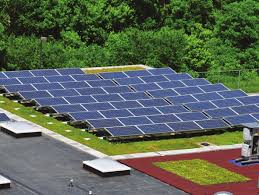
Combining green roofs with solar installations on rooftops has been tested and shown to be mutually beneficial.  See the installations at Scalo Solar, for example. Here the Sunscape rooftop in Crafton PA, acts as a “showroom” for various configurations of solar arrays and technologies, including several versions of green roof installations. The various arrangements are fully instrumented and monitored to compare efficiency and effectiveness. The data stream is available to university students in Pittsburgh for research.images


Leave a comment

Wildtending, Earth Healing, and Gathering and Sowing the Seeds

Dana presents a wonderful and inspiring perspective on our critical role in tending the land. Preserving and restoring the Living Earth strengthens the life support system of the planet. Plants taking inert materials plus free sunshine are the miracle that makes life possible on Earth. Become a true wildtender!

Dana's avatarThe Druid's Garden

Calling all land regenerators, earth walkers, and friends of the weeds!  You can help heal our lands, today, with the resources you have and the love you have to give.  What if, instead of doing less harm or less baad, we could do good?  We could work to heal?  In this post, I’m going to talk about the process of gathering, scattering, and sowing seeds, nuts, and roots in regenerating our lands. This perspective is of the wildtender, the seed scatterer, the weed wise wo(man). This is four-part series on Wildtending that I’ll be presenting over the next month–the first giving the “how to” and philosophy (this post) spiraling from my earlier writings throughout this year. So, grab a handful of seeds, nuts, and roots and let’s get started.

The Man Who Planted Trees

I recently came across a story called “The Man who Planted Trees and…

View original post 4,435 more words


1 Comment

Resolve to Cut Plastic Bags from Your Life in 2016

Between Asia and North America is the Great Pacific Garbage Patch, which is about twice the size of continental United States.  Located inside the North Pacific Gyre, the Great Pacific Garbage Patch is filled with at least 100,000,000 tons of micro plastics,marine debris, and fishing gear. A gyre is essentially a natural vortex in the ocean. Lots of the trash we do not throw away often ends up in the Great Pacific Garbage Patch by wind and ocean currents. The trash is severely harming the marine ecosystems of living things. Plastics leach Bisphenol A , an endocrine disrupting chemical.

garbage gyre in Pacific Ocean

garbage gyre in Pacific Ocean

Plastic bags have been around for about 30 years. The average American family takes home 1,500 plastic bags a year (Natural Resources Defense Council). Americans use and throw away 100 billion plastic bags every year, which requires 12 million barrels of oil per year to manufacture. (The Wall Street Journal). This is a huge environmental problem because the plastic is not biodegradable, a single plastic bag can take 500 years to degrade. The ocean ecosystem is especially hard hit by the vast accumulations of plastic debris.

Sea animals attempt to eat plastic debris, resulting in choking, or intestinal blockage and death.  Sea animals can become caught in plastic debris, such as the webs that bind six-packs of soda or beer. Toxic pollutants absorbed, and transported in plastic waste, when consumed by marine animals become part of the human food chain. 80% of the marine garbage originates on land.  It is time to stop using the ocean as a garbage bin.

For 2016 resolve to stop using plastic bags.  Here are five ways to do that immediately:

  1. Carry your own re-usable bags.  For groceries, it is simple to carry reusable bags, some even adapted for cold and thermal insulated goods. Keep a small collapsable nylon bag for miscellaneous purchases.  Chico makes a wide variety of them, and many places sell them in styles from whimsical to sturdy. Even the French string bag takes little space in a purse or pocket.  Get in the habit of carrying bags to transport purchases.
  2. Use glass containers or jars for storage. These can be used repeatedly, and are recyclable when you finally need to discard them.  They do last a very long time.  I have a row of glass topped wire bale canning jars from the 1920’s to store bulk purchased items like beans and cereals. Use reusable storage containers for things like bread and baked goods.
  3. Recycle. When you must use plastic containers, choose ones that can be recycled, and diligently recycle.  If your community does not have a municipal recycling program, petition to have one started. In America, only 0.5% to 3% of plastic bags are recycled.
  4. Take Responsibility. Set a specific goal to use less plastic packaging.  Make a conscious effort to purchase goods that are not over packaged. For example, buy bulk foods in re-usable containers. Decline to take a bag for items that can be easily transported without a bag.
  5. Hold Producers Accountable. Customers can contact producers to ask for less packaging and more recyclable materials in packaging.  Ultimately, there will need to be a change in the culture of hyper-packaging everything.

It is important to begin thinking through the fate of what we buy.  Do we really need all this stuff? Know that we do really need a healthy living ocean ecosystem! The only way to keep garbage from ending up there is to control what we throw out. Join me in taking a pledge to Cut Plastic Waste in 2016!