Patricia DeMarco Ph.D.

"Live in harmony with nature."


Leave a comment

Democracy is Not a Spectator Sport

May has arrived with a burst of blooming trees and borders, the return of summer birds and lawn signs touting candidates for the spring primaries.  While the latest round of community protest and violence unfolds in real time on television, people sit and make comments either cynical, sympathetic or outraged, depending on their own perspectives. We witness another symptom of society in distress, another plea for help.

I reflect on the differences between today’s protests and unrest and those of the late 1960s.  There are two observations that concern me here.  First, the challenge to authority is specific,not general, precipitated by specific confrontations between an individual and police. Second, the protests have no specific focus or call for action, no equal rights, war protest, environmental protection themes.  The eruption of community outrage and protest we see today marks the call for attention to communities where the advantages of modern time have not penetrated.  Major employers that offer entry level jobs with a career path to promotion are scarce, often leaving the rusting hulks of closed factories as reminders of former days. The communities are isolated physically and culturally from the mainstream of the wider society.  With unemployment in double digits from 14% to 25%, drug trade and other forms of desperation abound, education and public amenities like parks, youth programs, elder care, even basic things like grocery stores and shops are scarce or below par. More resources for policing do not solve such problems. The protests in Ferguson and Baltimore call out for basic human respect, for recognition, for attention and help.

It is not okay anywhere in America for children to have poorly equipped and staffed schools.  It is not okay anywhere in America for children to go hungry. It is not okay anywhere in America for people to see no way out of poverty.  When our priorities place the wealth of corporations over the basic needs of people we are seeding the revolt of the oppressed.

A representative democracy requires the participation of all the people.  Organized protests on behalf of voter registration drives, and calls for elected officials to respond to the actual needs of people can be effective.  Government spending to rebuild the infrastructure of former manufacturing neighborhoods and training the people who live there to do the work would be helpful.  Empowering people to take initiative requires some investment of money as well as social capital.  People need to care about each other and restore a sense of common purpose.

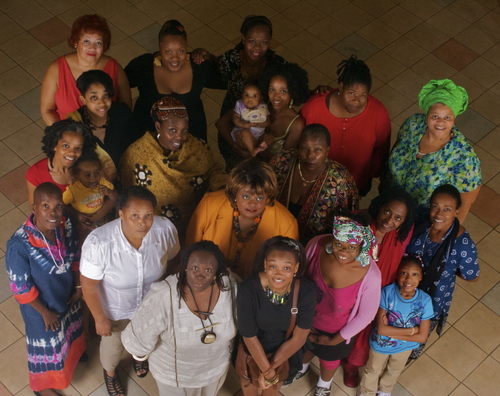
This process can work when people care, receive support, and positive reinforcement.  I take for example the rebirth of the Hill District in Pittsburgh.  It has become a vibrant place full of cultural wealth from the Kingsley Center to the UJAMAA2011+group+shot Collective. (See here some of the Sisters of the Ujamaa Collective visit at http://www.ujamaacollective.org/our-story/)

A restoration based on entrepreneurship and joint action, with urban farming and local investment now graces this area. Supportive policies from the City of Pittsburgh in zoning and community development policies help.  People have to care about each other, and make change a priority.

Democracy is not a spectator sport.  Democracy requires accountability of those who are in power.  Democracy requires taking responsibility for your own actions.  Democracy requires respect for all members of the society.  Democracy requires caring for those who need help, especially children, the elderly, and those who are disabled or ill.  Democracy requires that citizens vote, and hold their elected officials accountable.

In this primary election season, we see in the news the bantering and jousting of the Presidential hopefuls.  But, in every town, every county and borough and state across this country people are stepping out to run for local office.  Many of them stand unopposed.  Look around you, and if you do not like what you see, stand up and speak out.  Local communities have the most direct control of what happens in their own borders.  If you do not like what you see, you have the power to stand up and speak out to make it better.

Democracy is NOT a spectator sport. A government of the people, by the people and for the people requires that the people participate in their own governance.  Get involved, and make the change you want to see happen.  Do what you can with what you have where you are.

I am running for Forest Hills Borough Council in my own town to help build a community that thrives in harmony with nature – equitable, robust, and beautiful. You can do it too.


1 Comment

Down to the Roots- Earth Day 2015

Earth Day is a good time to think about roots. Roots of the plants and trees now shooting forth leaves and flowers, soon vegetables and fruits, and roots of the Earth Day movement. Forty-five years ago the first Earth Day gathered 20 million people from all kinds of causes to call for a stop to the flagrant destruction of our environment.  Everyone from nuclear bomb and air pollution opponents, to civil rights activists, anti-war activists, women’s rights and GLBT rights advocates, and workers rights advocates came together to protect clean air and clean water.  It was a rare moment of unity of purpose, exhilarating, and fresh, and hopeful.

The plethora of foundational environmental protection laws passed during the decade from 1970 to 1980 set a course for the regulatory battles we face today.  Those early efforts to curtail the unrestrained extraction and use of resources without regard for the natural resources put corks in the smokestacks, stoppers in the emission pipes, liners in the landfills and established elaborate permit processes.  Today, the EPA Toxic Release Inventory reveals that over 5.2 billion tons per year of toxic materials are released into the air, water and land legally, by permit.

This Earth Day in the second decade of the 21st century, it is time to go down to the roots, to the sources and causes of our pollution habits. We need to look at the problem from a different direction.  My clearest enlightenment on this process came from Eric Beckman, a green chemist who uses bio-mimicry to create non-toxic medical products.  We were on a panel talking about how people can use greener approaches to home and garden care, and he rejoined to a person who was recommending a switch to an electric lawn mower from a gas powered one: “You are just buying your way to pollution in a different place, the coal plant that powers your electric mower instead of the gas you burn on site. The truly “green” solution is to plant lawn that requires no mowing, perennials that only grow a few inches high in the first place!”  The root of the problem of emissions from power plants, factories, chemical production, farming comes from re-thinking the process to prevent the pollution at the source.

This is the exciting challenge of our time: to prevent pollution at the source.  That means to generate the energy we need from renewable resources and from non-combustion technologies such as fuel cells so we can stop burning fossil fuels.  It means shifting our food production system away from mass mono-cultures that require tons of fertilizer, herbicide, pesticide and a treadmill of increasingly toxic products to stay ahead of pests. We can adopt organic and locally adapted sustainable agriculture practices that restore and regenerate fertile ground, protect watersheds and add biodiversity to our agricultural landscapes.  It means we design products to be safe, not diluted toxics.  It means we design things to be re-used, re-purposed or reclaimed instead of turning from hot new item to trash within two years, or less.

We see today all around us the signs of stress from our living earth.  Our early assumptions that the sky was so wide, the ocean so deep and the land so endless that people could not possibly affect it have proven to be false.  We see measurable changes in the composition of our atmosphere, in the acidity of the oceans, and in the fertility of the ground.  Drought, extremes of flood and storms present us with the unintended consequences of 200 years of civilization based on extractive industries.  We must now shift to replenishing and regenerative industry to move our economy to a state of equilibrium with nature.  We can enjoy the condistock-photo-22932947-small-maple-tree-with-rootstions of abundance and robust resilience evident in any balanced ecosystem.  Just as the roots of a two year old maple sapling extend  more than a foot below ground, branching and thrusting intimately into the soil, we have many branches and opportunities for exploration into the new roots of our economy. We can take this Earth Day as a starting point for living in harmony with nature, according to Nature’s laws.

Plant a tree and care for it. The Earth will thank you.


Leave a comment

Celebrating the Beauty of the Earth

On this Easter morning, I sit at the edge of my garden, still a bit chilly, but in bright sun filtering through the shrubbery.  The birds busily feed in pairs preparing for the soon arduous task of caring for their brood of chicks.  I note the return of the banded robins, and see that the winter residents are busy establishing their nest sites too.  I saw a rufous towhee scratching around noisily in the leaf litter yesterday.  He will not stay, but continue into a more forested area for the summer.I note the swelling buds of trees and bushes, and watch expectantly for the leaves and flowers that soon will enclose my garden from view.

The marvel of the bounty of Nature never ceases to amaze me.  I worry about the changes in the patterns of distribution of water, and the alterations in the ecosystems that come with such a fundamental shift.  In this temperate climate, sheltered by mountains and buffered by rivers at the edge of the great Mississippi drainage, lies some of the most fertile land in the world.  Yet, we sit at the nexus of a crisis, with sewage and storm water management compromising our water supply for drinking, and fossil gas extraction by hydraulic fracturing threatening farm land all across this rich area.

On this bright Spring morning, it seems so obvious that we must study the ways of the natural systems whose abundance and stability surround us.  Our life support system of the Earth  provides oxygen rich air, fresh water and fertile ground sustained by the co-evolved myriad of living things that form the web of life.  We need to understand our place as one part of this delicate, complex, but strong and resilient system.  Our hubris in believing we are the dominant species on earth and therefore the most wise and in charge will be our doom.

On this Easter day, more than most other days, when so many people flock to places of worship to One who is believed to have created the universe, I seek the Cathedral of the Trees, and the ministry of the songbirds. In humility and with great awe, I contemplate the wisdom of ages embodied in the minute workings of the web of life as it thrums through me and around me in this quiet garden.

The laws of Nature are not negotiable. Our place is to understand how to thrive within them, not to suppress them.


2 Comments

Moving Targets – A Reflection From A Century Passing

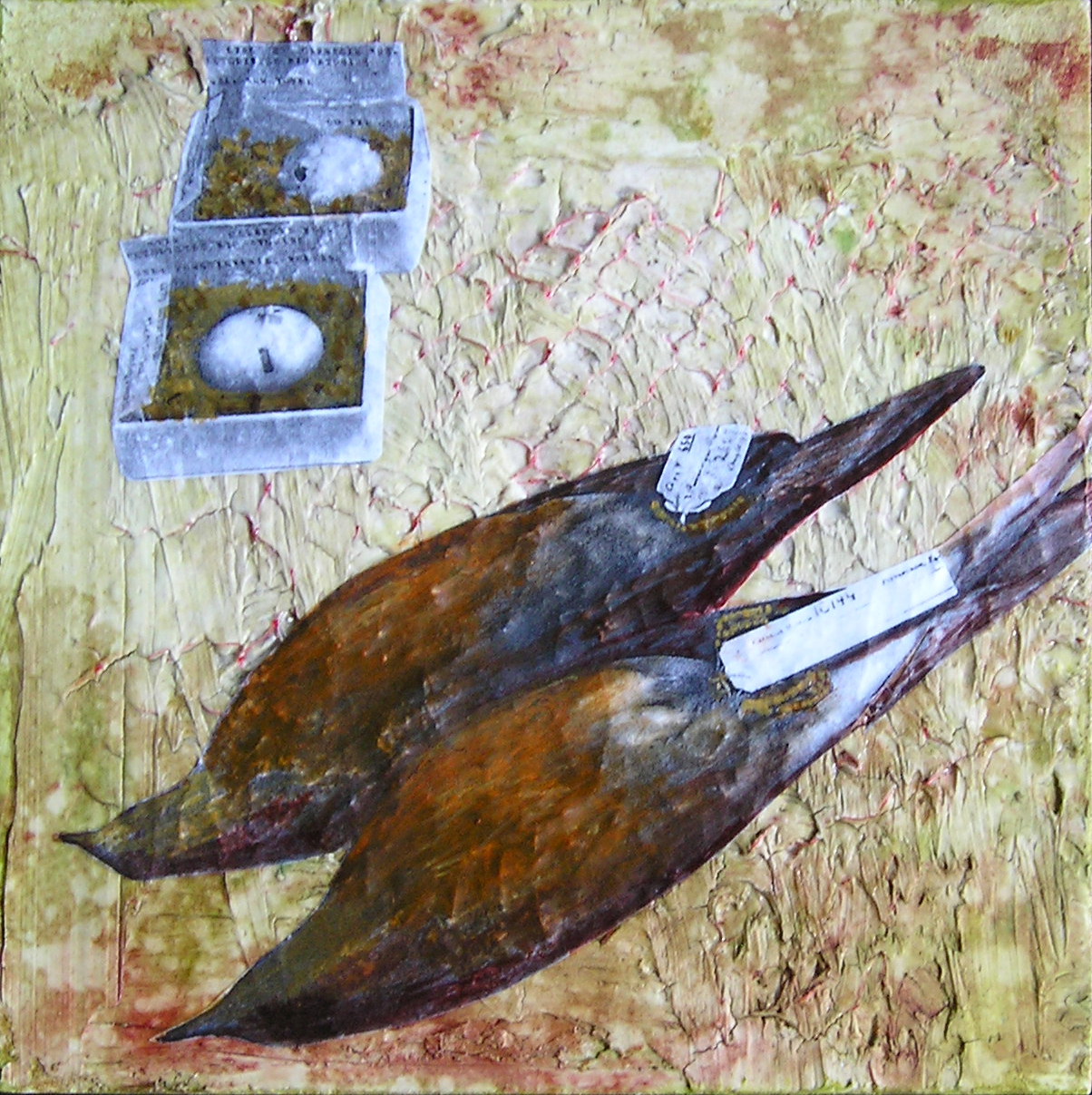
OLYMPUS DIGITAL CAMERAArt uniquely captures the complex responses surrounding the fact of extinction. Moving Targets juxtaposes the unintended extinction of the Passenger pigeon with the forced migration of Jews from Eastern Europe. These two interwoven stories show how fragile life is, for the abundant creatures of Nature, and ultimately, for humans as well.

The beautiful Passenger pigeon, with its iridescent feathers and graceful form, assembled in enormous flocks for annual gatherings to mate and raise their young. When the European colonists arrived on the American continent, half of the land was covered with thick and diverse forests from coast to coast, with lush prairie in the middle. The Passenger pigeon flocks of three to five billion individuals coursed from north to south, swooping across the country, feasting on nuts and berries. The habitat was so abundant and diverse that a decade would elapse between visits. The birds’ challenges began with the settlers clearing forests for farmland, housing, and timber masts for the British navy. Between 1620 and 1920, the forested area fell from 50% to less than 5%, and 53% of wetlands were converted to other uses.[i] This massive loss of habitat affected the food supply, and the migratory circuit of the Passenger pigeons.

The second most devastating challenge, was the ease of taking the birds for food. Their massive numbers gave protection against severe depletion by normal predators, so they did not have a well- developed instinct to fly from danger. From colonial times through the late 1800s, Passenger pigeons were hunted relentlessly to feed the growing population centers of the East coast. Birds were a cheap source of protein, selling at about a penny a bird, and enjoyed as “pigeon pie.” Once the railroads developed the capacity to ship birds across the country, millions were salted and shipped in barrels. The town of Plattsburg, New York, is estimated to have shipped 1.8 million pigeons to larger cities in 1851 alone, at a price of 31 to 56 cents a dozen.[ii] The birds’ reproductive patterns offered no defense against the unrelenting slaughter. Each pair produced a single squab, nesting at most twice in a season. Successful breeding depended upon large communal gatherings in nest sites that might cover 850 acres. In smaller groupings, as the numbers of birds began to decline in the 1860’s, reproductive success was less likely.

When conservationists sounded alarms in the late 1860’s, the laws passed were weak, unenforceable, and mostly ignored. Passenger pigeons declined slowly from 1800 to 1850, accelerating in the last part of the century until the demise became irreversible. In the early 1900’s attempts to breed them in captivity were unsuccessful. The last Passenger pigeon, named “Martha,” died in the Cincinnati zoo on September 1, 1914. Her passing marked our heedless extinction of one of Earth’s beautiful, abundant creatures. President Theodore Roosevelt took initiatives to preserve some wild places. At a Conference of Governors in 1908, he said, “The natural resources of our country are in danger of exhaustion.” This meeting was described by Gifford Pinchot as a “turning point in human history” which led to establishing the National Conservation Commission and the first inventory of the nation’s natural resources.[iii]

Laws to preserve wilderness and natural resources were hard-won, even modern efforts face opposition from business interests in mining and resource extraction, housing and agriculture. Globally we see massive destruction of natural habitat. The United Nations Environment Programme report on Global Biodiversity estimates that one third of the land has been compromised or destroyed by infrastructure, one third has been fragmented or disturbed, and one third afflicted with pollution and invasive species. No place on Earth is free from human impact. Some of the pollution that encompasses the entire earth affects reproductive success. Many of the chemical pollutants found in each of our bodies are known to cause cancer, birth defects, mutations and decline in fertility of humans.[iv]

Have we begun the accelerating decline from billions to few? How much of the living Earth can we destroy before we find ourselves on a planet inhospitable to life as we know it? The story of the Passenger pigeon gives us a chance to ask these questions, with the knowledge that even the most abundant of nature’s creatures falls to massive assault on habitat and reproductive stability. We can take this lesson of the Passenger pigeon: market forces alone will not solve a crisis. Concerned people raising their voices and standing together can change the course of history. The economic expediency and greed of the Passenger pigeon hunters assured their extinction. Refusing to address our own fossil fuel combustion habit, knowing that it is irreversibly compromising our atmosphere, may be setting the stage for ours.

“Martha” can symbolize the clarion call to change. We can take actions that preserve the living earth if we realign our priorities and values to favor the resilience of the human spirit, the community of caring, the sense of wonder in nature. These values, beyond mere economic measures, make us truly human. These are the characteristics that helped people survive the unspeakable horrors of the Holocaust. The stories of survivors, global migrants in their passage, can inspire us in the face of disaster. We can place priority on the pursuit of knowledge, art and wisdom, the time spent in friendships and community, and the appreciation of the beauty of the natural world. If we value the quality of all of our lives over the quantity of our treasuries, we will preserve our life support system for our children – fresh air, clean water, fertile ground and the biodiversity of species with whom we are interconnected as passengers through time on this planet Earth.

See http://atrart.net/moving-targets/ for a description of the Moving Targets project.

[i] Status and Trends of the Nation’s Biological Resources.
Land Use. Vol 1. Page 38. http://www.nwrc.usgs.gov
[ii] Schorger, A.W. (1955). The Passenger Pigeon: Its Natural History and Extinction. Madison, WI: University of Wisconsin Press. Page 145. .ISBN 1-930665-96-2.
[iii] Kevin Hillstrom. 2010. U.S.Environmental Policy and Politics: A Documentary History. “President Roosevelt’s Address at a Conservation Conference of Governors May 13, 1908.” CQ Press. Washington D.C. Page 187.
[iv] Linda Birnbaum, Ph.D., DABT, ATS. Director, National Institute of Environmental Health Sciences, National Institutes of Health, and Director, National Toxicology Program U.S. Department of Health and Human Services. “Testimony Before the Subcommittee on Superfund, Toxics and Environmental Health Committee on Environment and Public Works United States Senate.” February 4, 2010. http://www.epw.senate.gov/ Accessed March 10, 2015.


1 Comment

Celebrating Women’s History Month

March 8, 2015

Today is International Women’s Day, and March has been declared Women’s History month. This is one time in the year we call to mind the women who have helped to shape our world. They are too numerous to enumerate all in one place, and the perspective is always a personal one. We all have our heroes. Mine are Rachel Carson, Theo Colborn and Wangari Muta Maathai. These women are trail blazers in our time and practitioners of the ways to live in harmony with nature. I have been reflecting on the new direction and the new challenges of the 21st century, challenges that already press upon us with the inescapable progression of natural law. These women recognized that the laws of nature are not negotiable, but hold the wisdom of millennia to guide our path forward, if only we heed the message and adjust our behavior.

Testimony to Congress June 1963

Rachel Carson galvanized global awareness of the threat of pesticides and other persistent organic chemical contaminants on living systems. Her book Silent Spring and her testimony to Congress in June 1963 helped to mobilize a national movement to improve the environment. The rare decade of consensus in the public across partisan lines allowed the enactment of laws to protect Clean Air, Safe Drinking Water, Coastal Area Management, Toxic Substances Control and Endangered Species. Her core message of taking precaution in exposing living systems to the unintended effects of man-made chemicals remains an important message for us today. She called for people to respect and protect the natural world and to live in harmony with natural systems of which people are a part. Rachel Carson’s words speak to us today urging that we be very clear about what we oppose, and what we STAND FOR.

dr-theo-colbornTheo Colborn, who died in December 2014, documented the detailed mechanism of action of many of the chemicals released into the environment through things we use every day: personal care products, food additives, plasticizers, emulsifiers, preservatives, fragrances, and myriad others in addition to pesticides, herbicides, fertilizers and industrial chemicals. Most of our environmental laws are focused on controlling the amount of admittedly toxic materials allowed to be released into the air, water or land, now a total of 5.2 billion pounds per year. We know that many of these materials act in extremely low doses to mimic the hormones that act as control messengers in our bodies, as well as the bodies of many other complex organisms. We see evidence of global contamination with man-made chemicals in the body burden studies done every two years by the Centers for Disease Control and Prevention. Their most recent report finds over 441 man-made chemicals in the bodies of the average American, and of these, 79 are known to cause cancer, mutations, or developmental abnormalities. Theo Colborn’s book Our Stolen Future called for action on controlling endocrine disrupting chemicals and spent her life working for reforms to protect public health.

imagesWangari Muta Maathai founder of The Greenbelt Movement in Nairobi, Kenya is celebrated in her own country as a leader and a revolutionary reformer. Her Nobel Prize testifies to the power of her work empowering women to reclaim, regenerate and preserve the land by planting trees native to the area. Satellite views document the effectiveness of her work as a million trees reclaim the traditional vegetation and cultivation patterns of her land. Wangari Maathai put into action the process of living in harmony with nature, institutionalized and protected in law and practice.

In addition to these heroic public figures, I am always mindful of the strong women who made me who I am today, my mother Marcella DeMarco and my Nona, Pasqualina DiNardo DeMarco. My Mother pursued a career as a teacher, coach, mentor and leader at a time when most of her peers settled down to be happy home-makers after World War II ended. And I stand in the long comforting shadow of my Nona whose intelligence and wise counsel drove the success of our entire family in the New World. Her courage, wisdom, patience, love and humor sustained us all through the hard times, and to the aspirations to greatness. In the seventh decade of my life, I have decided to run for elective office to help make the community I live in a better, more resilient and equitable community living in harmony with the laws of nature.

I take courage from the many successful women whose legacy has changed our world for the better.


Leave a comment

February Union Edge – Labor and Climate Change

IMG_09412-11-2015

Ever since the EPA hearings on emission limitations for existing power plants that I attended in Pittsburgh, I have been thinking about the contrast in the reaction to climate change between labor activists and environmentalists.

I found a position statement by Richard Trumke addressing a United Nations Summit on Investment and I found his sentiment very compelling.  He said: “Why should investors or working people focus on climate risk when we have so many economic problems across the world? The labor movement has a clear answer: Addressing climate risk is not a distraction from solving our economic problems. Addressing climate risk means retooling our world – it means that every factory and power plant, every home and office, every rail line and highway, every vehicle, locomotive and plane, every school and hospital, must be modernized, upgraded, renovated or replaced with something cleaner, more efficient, less wasteful. That means putting investment capital to work creating jobs.”

If we are going to actually address the climate change crisis, we need to work together.  We need to have the discussions and the creative solutions that come from a broad collaboration.  Unions are good at solving problems, that’s what we do.  Market driven policies in place now will not move our economy in the direction it needs to go.  We need a total mobilization of policy, capital, labor and the education and engagement of the whole general public to make this kind of total societal shift, and make it quickly.

Have we ever done such a thing?  Well, we have done it 70 years ago when the nation was challenged to mobilize for World War II.  Within only a few years, we focused industrial production, food system output, and individual sacrifice to meet the war effort. Everybody got behind it, and everybody made it happen.

The challenge of moving away from fossil fuel combustion to preserve our atmosphere in a temperate range suitable for human life is no less critical.  But we have yet to address the compelling issues that need to be met so we can move forward with equitable, economically viable, lasting solutions.

We have to address the people problems, not just apply technical fixes.  What can we do to protect the displaced workers in the fossil extraction industries of coal, oil, and fossil gas?  The pensions and health benefits are an obligation that has to be honored.  How can we re-direct the workforce to make the infrastructure of a non-fossil economy replace the aging infrastructure of the fossil age?  Skills and know-how are abundant, but shifting the systems for applying the expertise of workers in new ways needs to be organized and focused for deployment. If we are serious about re-structuring our economy to save the world, why are we still subsidizing fossil fuels and fragmenting business conditions for renewable systems?  No business will grow and thrive in an environment of different rules in 50 states, changing tax treatment each year, and punitive insurance and utility tariff systems, again varying in all the states.

We need to have an organized policy and a strategic plan.  We need the unity of purpose from people at all levels.  Education, empowerment, and care for people above machines, and good wages for hard work above profits to the few multi-national corporate interests that benefit from plundering the earth forever.

Think about what kind of a world we leave to our grandchildren.  We can plan to leave them a living Earth, or bicker away our efforts and leave them a despoiled planet.

PD


Leave a comment

Backyard Bird Count -Observations and Reflections

February 15, 2015

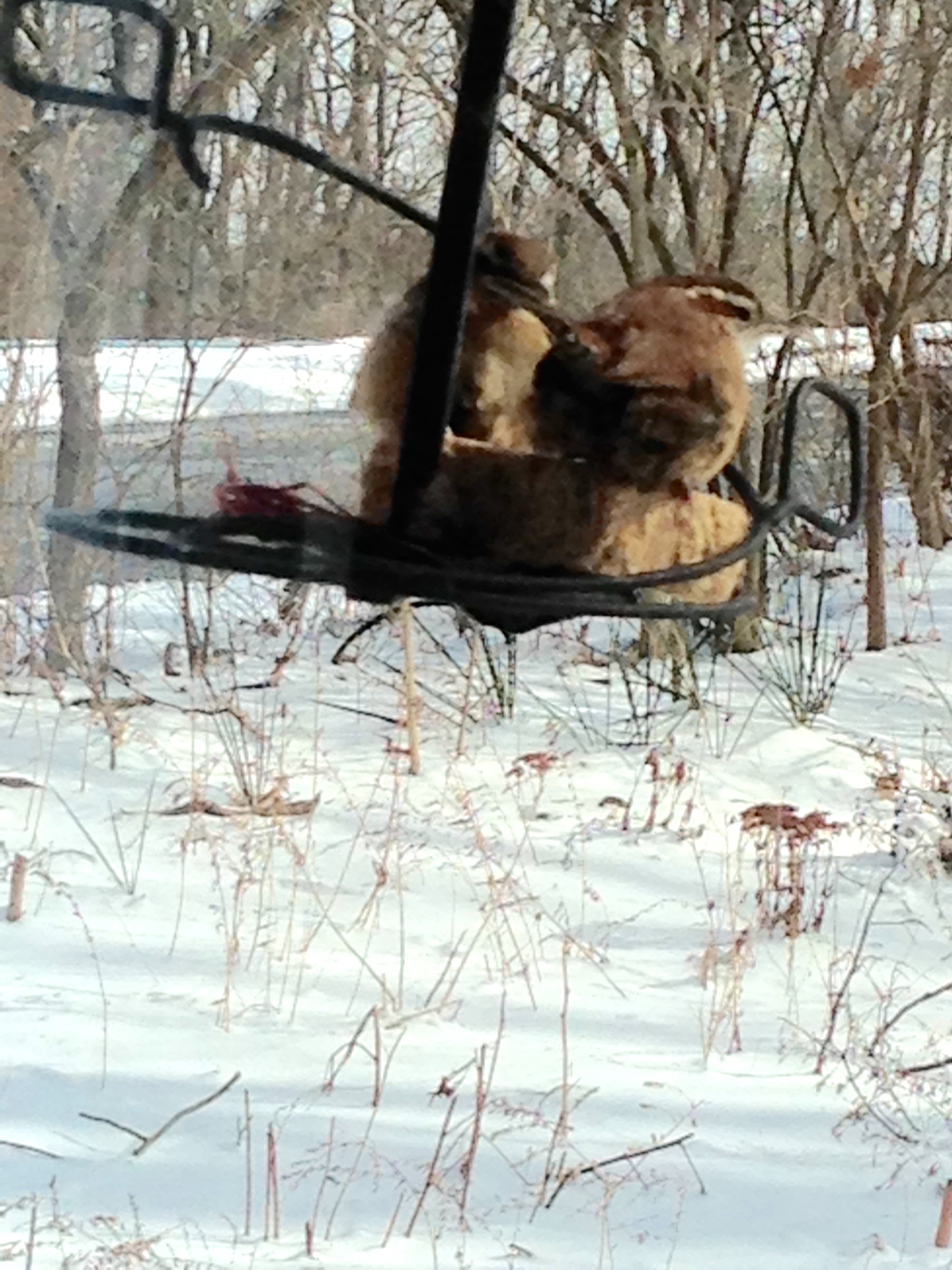
The Cornell Ornithology Lab annual Backyard Bird Count took place this weekend, a frigid time with blowing snow and pale light.  The thermometer registered five degrees Farenheit, headed down.  I watched the local visitors to the feeders and suet cakes chase each other, and scratch in the snow to uncover seeds constantly covered by the blowing snow.  I count 15 different species of birds, including the Coopers Hawk that swooped through, and five of the birds banded in the Spring.

It is a marvel how they adapt to such inhospitable weather.  I follow individual sparrows to their shelters in the stone wall, and I see the juncos and titmouse head for shelter at the dense base of the border hedge and the brush pile in the corner of the compost heap.  The mourning doves perch on low branches under an evergreen bough and huddle together with their backs to the wind. I wonder how well people would fare in adapting to such harsh conditions.  We have no feathers to fluff out and create an insulating cover; we have no way to increase our metabolism to generate more heat, and we do not become hypothermic at night to conserve energy.  A chickadee can do all of these things,and scientists are still studying how they manage the task of survival.

I note with good cheer each spotting of the banded chickadee  and cardinals,  the song sparrow and especially the Carolina wren. But I wonder and worry about my banded summer birds – the robins and catbird and cowbird.  What are they facing in their distant winter homes?  Are they finding food and shelter and safe travel?  Is their habitat intact,or are they finding drought and destruction?  Will I ever see them again?

Carolina wrens 2-15-15

Carolina wrens 2-15-15

The migrating birds drive their life cycle according to ancient ingrained forces by which they survived over hundreds of years.  We see the changes in the wider world, and know that these long distance travelers depend on the stability of the cycles of the seasons for food and sustenance.  I send the little black eyed junco flock back to the Arctic or Northern Canada well fed and healthy after a winter of eating sunflower seeds and suet.  For them, I worry that their nesting places might be destroyed.  The junco was a summer bird to me in Anchorage, and I know there are many wooded hillsides falling to housing construction.

It seems small and petty to worry for the fate of these little winged creatures when there is so much misery in the world, but they are the harbingers of our fate.  They are Nature’s creatures that spread song, beauty and a thousand uncounted services from pest control to pollination.  Their well-being expresses the soul of the living earth.

SO, feed them, count them, enjoy their place in your world.


Leave a comment

Moving from Awareness to Action

January 2015

This month two new tools have come forward from the expanding team of people working with and around me to engage solutions to the climate change challenge and the subversive threat embodied in endocrine disrupting chemical contaminants in our biosphere.  We feel an increasing sense of urgency to make meaningful changes to address these serious global problems.  Taken together, the problem appears overwhelming.  A sense of powerlessness and being overwhelmed with the complexity of it all yields denial and paralysis.

But, we take courage from our heroes!   In the new documentary “The Power of One Voice- A 50 Year Perspective on the Life of Rachel Carson” we see how her one voice raised fearlessly and courageously in spite of vicious, personal attacks, did change the world. We can see in “Sustainability Pioneers” regular people making changes in their own lives, in their communities and in their businesses to move to a more resilient future.

We have the tools to take action moving toward a more sustainable future.  We must address the barriers entrenched in our current way of doing things.  How can we connect the unionized labor movement to environmentally sound solutions?  The labor movement was instrumental in organizing the first Earth Day and pressing for environmental protections in the 1970’s.  Now, the divide artificially pitting a clean environment against jobs makes collaboration more difficult.  Yet, the need has never been greater.  Solutions that reshape a robust economy based on renewable energy systems, organic agriculture practices and green chemistry principles for producing goods, will require changing some laws!  We need to have a broader coalition of people involved, and we need to reach beyond environmental advocates talking to each other with increasing passion and frustration.

Everybody wants healthy children.  Everybody needs clean water and air.  Everybody needs a wholesome, secure food supply. Every worker needs a living wage in a secure career path. To make a transition from a fossil based economy to a renewable and sustainable economy, we need a strategy and a plan for an orderly transition.  Allowing the fate of our children to fall from “market forces” as a policy will not work.  Our policy process is currently based on markets with government regulation seen as a negative interference. To make a successful transition, we must have a longer view than a three month business cycle; we must recognize the costs and risks the current practices are imposing on our current life and on the lives of our children and their grandchildren. We must make a strategic plan to reach a fossil-free future within the next 30 to 50 years, or our children will face life threatening conditions.

Business as usual scenarios based on continued fossil fuel use projected 650 parts per million levels of carbon dioxide in the atmosphere. This is not a viable condition!  Reaching this level of carbon dioxide in the atmosphere would be catastrophic for humans, and other creatures that breathe air.  We need to get serious about choosing more viable options.

Jobs in the renewable energy industries are growing at 22% per year for the last five years, compared to a falling profile for coal, oil and gas jobs at 8.7% over the last five years. If we make a policy commitment to support and accelerate the penetration of renewable energy systems into the economy, instead of throwing up roadblocks and objections on all fronts, we could jump start a period of prosperity and sustainable enterprise that will lead the world.

Change the laws to stabilize the tax incentives and investment incentives for the renewable energy industry.  No emerging industry will thrive in an uncertain regulatory environment, where the rules change each year and vary vastly from state to state! Shift the subsidies and tax advantages from fossil fuels to renewable systems to fund the emerging and growing technologies.  We know climate change is caused by burning fossil fuels, so it makes no sense as a public policy in the public interest to continue providing $72 billion in subsidies for fossil fuel industries. Especially since much of that benefit accrues to multinational corporations who do not necessarily invest their earnings here.

The choices we have to make are not limited by technology.  We have lots of technology to do many things from the simple to the extreme.  The question is, just because we can, whether we should pursue extreme fossil development.  We can make choices that have more favorable consequences for our life support system.

Look at your own energy supply this month.  How can you reduce your own footprint, and shift your electric supplier to renewable fuels? Make a commitment to start now!


Leave a comment

A Wish for The New Year 2015

My wish for the New Year:

I reflect as we close out 2014 on the strong voices for change that have influenced our time- Pete Seger, Theo Colburn, and the legacy of Rachel Carson and Jonas Salk.  We see the impact of concerted community voices in the New York ban on hydraulic fracturing for fossil gas development, and we have hope for shifting our economy to a more viable future.

May we raise a chorus of strong voices –IMG_1254
Pleading to protect the living environment so we can be healthy;
Working together for justice so we can have peace;
Standing for social equity so we can all share prosperity; and

Demanding accountability from those in power so we can all have freedom.

In this Season of sharing thanks and blessings among those we care about, I thank all of you my Colleagues and Friends for all you do to make the world a better place!


Leave a comment

A Reflection on the “Energy for the Power of 32” Conference

Energy for the Power of 32 Conference was organized to establish a baseline and catalyze a regional energy plan and strategy for the 32 contiguous counties encompassing western Pennsylvania, Ohio, Virginia and West Virginia.  The preparations included a regional compilation of the Energy Flows in a Sankey diagram of Production, Consumption, Net Imports/Exports, and Losses.  the full report and analysis can be found at www.energy4p32.org

Regional Energy Flow showing Production, Consumption, Net Imports/Exports, and losses is a critical starting point for analysis. The three issues that emerge from this set of data are:

  1. the dominance of coal for electricity generation and as an export product
  2. Net exports (1,470 Trillion Btu) far exceed the regional consumption of energy for all uses (520 trillion Btu).
  3. The largest sources of “Unused Energy” result from electricity generation and transportation, Both sectors rely predominantly on technologies from the 1800’s- the Rankine cycle thermoelectric steam turbine and the internal combustion engine.

Data showing the global context creating an impetus for a change in our energy system was not allocated to a regional profile. Data adapting the EPA Sankey diagram on greenhouse gas emissions[1] to a regional profile would be helpful in isolating principal targets for change. Coal combustion for generating electricity is the most significant source of greenhouse gas emissions in the region.

A large data void exists in the failure to present, or even discuss, the ecosystem service components of the economy. There were some presentations about health effects and costs related to loss of productivity associated with pollution. However, the positive attributes derived from ecosystem services such as water purification, oxygen generation, food production through photosynthesis etc were not included. To the extent that the strategic plan seeks metrics and indicators to track economic conditions forward, it is essential to include metrics that reflect the health of the environment, our life support system. Measures for clean air, water quality, soil fertility and species diversity reflect not only quality of life conditions but also the resilience and sustainability of conditions upon which the economy ultimately depends. The failure to consider such parameters in economic development planning has largely contributed to the climate changing circumstances we are facing today. The classic papers of Robert Constanza et al. may be helpful in addressing this critical component of a regional strategic plan.[2] [3]

A second major omission in this discussion may be due to the absence of the presentation on environmental justice that would have been covered by Mustafa Ali. It is critical to recognize that the options for future development in energy are not limited by technology, but must be shaped by choices grounded in the ethics and values of our society. It is an ethical criterion to preserve our life support system for future generations, and indeed this is a part of the Constitution of the Commonwealth of Pennsylvania, Article 1, Section 27, the Environmental Rights Amendment.[4] It is an ethical criterion to transition from a resource extraction based economy to a value adding economy, a legacy of manufacturing and innovation well rooted in our region’s history. It is an ethical criterion to establish conditions that reflect social equity among workers past and future. It is an ethical criterion to plan for a healthier solution to our energy requirements than we have done in the past.

Establishing an energy system that provides for a robust economy requires that we recognize the absolute need to rapidly move away from burning fossil fuels, in all aspects of our economy. In our region, the conditions are not favorable to take maximum advantage of the natural flows of renewable and sustainable energy. The myth that renewable energy is insufficient to serve our needs must be addressed directly. The flow of solar energy to the surface of the earth exceeds our current and projected needs by many orders of magnitude. [5] The energy uses in the region for all sectors – residential, commercial, industrial and transportation – require only 520 trillion Btu. The Unused (wasted) portion to deliver this amount of energy in useful form 1,400 trillion Btu, represents the compelling reason to change our system. If we focus on the work that needs to be delivered, rather than the replacement of the fuels that are mostly being wasted in the current system, the options are far more exciting.

WindStax Vertical turbine- Made in Pittsburgh

WindStax Vertical turbine- Made in Pittsburgh

The work of Lovins et. al. illustrate ample ways to move toward a much less wasteful energy system focus on suiting the energy source to the energy need, and addressing appropriate technologies for the task.[6] Thus as a goal, buildings will operate in net zero profile for energy, water and waste. We have current illustrations for the realistic achievability of this approach in the Phipps Living Building example, and even retrofit examples in the innovation workplace. [7] [8]

Transportation systems will require two types of transition first, to renewable fuels, most likely recovered from wasted food sources, but also new technologies such as methane gas fired or electric engines., ultimately to hydrogen driven systems. Transportation system solutions require better integration of non-mechanized mobility options such as designing communities for easier pedestrian access to services, recreation and workplace centers. Our region was once heavily dependent on pedestrian mobility, as the many remnants of pedestrian stairways testify. Walking distances to transit was normal as recently as 1968.

Industrial and manufacturing sector presents the largest challenge, but also the largest opportunity. As a strategic goal, think about converting the raw export component of the regional economy to value added production where raw materials convert n the regional economy to finished goods. Such activity can occur as part of creating a sustainable stream of energy system supports, including the technology and communication interconnects for a distributed electric system where the load and source are balanced. New categories of utility services emerge from such an inverted paradigm of utility system including DC as well as AC segments, load leveling and voltage regulation , and storage (including not only batteries but fly wheel, compressed ait, pumped hydro storage and chemical phase change crystals.) Making and installing adaptive technologies for existing buildings can also offer increased production opportunities, such as ground source heat pump auxiliary heating/cooling systems that tap into the existing water pipes with external heat exchangers.

Transformation from fossil fueled enterprise to renewable energy flow based enterprise seems daunting and “unrealistic” according to my working group colleagues. But, many times in our history we as a country have taken on major transformations in a very short span of time, often less than a decade. The industrial mobilization that shifted production to make vehicles machines and munitions for World War II happened in a span of three years. The rural electrification of America took only five years. The shift from horse and buggy to automobile took only 20. The shift from regulated communication to unregulated and competitive communications took less than a decade. What is needed in order to mobilize this kind of capability is a clear and urgent motivating force that enables cooperation among competing interests. That force can be national security in time of war, market opportunities opened by innovative technology, or collective moral outrage.

What we cannot lose sight of in this discussion is the essential truth that the climate of the earth is changing rapidly, irreversibly, due to human activity that we can control. If we defer meaningful action to contain the conversion of sequestered carbon into atmospheric carbon dioxide, the atmosphere will no longer support aerobic living organisms…that includes people. A graph projecting 600 to 800 parts per million of carbon dioxide in the atmosphere was presented as if it were a normal expectation for continued practices. This cannot be construed in any way as “Business as Usual” but as a catastrophe! Every year that we delay in addressing this situation narrows our options and reduces our chances of shifting successfully away from a course of disaster. Because carbon dioxide stays in the atmosphere for 200 years or more, our actions today determine the fate of the unborn generations who have no say in determining their fate. We must consider the legacy we are leaving to them. We have seen the accumulated damages from mining and burning coal for fifty years, including the 3,000 miles of Pennsylvania streams permanently contaminated with acid mine drainage. We must take precautions going forward to preserve, protect and if possible restore the health of the living earth we depend on for our own survival.

As you develop the formal strategic plan for the Power of 32, I urge you to seek out and consider seriously the voices who speak for the living parts of our community, our economy and our selves. If we only focus on the infrastructure and technology, we will not preserve our own survival.

Respectfully submitted,

Patricia DeMarco

[1] EPA greenhouse gas emissions by source http://www.epa.gov

[2] Constanza, Robert et. Al. “The Value of the World’s Ecosystem Services and Natural Capital. Nature. May 15, 1997. Vol 387. Pages 253-260.

[3] Hunter Lovins. Natural Capitalism. 2010. Earthscan. London.

[4] Constitution of the Commonwealth of Pennsylvania, Article 1, Section 27

[5] NASA Chart on energy flow comparisons renewable vs fossil resources

[6] Amory B. Lovins and Rocky Mountain Institute. Reinventing Fire – Bold Business Solutions for the New Energy Era. 2011. Chelsea Green Publishers. Vermont.

[7] Phipps Living Building see http://www.Phippsconservatory.org

[8] Hartkopf and Loftness – innovation workplace Carnegie Mellon University