
By Patricia M. DeMarco, Mayor of the Borough of Forest Hills, PA
As extreme weather fluctuations and higher heat bring health concerns to the headlines, cities look for ways to adapt for a more resilient approach. Once defined only by skyscrapers and concrete canyons, many modern cities seek to bring nature into the cityscape to improve the health and quality of life of the people who live, work and play in urban environments. Natural landscapes bring many benefits to urban living, including health benefits, economic value of property, and cultural distinction.
Ecosystem services support all life on earth.[1] As people have settled into larger urban environments, we have become more removed from the essential services of the living earth that comprise our life support system. Fresh water, oxygen-rich air, fertile ground and the millions of species that make up the interconnected web of life come from the ecosystem services of the earth. Evolved over millions of years, the four categories of ecosystem services support life on earth as we know it.

These gifts of the living earth operate automatically. The supporting services include nutrient cycling for carbon, nitrogen, water, oxygen and phosphorous; soil formation from the action of millions of micro-organisms breaking down detritus; primary production includes energy conversion by photosynthesis to create biomass and release oxygen; and habitat provision which establishes living conditions specific to various regions of the planet. These services feed into all the other ecosystem services. The provisioning services generate primary food production, fresh water, wood and fiber and biomass- based fuels. The regulating services are the control systems of the earth that shape climate by storing carbon and the temperature through the thermohaline circulation of the oceans; flood and erosion control through wetlands and tree roots; water purification through wetlands; and disease control through predator/prey relationships in natural ecosystems. Finally, the cultural services provide spiritual and aesthetic values to human experience, often called biophilia- the natural feelings of being connected to nature that makes people want to be in the “outdoors” for vacations at the beach or in parks.
These services do not usually “count” in computations of the Gross Domestic Product or the economic valuation of transactions. However, they are priceless contributors to many aspects of daily life that people take for granted, such as having fresh water or pollination for agricultural products, or natural fibers like cotton, linen, bamboo and hemp. Note that all of these ecosystem services are circular in regenerating and replenishing the elements of each system, all driven primarily from the sun as the primary source of energy, temperature gradients and seasonal cycles.
Our Life Support System is Under Stress. Human activities, especially since the Industrial Revolution, have brought stress to the balanced ecosystems that have sustained life as we know it.Resource extractionfrom miningfor fuels and minerals, industrial scale farming, and land use for highways, buildings and parking lots has stressed the environment. Also, the rapid acceleration of burning fossil resources for fuel is reversing in decades the millions of years of biological process that increased the amount of oxygen in the atmosphere and sequestered carbon in coal, petroleum, and natural gas. The modern surge in use of synthetic materials, especially plastics which are derived from petrochemicals, has also stressed the natural ecosystems in many ways, especially as the population of the earth has continued to grow, and more countries adopt a heavy consumer-oriented economy. Hyper-consumption spreading worldwide adds to the stress on our natural life support system.
Pennsylvania’s Constitution Article 2 Section 27 states: “The people have a right to clean air, pure water, and to the preservation of the natural, scenic, historic and esthetic values of the environment. Pennsylvania’s public natural resources are the common property of all the people, including generations yet to come. As trustee of these resources, the Commonwealth shall conserve and maintain them for the benefit of all the people.”
However, Pennsylvania bears the scars of hundreds of years of reliance on extractive industries.
- Abandoned mined lands estimated at 288,000 acres[2]
- 5,500 miles of streams and rivers polluted[3]
- Air quality ranked 2nd worst in US[4]
It is our ethical and moral obligation to preserve and restore the ecosystems of the living Earth for now and for the future. It is our duty to preserve the right for life to exist for the people we serve in our communities, and for future generations whole lives will be shaped by the decisions we make today. We cannot legislate the laws of chemistry and physics nor the biologic system responses to changes in the environment. But we can adjust our laws, and our way of life, to be more in harmony with the natural systems we depend on. The time for wanton exploitation of the natural world is over!
Pathways Forward
We who govern at the local level are in a good position to shape a pathway to a better future. We are no longer facing a gradual transition but rather a transformation in our relationship to the natural world that supports us.
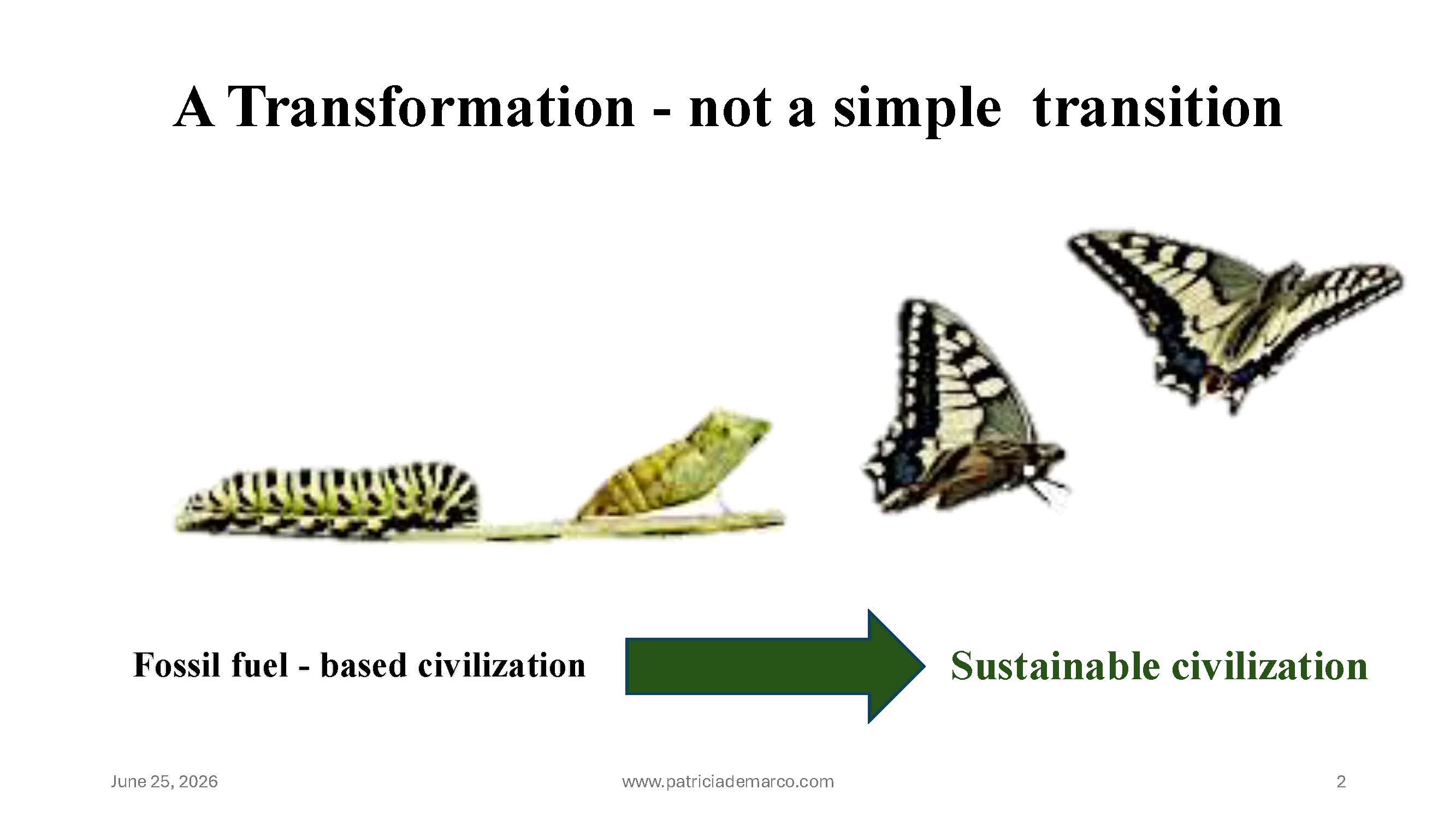
This transformation from an extractive civilization based on fossil-fuels to a regenerative civilization based on renewable resources is not a technical problem but rather a moral and ethical problem. Do we have the courage to shift the base of our economy to systems that can be sustained for the next generations, or will we persist in the destruction of our life support system for now, and for generations to come?
Our current situation has been built on a primary premise of economic drivers as the principal, sometimes the exclusive, basis for policy decisions. As a result, cultural values such as history, social services, public education, public health, public amenities such as parks and nature preserves as well as environmental values such as clean air, fresh water, fertile ground and preserving the biodiversity of species have diminished consideration in public policy decisions. This situation cannot be sustained for decades into the future without seriously compromising the quality of life for everyone on earth. The biggest shift from an extractive to a sustainable system involves a change in priorities to re-balance, economic, environmental and cultural values to be more equal in weight for decision making on policy.
Regenerative thinking provides a framework to support this adjustment. Regenerative thinking looks beyond the instant gratification of the next quarterly report, but rather considers the life cycle implications, and the associated impact on environmental and cultural values over time. [5] This is especially relevant in local government decisions, for example when determining what kind of a public building to invest taxpayer dollars in, or what land use decisions to make for preservation vs development. Fortunately, regenerative solutions are available, proven and cost-effective.Cities can be catalysts for living in harmony with Nature. The inherent human affinity for nature is called “Biophilia” and has been recognized as a movement throughout the world as a way to improve the quality of life for urban areas.[6][7] Incorporating nature into urban environments brings many benefits.
Renewable Energy Systems conserve and restore resources. Technology costs in renewable energy systems are dropping sharply.[8] Demand is increasing for efficiency and clean energy solutions. More supportive national policies (Inflation Reduction Act & Infrastructure Investment and Jobs Act) showed the potential for effective adoption of renewable energy resources at scale.[9] Investment in renewable infrastructure is increasing in states, public institutions, and in private investments, in spite of federal policy changes. The Borough of Forest Hills designed and built a net-zero energy borough building, and now also has solar on five additional buildings to save energy costs and have more efficient operations. The capital costs the solar were administered through a Guaranteed Energy Savings Program of the PA Department of Conservation and natural Resources.
Prevent Pollution by designing materials through Green Chemistry principles that are benign by design.[10] This process reduces the inherent hazard from things like plastics and forever chemicals rather than limiting our exposure to toxic substances through regulation. Substituting biological materials like hemp, bamboo, algae and fungi for petrochemicals can shift the production to less environmentally and health damaging materials.
Circular Materials Management shifts our economy away from using raw materials to make products designed to be replaced rapidly.[11] Instead, materials and products can be designed to be made in America and made to last as durable goods. Also design features can include reclaiming raw material for re-use or repurposing, rather than to become trash. Ideally, circular materials management using renewable resources as feedstocks can create an economy of higher value with much less waste.
Reduce urban stress. Urban living often brings social stress, a sense of physical threats from crime, traffic safety and adverse environmental exposures associated especially with noise and air pollution, and heat island stress. Adding urban tree cover contributes to more vigorous physical activity among adults aged 18 to 24 as well as reduced obesity, better general health, less asthma and better social cohesion in communities.[12] Forest Hills has been a USA Tree City since 1975. Our 2,800 urban Trees contribute an estimated $19.7 Million in cumulative asset value.[13]
Calm traffic. Using natural landscapes and plantings as part of a Complete Streets policy helps to calm urban traffic and improve the quality of experience for pedestrians. This was especially effective when native plants and shrubs were used as well as incorporating water features such as fountains and ponds as part of bioswales for stormwater management.[14]
Provide economic value. Studies completed by the US Department of Agriculture show that urban tree canopies deliver over $18.3 billion in annual environmental and economic value.[15] This value is derived from shade that reduces cooling demand, health improvements from absorbing pollutants in the air, and sequestering carbon in trees.
Mature trees act as critical infrastructure thatboost property values, mitigate the urban heat island effect, and improve public health.[16]
Green Infrastructure can contribute to stormwater management by diverting storm surges into bioswales and rain gardens. Especially if these are planted with native species, they can also support birds and pollinators within the urban environment. The Forest Hills Borough Building has bioswales that capture all stormwater from the property.
Zoning and policy support canencourage land uses that include landscaping with native species, wilding lawns, encouraging urban agriculture for local food production and to connect people to nature, and using neighborhood park and open spaces as part of blight remediation.
Biophilic Design in Public Buildings and Urban Spaces incorporates natural elements like greenery, water, and natural light, enhancing both the physical and mental well-being of the people who occupy these spaces. Sustainable energy features and natural landscaping are especially easy to incorporate into the design of new buildings or major renovations of public buildings or public spaces. In Forest Hills Borough, the Late Bloomers Garden Club and the Forest Hills Garden Club plant and maintain native plantings and pollinator gardens in the Ardmore Boulevard and in Forest Hills Park. Borough plantings include native species and integrated pest management practices to protect pollinators and wildlife.
We are part of the interconnected web of Life. Every opportunity we can take as local leaders to make our communities more resilient, more beautiful with living landscapes more supportive to wildlife, birds and pollinators, the more our communities will support living in harmony with nature. When we preserve the living earth, we preserve and strengthen our own life support system.
(This article will appear in the August issue of “The Municipal Reporter” published by the PA Municipal League.)
Resources and References:
[1] Robert Costanza, Rudolf deGroot, Leon Braat, Ida Kubiszewski, Lorenzo Fioramonti, Paul Sutton, Steve Farber, and Monica Grasso. Twenty Years of Ecosystem Services: How far have we come and how far do we still need to go? Ecosystem Services. Vol. 28(2017) pages 1-16. http://www.robertcostanza.com/wp-content/uploads/2017/02/2017_J_Costanza-et-al.-20yrs.-EcoServices.pdf Accessed July 12, 2026.
[2] Eric Dixon. Repairing the Damage: Cleaning up the air, land, and water damaged by the coal industry before 1977. Ohio River Valley Institute. April 2021. https://ohiorivervalleyinstitute.org/abandoned-mine-lands/ Accessed July 22, 2026.
[3] Kiley Bense. “The Toxic Cocktail brewing in Pennsylvania’s Waterways. Allegheny Front. December 21, 2025. https://www.alleghenyfront.org/pennsylvania-frack-waste-water-radioactivity/ Accessed July 30,2026.
[4] https://www.lung.org/getmedia/dabac59e-963b-4e9b-bf0f-73615b07bfd8/State-of-the-Air-2024.pdf
[5] Patricia DeMarco. “From Conquerors to Stewards of the Earth.” 04 February, 2022. https://patriciademarco.com/2022/02/04/transformation-from-conquerors-to-stewards-of-the-earth/
[6] Edward O. Wilson. Biophilia. Harvard University Press. Cambridge, MA. 1984.
[7] Biophilic Cities- Partner Cities. https://www.biophiliccities.org/partner-cities
[8] Lazard Life Cycle Cost of Energy- 2026 Report. https://www.lazard.com/news-announcements/lazard-releases-2026-levelized-cost-of-energyplus-report-pr/ Accessed July 28, 2026.
[9] Environmental and Energy Study Institute. “Implementing the Inflation Reduction Act and the Infrastructure Investment and Jobs Act- A Progress Report.” March 9, 2023. https://www.eesi.org/irabriefings Accessed July 22, 2026.
[10] Paul Anastas and John Warner. Green Chemistry: Theory and Practice. Oxford University Press. 2000. https://www.acs.org/green-chemistry-sustainability/principles/12-principles-of-green-chemistry.html Accessed July 29, 2026.
[11] Patricia DeMarco. “The End is the Beginning- The Case for a Circular Materials Management System.” March 7, 2021. https://patriciademarco.com/?s=Circular+Materials+management
[12] Jared Ulmer, Kathleen Wolf, Desiree Backman, Raymond Truthway, Cynthia Blain, Jarlath O’Neil-Dunne, Lawrence Frank. Multiple health benefits f urban tree canopy: The Mounting Evidence for a green prescription. Health and Place. Vol 42. (2016) Pages 54-62. https://research.fs.usda.gov/download/treesearch/54105.pdf Accessed July 29, 2026.
[13]Jason Rihn, Nicholas Burnett. Forest Hills Tree Inventory and Management Plan. Bartlett Tree Experts. June. 2026.
[14] Smart Growth America. “Complete Streets Are for Everyone.” 2024. https://www.smartgrowthamerica.org/programs-and-coalitions/national-complete-streets-coalition/about/ Accessed July 29,2026.
[15] Heather Sander, Stephen Polasky and Robert Haight. “The value of urban tree cover: A hedonic property price model in Ramsey and Dakota Counties, Minnesota, USA.” Ecological Economics. Vol 69 (2010) Pages 1646-1656. https://research.fs.usda.gov/download/treesearch/36073.pdf Accessed July 29, 2026.
[16] See the Arbor Foundation site here for tree value tool. https://www.arborday.org/value

