
We commemorate Memorial Day on the last Monday in May, honoring all of those fallen in wars from the Civil War until now. It is a solemn occasion to mark the service of those who have given their lives in the name of our country. The causes and outcomes have varied over the years, with some more strikingly clear than others. But as a constant lies the dedication and support of the families of soldiers; the solidarity of those who share the experience of combat in arms; and the grief of loved ones for the loss of youth and promise.
The “war of choice” in Iran engaging us now has disrupted commerce and challenged the concept of trust in our leaders to weigh the value of lives carefully.[i] We mere citizens have little influence over the powers that wage wars, but we do experience the personal losses of family and friends; and communities see the impact as resources shift from domestic to military support. As military disruptions affect the international flow of petrochemicals, we see clearly how dependent we have become on this resource in all aspects of our lives. Especially in the food system.
The Straits of Hormuz closing has restricted movement for critical materials disrupting the flow of about 20% of global oil supply.[ii] Fertilizers, pesticides, herbicides and packaging in the food industry all come from petrochemical industry. So does the fuel that runs the machinery and processing equipment for cultivating and harvesting, and fuel for transporting food from the growing areas to stores and homes. As with many other systems, the use of petrochemicals (oil and natural gas) has been a driver in their growth and development to major international industries.[iii]Now the war in Iran has put a spotlight on what it means to move away from the fossil fuel base for our basic needs for energy, food and transportation. This wartime experience has sharpened the points of need for alternatives based on non-fossil fueled, sustainable systems. It took decades for the industrial revolution to create the conditions of dependence on extractive resources we experience today, but it need not take decades to shift to a more sustainable system. The building blocks are in place already.
The Victory Garden and Domestic food initiatives of the WWII era have many parallels with the sustainable food initiatives of today.[iv] Even though the motivation for the gardens differs somewhat, using local foods, and how we prepare and acquire food for economy, health and public purpose have strong parallels. Rachel Carson compiled recipes for using domestic fishes in all regions of the United States as part of this effort.[v] Efforts to compensate for such things as sugar and butter rationing suggest approaches that can help with healthier eating habits today. Likewise, processes for preserving food for Winter have seen major advances in technology, with dehydration for example.[vi] But the concept of putting food by for year – round use stands as a long tradition to the oldest recorded history of human civilization.
This year, we face food supply constraints not only from war blockades of supply chains but also from the side effects of climate events. In Georgia wildfires have delayed planting times.[vii] In the Midwest, drought lingers, and in the agricultural areas served by the Colorado River, water restrictions loom.[viii] [ix] Conflicting demands between industrial uses and domestic and agricultural needs are growing. The erratic swings in climate conditions makes reliable agricultural production even more of a challenge than it has been traditionally.
Acquiring local foods, preserving seasonal foods and practicing economy and health in what we eat are standards of food culture available to everyone. The women of WWII tended Victory Gardens as part of a war effort, displacing commercial food so production could feed the Armed Forces and Allies. An estimated 8 to 10 billion pounds of food were grown in victory gardens and from other domestic food sources, releasing commercial production for military use.[x]
Modern Home -Grown initiatives look toward reducing the carbon footprint of the food chain by using locally sourced food and using regenerative agriculture practices for healthier eating.[xi] The Rodale Institute has documented that global adoption of regenerative practices across both grasslands and arable acreage could sequester more than 100% of current anthropogenic emissions of CO2 and that stable soil carbon can be built quickly enough to result in a rapid drawdown of atmospheric carbon dioxide.[xii] Restoring fertile ground through regenerative agriculture is an effective tool for capturing carbon dioxide from the air and binding it in soils. That means growing food with natural fertilizers like compost that stores carbon and increases soil fertility. It means having food produced without pesticides and herbicides that can leave residues in food. It means less petrochemicals used for transportation fuel, packaging, and refrigeration. Even displacing a little food purchased can save much in energy use and food waste.
The Climate Victory Garden is a new initiative that contributes to the resilience and sustainability of our food supplies in uncertain times. You can see all the Climate Victory Gardens and register yours here https://greenamerica.org/climate-victory-gardens
You can also support your community farmers by buying fresh produce at local Farmers Markets or participating in Community Supported Agriculture in your area. Summertime is planting time. Harvesting foods as they are ready and appreciating seasonal fruits and vegetables fresh from local gardens and farms is a pleasure forgotten in the inundation of year-round hybrid strawberries, raspberries and apples. Gone are the regional specialties anticipated for a year and enjoyed as a rare delight- like fresh-picked peaches in August. Discover the joy of growing some of your own food and herbs. Share the experience with your children. Live closer to the force of Nature that supports our life on Earth.
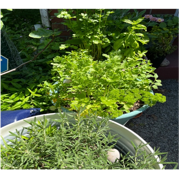
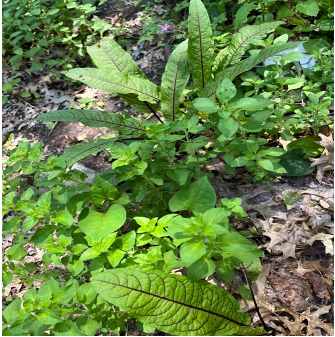
Kitchen herb pots- P.DeMarco Spring 2026.
References and Citations:
[i] Anton Troianovski. “Trump wants to call the shots but in Iran he keeps hitting his limits.” New York Times. June 8, 2026. https://www.nytimes.com/2026/06/08/us/politics/trump-iran-war-middle-east.html Accessed June 9, 2026.
[ii] Samantha Gross and Ryan Beane. “From chokepoint to crisis: The Strait of Hormuz and global oil markets.” Brookings Institute. June 8, 2026. https://www.brookings.edu/articles/from-chokepoint-to-crisis-the-strait-of-hormuz-and-global-oil-markets/ Accessed June 9, 2026.
[iii] American Fuel and Petrochemical Manfacturers. “From Farm to table: The Role of Petrochemicals in Agriculture.” March 15, 2016. https://www.afpm.org/newsroom/blog/farm-table-role-petrochemicals-agriculture Accessed June 10, 2026.
[iv] Megan Springate. Victory Gardens on the World War II Home Front. National Park Service. https://www.nps.gov/articles/000/victory-gardens-on-the-world-war-ii-home-front.htm Accessed June 9, 2026.
[v] Rachel Carson. Food From the Sea: Fish and Shellfish of New England. Conservation Bulletin 33. United States Department of Interior, Fish and Wildlife Service. Washington DC. 1943. National Archive accessed in person May 12, 2025.
[vi] USDA. Complete Guide to Home Canning, 2015 Revision. National Agricultural Library Digital Exhibit. https://www.nal.usda.gov/exhibits/ipd/canning/items/show/101 Accessed June 9, 2026.
[vii] Southern Georgia Wildfires. Satellite Imagery. Cooperative Institute for Research in the Atmosphere. NOAA. April 18, 2026 https://satlib.cira.colostate.edu/event/southern-georgia-wildfires/ Accessed June 9, 2026.
[viii] Natalina Sents Bausch. Five Corn States Enter 2026 with Extreme or Exceptional Drought. Successful Farming. January 9, 2026. https://www.agriculture.com/5-corn-states-enter-2026-with-extreme-or-exceptional-drought-11882929 Accessed June 9, 2026.
[ix] John Frank. Colorado River ranked as “most endangered” in the nation. Axios News. April 19, 2022. https://www.axios.com/local/denver/2022/04/19/colorado-river-ranked-most-endangered Accessed June 9, 2026.
[x] Sundin, Sarah (2022) “Victory Gardens in World War II. Today in World War II History, August 15, 2022. https://www.sarahsundin.com/victory-gardens-in-world-war-ii/ Accessed June 10, 2026.
[xi] Hilary McClafferty. Benefits of Eating Locally Sourced Foods. American Board of Physician Specialties. https://www.abpsus.org/eating-local-foods/ Accessed June 10, 2026.
[xii] Jeff Moyer, Andrew Smith, Yichao Rui,and Jennifer Hayden. Regenerative Agriculture and the Soil Carbon Solution. Rodale Institute. September 2020. https://rodaleinstitute.org/wp-content/uploads/Rodale-Soil-Carbon-White-Paper_v11-compressed.pdf
 Patricia DeMarco Ph.D.