Patricia DeMarco Ph.D.

"Live in harmony with nature."


From WWII Victory Gardens to Climate Victory Gardens

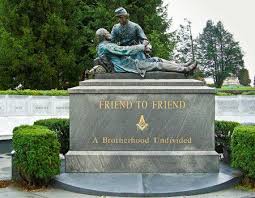
We commemorate Memorial Day on the last Monday in May, honoring all of those fallen in wars from the Civil War until now. It is a solemn occasion to mark the service of those who have given their lives in the name of our country. The causes and outcomes have varied over the years, with some more strikingly clear than others. But as a constant lies the dedication and support of the families of soldiers; the solidarity of those who share the experience of combat in arms; and the grief of loved ones for the loss of youth and promise.

The “war of choice” in Iran engaging us now has disrupted commerce and challenged the concept of trust in our leaders to weigh the value of lives carefully.[i] We mere citizens have little influence over the powers that wage wars, but we do experience the personal losses of family and friends; and communities see the impact as resources shift from domestic to military support. As military disruptions affect the international flow of petrochemicals, we see clearly how dependent we have become on this resource in all aspects of our lives. Especially in the food system.

The Straits of Hormuz closing has restricted movement for critical materials disrupting the flow of about 20% of global oil supply.[ii] Fertilizers, pesticides, herbicides and packaging in the food industry all come from petrochemical industry. So does the fuel that runs the machinery and processing equipment for cultivating and harvesting, and fuel for transporting food from the growing areas to stores and homes. As with many other systems, the use of petrochemicals (oil and natural gas) has been a driver in their growth and development to major international industries.[iii]Now the war in Iran has put a spotlight on what it means to move away from the fossil fuel base for our basic needs for energy, food and transportation. This wartime experience has sharpened the points of need for alternatives based on non-fossil fueled, sustainable systems. It took decades for the industrial revolution to create the conditions of dependence on extractive resources we experience today, but it need not take decades to shift to a more sustainable system. The building blocks are in place already.

The Victory Garden and Domestic food initiatives of the WWII era have many parallels with the sustainable food initiatives of today.[iv] Even though the motivation for the gardens differs somewhat, using local foods, and how we prepare and acquire food for economy, health and public purpose have strong parallels. Rachel Carson compiled recipes for using domestic fishes in all regions of the United States as part of this effort.[v] Efforts to compensate for such things as sugar and butter rationing suggest approaches that can help with healthier eating habits today. Likewise, processes for preserving food for Winter have seen major advances in technology, with dehydration for example.[vi] But the concept of putting food by for year – round use stands as a long tradition to the oldest recorded history of human civilization.

This year, we face food supply constraints not only from war blockades of supply chains but also from the side effects of climate events. In Georgia wildfires have delayed planting times.[vii] In the Midwest, drought lingers, and in the agricultural areas served by the Colorado River, water restrictions loom.[viii] [ix] Conflicting demands between industrial uses and domestic and agricultural needs are growing. The erratic swings in climate conditions makes reliable agricultural production even more of a challenge than it has been traditionally.

Acquiring local foods, preserving seasonal foods and practicing economy and health in what we eat are standards of food culture available to everyone. The women of WWII tended Victory Gardens as part of a war effort, displacing commercial food so production could feed the Armed Forces and Allies. An estimated 8 to 10 billion pounds of food were grown in victory gardens and from other domestic food sources, releasing commercial production for military use.[x]

Modern Home -Grown initiatives look toward reducing the carbon footprint of the food chain by using locally sourced food and using regenerative agriculture practices for healthier eating.[xi] The Rodale Institute has documented that global adoption of regenerative practices across both grasslands and arable acreage could sequester more than 100% of current anthropogenic emissions of CO2 and that stable soil carbon can be built quickly enough to result in a rapid drawdown of atmospheric carbon dioxide.[xii] Restoring fertile ground through regenerative agriculture is an effective tool for capturing carbon dioxide from the air and binding it in soils. That means growing food with natural fertilizers like compost that stores carbon and increases soil fertility. It means having food produced without pesticides and herbicides that can leave residues in food. It means less petrochemicals used for transportation fuel, packaging, and refrigeration. Even displacing a little food purchased can save much in energy use and food waste.

The Climate Victory Garden is a new initiative that contributes to the resilience and sustainability of our food supplies in uncertain times. You can see all the Climate Victory Gardens and register yours here https://greenamerica.org/climate-victory-gardens

You can also support your community farmers by buying fresh produce at local Farmers Markets or participating in Community Supported Agriculture in your area. Summertime is planting time. Harvesting foods as they are ready and appreciating seasonal fruits and vegetables fresh from local gardens and farms is a pleasure forgotten in the inundation of year-round hybrid strawberries, raspberries and apples. Gone are the regional specialties anticipated for a year and enjoyed as a rare delight- like fresh-picked peaches in August. Discover the joy of growing some of your own food and herbs. Share the experience with your children. Live closer to the force of Nature that supports our life on Earth.
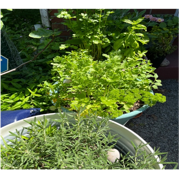
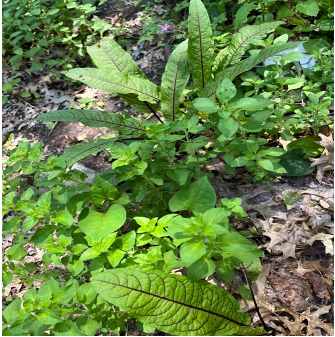
Kitchen herb pots- P.DeMarco Spring 2026.

References and Citations:


[i]  Anton Troianovski. “Trump wants to call the shots but in Iran he keeps hitting his limits.” New York Times. June 8, 2026. https://www.nytimes.com/2026/06/08/us/politics/trump-iran-war-middle-east.html  Accessed June 9, 2026. 

[ii] Samantha Gross and Ryan Beane. “From chokepoint to crisis: The Strait of Hormuz and global oil markets.” Brookings Institute. June 8, 2026.  https://www.brookings.edu/articles/from-chokepoint-to-crisis-the-strait-of-hormuz-and-global-oil-markets/   Accessed June 9, 2026.

[iii]  American Fuel and Petrochemical Manfacturers. “From Farm to table: The Role of Petrochemicals in Agriculture.” March 15, 2016.  https://www.afpm.org/newsroom/blog/farm-table-role-petrochemicals-agriculture  Accessed June 10, 2026.

[iv] Megan Springate. Victory Gardens on the World War II Home Front. National Park Service.   https://www.nps.gov/articles/000/victory-gardens-on-the-world-war-ii-home-front.htm  Accessed June 9, 2026.

[v] Rachel Carson. Food From the Sea: Fish and Shellfish of New England. Conservation Bulletin 33. United States Department of Interior, Fish and Wildlife Service. Washington DC. 1943. National Archive accessed in person May 12, 2025.

[vi]  USDA. Complete Guide to Home Canning, 2015 Revision. National Agricultural Library Digital Exhibit.  https://www.nal.usda.gov/exhibits/ipd/canning/items/show/101   Accessed June 9, 2026.

[vii]  Southern Georgia Wildfires. Satellite Imagery. Cooperative Institute for Research in the Atmosphere. NOAA. April 18, 2026 https://satlib.cira.colostate.edu/event/southern-georgia-wildfires/  Accessed June 9, 2026.

[viii] Natalina Sents Bausch. Five Corn States Enter 2026 with Extreme or Exceptional Drought. Successful Farming. January 9, 2026. https://www.agriculture.com/5-corn-states-enter-2026-with-extreme-or-exceptional-drought-11882929  Accessed June 9, 2026.

[ix]  John Frank. Colorado River ranked as “most endangered” in the nation. Axios News. April 19, 2022. https://www.axios.com/local/denver/2022/04/19/colorado-river-ranked-most-endangered    Accessed June 9, 2026.

[x] Sundin, Sarah (2022) “Victory Gardens in World War II. Today in World War II History, August 15, 2022. https://www.sarahsundin.com/victory-gardens-in-world-war-ii/    Accessed June 10, 2026.

[xi]  Hilary McClafferty. Benefits of Eating Locally Sourced Foods. American Board of Physician Specialties. https://www.abpsus.org/eating-local-foods/  Accessed June 10, 2026.

[xii]  Jeff Moyer, Andrew Smith, Yichao Rui,and Jennifer Hayden.  Regenerative Agriculture and the Soil Carbon Solution. Rodale Institute. September 2020.   https://rodaleinstitute.org/wp-content/uploads/Rodale-Soil-Carbon-White-Paper_v11-compressed.pdf


5 Comments

Freedom is Not Free” _ Homage to the Citizen Soldiers of America

America is heralded as “The Land of the Free and the Home of the Brave.” We assume that government serves the collective public interest and protects the weak and vulnerable from the tyranny of self-interested power. But the concept of “Freedom” exhibited today makes a mockery of the legendary ideals our forefathers fought and died for.  Freedom does not mean we are all free to do whatever we want, wherever we want, whenever we want as a right.  This is not freedom but selfish indulgence.  Freedom is granted as a privilege but implies responsibility and accountability for our actions as they affect others.

The generation that fought together in World War II shared a bond of common commitment to face down evil and stand for the moral high ground of humanity.  Service above self, to the ultimate sacrifice of life itself, bound the citizen-soldiers of that time together, and set up the conditions that built the greatness of America as a world leader, and as a model for progress.  But, in the aftermath of that war, the spirit of cooperation in governance, in institutions, in aspirations began a slow erosion decade by decade.  My Father was a paratrooper in Donovans unit of Special Forces, and later served in the United States Information Service. He would not recognize the America he fought for, and the government policies prevalent today would shock his sensibilities to the core.

The sense of making life better for our children, the sense of making life better for everyone together has evaporated into a governance framework driven by corporate interests.  Business and government have fundamentally different objectives.  The special interests of multi-national corporations now drive public policy to the detriment of the health and welfare of the people, as a collective whole. Tax and financial policies have deliberately skewed the distribution of wealth to an increasingly bloated top 5% of the people, leaving more and more people in the clutch of poverty, even if they are working full time, or have multiple jobs. The system is rigged for people who make money from the returns on their invested money. Corporate profits are at an all-time high, while wages stagnate or fall. Working hard does not guarantee success, or even a viable life.  The poverty in America is a deliberate political decision.  This time of COVID-19 pandemic reveals the injustice embedded n our economic system today: “essential workers” are al the bottom of the wage ladder. People whose work is critical to food supplies, health and basic safety stand out of their own sense of duty in the face of daily danger, yet these are paid least, hold lowest status, and are treated as disposable people. This is not the America my Father and Grandfathers, uncles and brother fought for!

Likewise, the assumption that clean air and fresh water are guaranteed is fraying in America.  As pollution runs rampant with regulatory controls rolled back, rescinded or unenforced, millions of Americans suffer from living in polluted air and unsafe water.  Contamination from industrial operations disproportionately affects communities of color, and people who cannot afford to move away.  The COVID virus compounds the insult of having to live in unhealthy places, with no recourse, and no hope of escape. Rolling back basic environmental protections to promote business undermines the basic health and safety of the nation, and the globe as water and air pollution respects no borders. The laws of Nature are not negotiable- physics, chemistry, biology operate whether our laws take science into account or not.

Unlike the specific, horrific crimes of Nazi Germany, the slow violence of corporate greed raises few objections.  The country increasingly splits over ideology, politics, race and religion.  There is no sense of urgency to move in a collective effort to preserve a fair, equitable, healthy future for our children.  Everything rests on short-term benefits.  There is no sense of collective action to make better options for our children.  Any policies that purport to curtail the “rights” of individuals or corporations to profit, regardless of the consequences, are viewed with derision and trounced as burdens on business or curtailing freedom.

What of the burdens on the next generation?  What of the obligation to protect the innocent and help the indigent?  Where is our higher calling to improve the community in which we live?  

As the conditions of the world continue to deteriorate, it is necessary for everyday people to take up the mantle of moral conviction to make things better.  It is imperative that people learn from the brave men and women who laid down their lives for justice, freedom and respect for human dignity.  The rampant racism underlying many of the current policies in America must be called out, and trounced for the precursor to tyranny. Democracy is not automatically viable, it requires active participation by an informed and caring citizenry.  There is no way to honor those who stood for the America that united together to defeat tyranny without reclaiming the moral imperative.  We must be willing to stand and fight for the dignity and respect of all people, for the right for life to exist as intact living systems that serve our Earth, for the fair and equitable distribution of the nation’s wealth, and for the rights of people to express their opinions openly and to receive respect. 

We must remember that we are a nation stronger as a community joined in common purpose than as a group of individuals, each striving for his or her own goal. It is the common sensitivity of caring communities, built on mutual respect and recognizing the inherent dignity of each person, that will prevail over tyranny.  The injustice visited on any one of us is owed an answer by all of us. That is what makes a nation great.

On this Memorial Day 2020, there are few parades, few traditional ceremonies of honor, few gatherings at cemeteries, or family picnics. On this Memorial Day strangely isolated and mourning the 100,000 lost to COVID-19, we can each stand in honorer those who stood for us. We must each take up the burden and the privilege of Freedom to hold that high standard of taking responsibility for our actions, supporting those who hold that space of concern for the least among us, and respect the inherent dignity of each fellow citizen. The mark of a truly free person is the generosity of spirit each shows to others. The mark of a truly free country is measured in the quality of life the least of its people can enjoy.

In homage to the Citizen Soldiers who served to defend America, we can each take up the honor of holding our freedom by holding responsibility for defending it daily, ourselves in our actions, words and deeds. We can hold our freedom by demanding accountability from our leaders to keep the standards of a moral and ethical government.

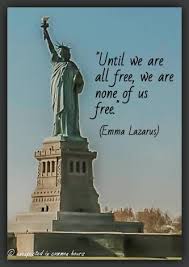
The Statue of Liberty in New York Harbor welcomed my Father and my grandparents to a land of opportunity, a land yet unshackled by the bonds of class and tyranny. We must remember what made America truly great: her people, their hopes, aspirations and collective sense of purpose.

“Give me your tired, your poor,
Your huddled masses yearning to breathe free,
The wretched refuse of your teeming shore.
Send these, the homeless, tempest-tost to me,
I lift my lamp beside the golden door!”


Leave a comment

A Reflection on Memorial Day 2018

A Reflection on Memorial Day 2018

by Patricia M. DeMarco

May 28, 2018

I was born in the “Baby Boom” following the end of World War II – a defiant and hopeful declaration by my parents that the world could still hold love, and grace and beauty.  My Father served in Donovan’s paratroopers unit, behind enemy lines fighting with the Resistance in France and Italy.(1) He never spoke of his time in the War, even when we as children would ask about it. The book was closed, and the scars of his experience haunted him until the end of his life.  Yet, he served in the United States Information Service (now part of the CIA), and in the U.S. Foreign Service with dedication and commitment to build an America that would fulfill the promise offered to immigrants and citizens.  As a first- generation Italian/American, I have carried the commitment to public service for most of my own life.  Always the ideal that government serves the collective public interest and protects the weak and vulnerable from the tyranny of self-interested power has driven my own personal and professional decisions.

The generation that fought together in World War II shared a bond of common commitment to face down evil and stand for the moral high ground of humanity.  Service above self, to the ultimate sacrifice of life itself, bound the citizen-soldiers of that time together, and set up the conditions that built the greatness of America as a world leader, and as a model for progress. But, in the aftermath of that war, the spirit of cooperation in governance, in institutions, in aspirations began a slow erosion decade by decade.  My Father would not recognize the America he fought for, and the government policies prevalent today would shock his sensibilities to the core.

The sense of making life better for our children, the sense of making life better for everyone together has evaporated into a governance framework driven by corporate interests. Business and government have fundamentally different objectives.  The special interests of multi-national corporations now drive public policy to the detriment of the health and welfare of the people, as a collective whole. Tax and financial policies have deliberately skewed the distribution of wealth to an increasingly bloated top 5% of the people, leaving more and more people in the clutch of poverty, even if they are working full time, or have multiple jobs. The system is rigged for people who make money from the returns on their invested money. Corporate profits are at an all-time high, while wages stagnate or fall. Working hard does not guarantee success, or even a viable life.  The poverty in America is a deliberate political decision.  Likewise, the assumption that clean air and fresh water are guaranteed is fraying in America.  As pollution runs rampant with regulatory controls rolled back, rescinded or unenforced, millions of Americans suffer from living in polluted air and unsafe water.  Contamination from industrial operations disproportionately affects communities of color, and people who cannot afford to move away.  The environmental injustice compounds the insult of having to live in unhealthy places, with no recourse, and no hope of escape.

Unlike the specific, horrific crimes of Nazi Germany, the slow violence of corporate greed raises few objections.  The country increasingly splits over ideology, politics, race and religion. There is no sense of urgency to move in a collective effort to preserve a fair, equitable, healthy future for our children.  Everything rests on short-term benefits.  There is no sense of collective action to make better options for our children. Any policies that purport to curtail the “rights” of individuals or corporations to profit, regardless of the consequences, are viewed with derision and trounced as burdens on business.

What of the burdens on the next generation?  What of the obligation to protect the innocent and help the indigent?  Where is our higher calling to improve the community in which we live?  As the conditions of the world continue to deteriorate, it is necessary for everyday people to take up the mantle of moral conviction to make things better.  It is imperative that people learn from the brave men and women who laid down their lives for justice, freedom and respect for human dignity.  The rampant racism underlying many of the current policies in America must be called out, and trounced for the precursor to tyranny. Democracy is not automatically viable, it requires active participation by an informed and caring citizenry.  There is no way to honor those who stood for the America that stood together to defeat tyranny without reclaiming the moral imperative.  We must be willing to stand and fight for the dignity and respect of all people, for the right for life to exist as intact living systems that serve our Earth, for the fair and equitable distribution of the nation’s wealth, and for the rights of people to express their opinions openly and to receive respect.

As we take a few moments over Memorial Day to remember and honor those who died for our country in World War II and in the many conflicts since then. We must remember that we are a nation stronger as a community joined in common purpose that as a group of individuals, each striving for his or her own goal. It is the common sensitivity of caring communities, built on mutual respect and recognizing the inherent dignity of each person, that will prevail over tyranny.  The injustice visited on any one of us is owed an answer by all of us. That is what makes a nation great.

I thank my Father and his many comrades in arms who came home from serving our country and left a legacy of hope for the future.


  1. Meredith Wheeler. “OSS ReBorn: the OSS OG  PAT Mission 1944” http://www.ossreborn.com/files/OG_PAT_A_Fresh_LookPhotos1.pdf  “4,500 German Wehrmacht soldiers surrendered to 12 OSS PAT soldiers and about 100 French Maquis at LeRailet, in the Tarn region of France.”