Patricia DeMarco Ph.D.

"Live in harmony with nature."


Leave a comment

A Plea for the Rights of the Living Earth

“I pledge myself to preserve and protect America’s fertile soils, her mighty forests and rivers, her wildlife and minerals, for on these her greatness was established and her strength depends.” Rachel Carson [1]

Earth as we have known it faces dramatic and escalating changes wrought by the ignorance and carelessness of human exploitation. In the early days of human civilization, when humans were small tribal bands moving among other predators and omnivores, their impact was kept in balance as part of the ecosystems they occupied. As the population grew and humans added technologies for manipulating and shaping the natural world through large scale agriculture then through roads, cities and industry, the impact has grown to the point where now modern people do not perceive themselves automatically as part of the natural world. This separation from nature combined with a sense of entitlement to exploit, own and use the resources of the Earth for profits has sent the impact of human civilization spinning beyond the threshold of balance of natural systems.


Today’s economy rests on using fossil resources- oil, natural gas and coal – for fuel and petrochemical feedstocks. Fossil resource use is manifest in global warming and global pollution, from the accumulation of petrochemical products in the environment and the products of fossil fuel combustion in the atmosphere.[2] Our fossil dependent civilization now faces life or death situations across the planet as the inherent limits of tolerance for living conditions are breached. A quarter of the globe now faces desert conditions from prolonged drought; bleaching of 40% of the world’s coral reefs from ocean acidification and warmer temperatures; melting and collapse of Arctic and Antarctic ice sheets; and average global carbon dioxide levels above 400 parts per million, levels not seen for thousands of years.[3]


The governments of all the countries in the world have pledged to address the peril of climate change, except for the United States of America under the Trump Administration. The isolation from our peers and the destructive effect of his policies undermine the natural capital of our nation and amplify the effect of our civilization on climate change and global pollution. Our life support system is under direct attack. Since taking office, the Trump Administration has rescinded or repealed 60 environmental, public health and worker safety protections in the name of eliminating ‘burdensome regulations.”[4] Millions of people now are exposed to risks of water contamination, air pollution, and the destruction of national lands and offshore areas from expanded oil, gas and coal development under relaxed environmental reviews. This is the road to an impoverished and unhealthy nation ruled by a cruel and oblivious elite. This is not the America my immigrant grandparents shed blood, sweat and tears to build.


This situation is more tragic because the solutions are all around us, technologies and systems proven to provide the base for a thriving economy abound – renewable energy systems, regenerative agriculture, green chemistry and a circular supply chain.[5] We are facing a moral and ethical crisis, not a technology challenge. The splintered factions of the environmental and social justice movements must coalesce and stand together to restore a system of checks and balances that contain the rampant greed of unfettered economic exploitation.  Capitalism unbalanced by social and environmental constraints becomes a tyranny, thriving on the exploitation of the natural resources of the Earth and discounting the intrinsic value of all living things, including people. Continuing on this course will end in a planet hurtling through space devoid of the lush regenerative life we have known.


The People’s Climate Congress held in Cochabamba, Bolivia in 2010 adopted a Universal Declaration of the Rights of Mother Earth signed by 288 nations and adopted at COP21 in Paris as part of the Paris Climate Accord. The first declaration is “For the right to life and to exist.”[6] The Earth provides everything we need to live and thrive as functions of the interactions among the living systems and mineral structure of the planet.  Robert Costanza and his colleagues have recently updated the twenty- year study of the value of ecosystem services in an article which concludes that the substantial contributions of ecosystem services to the sustainable wellbeing of humans and the rest of nature should be at the core of the fundamental change needed in economic theory and practice if we are to achieve a societal transformation to a sustainable and desirable future.[7]

We can achieve a sustainable society where economic enterprise is balanced with environmental health and social and cultural values. This goal rests on recognizing the intrinsic value of the life support systems of the living Earth. We have established in law that corporations have the same rights as “persons” under the First, Fourth, and Fifth Amendments; the Equal Protection Clause of the Fourteenth Amendment; and the Contract Clause and Supremacy Clause of the U.S. Constitution.[8] Yet, we do not recognize the components of our living Earth as having intrinsic rights under the law. In a few places in America, this concept of Nature having legal rights is beginning to be challenged in the courts.  First is the lawsuit Juliana et. al. vs. the United States filed by the Children’s Trust on behalf of 21 teenagers in Oregon who claim the federal government’s promotion of fossil fuel production and its indifference to the risks posed by greenhouse gas emissions have resulted in “a dangerous destabilizing climate system” that threatens the survival of future generations. The plaintiffs argue that their fundamental constitutional rights to life, liberty, and property have been violated. They also argue that the government violated the public trust doctrine, a legal concept grounded in ancient law that holds the government is responsible for protecting public resources, such as land and water—or in this case, the climate system—for public use.[9]

A new lawsuit filed in U.S. District Court in Denver, Colorado is asking a judge to treat the Colorado River as a person rather than property, therefore recognizing its right “to exist, flourish, regenerate, and naturally evolve.” It makes the argument that if corporations in the U.S. can be granted the same rights as people, shouldn’t rivers be allowed that status as well? [10]The same issue lies at the heart of the of the Indigenous Peoples challenge to the Keystone XL Pipeline, who argue that the pipeline would endanger the water supply and the river system in the event of a leak. Initially denied pending further environmental studies to evaluate the effects on the watershed and water supply, the Keystone XL Pipeline is now returned to production by Trump actions rescinding the requirement for a more thorough environmental review.[11] The 1,179-pipeline extension was projected to move 830,000 barrels of sands oil per day, and is at the center of this battle over land rights of private U.S. citizens, Native Americans, and the U.S. government in its role as guardian of the public interest.

The most alarming aspect of these lawsuits and many others piling up across the country is that the government is supposed to protect the public interest and the people, not corporations! The perversion of our Constitution to serve multinational corporations with no concern whatsoever for the people of this country, or indeed of ANY country, over the preservation of the public health and welfare is a total perversion of America.  We must take back the true values of America, a government of the people, by the people and for the people, or we will perish from this Earth. If corporations are persons, how much more valid is the claim that the rivers, forests, grasslands, wetlands, and estuaries should have the rights of persons? I call for the adoption of the Universal Rights of Mother Earth as a Constitutional Amendment to balance Citizens United.  We will otherwise destroy our life support system in the pursuit of unfettered economic greed.

Written for the Sierra Club Allegheny Group Newsletter. January 21, 2018 Published in Allegheny Sierran, Spring 2018 issue, page 5. http://alleghenysc.org/agv1/wp-content/uploads/sierran_spring_2018.pdf

References

[1] Patricia m. DeMarco. Pathways to Our Sustainable future- A Global Perspective from Pittsburgh. 2017. University of Pittsburgh Press. p. 43

[2] National Climate Assessment. http://www.noaa.gov/media-release/arctic-saw-2nd-warmest-year-smallest-winter-sea-ice-coverage-on-record-in-2017Nature. http://nca2014.globalchange.gov/highlights/overview/overview#intro-section-2

[3] NOAA;  https://www.nature.com/articles/nature25026 Accessed January 16, 2018.

[4] Nada Popovitch, Livia Albeck-Ripka, and Kendra Pierre-Louis. “60 Environmental Rules on the way out under Trump.” The New York Times. Updated, December 15, 2017. https://www.nytimes.com/interactive/2017/10/05/climate/trump-environment-rules-reversed.html Accessed January 20, 2018

[5] Patricia m. DeMarco. Pathways to Our Sustainable future- A Global Perspective from Pittsburgh. 2017. University of Pittsburgh Press.

[6] See the preamble and the ten rights of Mother Earth in Patricia DeMarco. 2017. Pathways to Our Sustainable Future- A Global Perspective from Pittsburgh. (Pittsburgh, University of Pittsburgh Press.) p. 25-26.)

[7] Robert Costanza, Rudolph deGroot, Leon Braat, Ida Kubeziewski,Lorenzo Fioramonte, Paul Sutton, Steve Farber, Monica Grasso. “ Twenty years of ecosystem services: How far have we come and how far do we still need to go?” Ecosystem Services 28(2017) 1-16. http://www.robertcostanza.com/wp-content/uploads/2017/02/2017_J_Costanza-et-al.-20yrs.-EcoServices.pdf Accessed January 15, 2018.  See also my interview with Robert Costanza on The New American Economy Radio https://theunionedge.com/twenty-years-ecosystem-services/

[8] Citizens United vs. Federal Elections Commission ruling of corporations as persons http://caselaw.findlaw.com/us-supreme-court/08-205.html Accessed January 15, 2018.

[9] Juliana et. Al. vs the United States Government. https://www.ourchildrenstrust.org/us/federal-lawsuit/ Accessed January 20,2018.

[10] Angela K. Evans. “Rights of Nature Lawsuit Seeks personhood for the Colorado River.” Boulder Weekly. September 28, 2017. http://www.boulderweekly.com/news/rights-nature-lawsuit-seeks-personhood-colorado-river/ Accessed January 19, 2018.

[11] Robert. Diotalev and Susan Burhoe. “Native American Lands and the Keystone Pipeline Expansion: A Legal Analysis.” Indigenous Policy Journal. Vol XXVII, No.2. (Summer 2016)  http://www.indigenouspolicy.org/index.php/ipj/article/viewFile/265/403 accessed January 19, 2018


Leave a comment

Fatal Fracking Frenzy

Fatal Fracking Frenzy

By Patricia M. DeMarco

January 4, 2018


“The road we have long been traveling on is deceptively easy, a smooth superhighway on which we progress at great speed, but at its end lies disaster.”  Rachel Carson.[1]


Conceived of greed, promoted with pride, and nourished with worker’s blood, sweat and tears, the hydraulic fracturing (fracking) for fossil gas reserves has whipped the energy industry into a frenzy. Its backers point with great satisfaction at the results accomplished by eliminating “burdensome regulations.”  This industry could only proceed when the National Energy Act of 2005 opened the “Haliburton Loophole,” granting exemptions for hydraulic fracturing natural gas extraction from seven federal environmental and worker protection laws.(https://fas.org/sgp/crs/misc/R41760.pdf)  Without these exemptions, fracking would be illegal! Now 39 states have some degree of fracking operations producing natural gas at the pace of 80 billion cubic feet per day, 67% from fracking from 300,000 wells.[2]


Relatively cheap natural gas is piped across the country mostly for domestic use in homes and displacing coal for utility electricity production.  But the industry targets massive exports in the near future as the infrastructure for transport and shipment to China and other growing markets is complete.[3] When that happens, the domestic prices will go up, and the communities that currently justify the fracking side effects with the need for local use and local jobs will be left with the environmental degradation in water use, land devaluation, and air emissions[4] but the larger profits will accrue to the multinational companies that sell the gas internationally.


Fracking also produces hydrocarbon liquids that can be used as precursors for plastics and other petrochemical products.  This is the payload for the industry.  The collection system and infrastructure of new refineries , “ethane cracker” plants, is shifting the locus of the petrochemical industry toward Western Pennsylvania, Eastern Ohio and West Virginia, the heart of the Marcellus and Utica shale gas deposits.[5] The pace of this industry initiative has hastened following the devastating storm damage that lay siege to the Houston and Louisiana coastal installations.  As the industry knows in its strategies, continued sea level rise and the increased storm severity from global warming compromise the viability of these operations long term.  While continuing to deny and obfuscate the reality of climate change, the petrochemical industry prepares to migrate into areas interior from the coasts.


Companies like the Edgar Thomson Works of U. S. Steel see fracking as a way to secure a dedicated gas supply in the face of likely price increases and restrictions.[6] A community such as Braddock, left devastated by the loss of industries, looks hopefully to this new avenue for employment and economic development.  But, the hidden costs loom unrecognized, lurking to bring on lower birth weights in babies, higher incidents of asthma, water contamination, and increased pollution from diesel trucks and spills.[7] Without strict controls and oversight, the short- term promise of jobs, both those preserved in the existing Edgar Thomson operations and those emergent in the new fracking industry, comes at the price of a community locked into a sacrifice zone.[8]


Ultimately, the fracking frenzy unleashed by Dick Chaney and his colleagues through the Haliburton Loophole accelerates the fatal outcome of our fossil dependence. Investments in the infrastructure of the fossil gas extraction and enhanced oil recovery and “clean coal” technologies divert resources from implementing renewable energy systems on a large scale nationwide.  Every new data point indicates greater levels of greenhouse gases in the atmosphere, greater acidification of the oceans and greater contamination from petrochemical products- plastics – worldwide.[9]  Rather than curtailing these destructive initiatives, we plunge forward heedless of the signals of danger ahead, danger already upon us, and catastrophe for humanity as a certain end.


The proposed fracking operation at the Edgar Thomson Steel Works is the exact cutting edge of the transition. The 600 workers in the Edgar Thomson mill one of the last steel mills operating from the heyday of Pittsburgh Industry, see cheap gas as a lifeline to preserving their jobs. The company argues that gas is cleaner than coal and provides revenue from potential sale of produced liquids that can become feedstock for the plastics petrochemical industry. Mayor Fetterman is looking at the immediate tax revenues and retention of jobs for 600 working families, and minimizes the risks that he bets will play out long range, if at all.[10]


There is a three-layered ethical conundrum surrounding fracking.

  1. The hydraulic fracturing industry only exists because the Halliburton Loophole in the National Energy Act of 2005 gave exemptions from seven federal environmental protection and worker safety standards. It may be legal, but it is wrong to suspend environmental and worker protections to promote the profitable extraction of a fossil resource for the economic benefit of corporations. Using petrochemical liquids from fracking to add to the single-use plastic burden of the Earth is another highly unethical consequence of this industry.


  1. Environmental justice issues arise from exposures to people who live in proximity to pollution sources such as steel mills fracking operations, coal fired power plants and petrochemical facilities. The areas around such sources are considered “sacrifice zones” where people cannot afford to leave and are subject to pollution for generations. (See the lengthy literature on Baton Rouge cancer alley, for example)


  1. Inter -generational justice issues arise as the fracking process extends the use of fossil fuels and infrastructure for its extraction, processing and use for another thirty years. Global warming from increasing greenhouse gas emissions is an existential threat to all life on Earth as we know it. This is a step in the wrong direction.


Finally, policies for a just transition for heavy industry need to be developed. As the whole industrial supply chain moves to a more circular system based on sustainable practices for resource management, the fate of existing workers and the human and social needs in the transition must receive focused attention. Economics alone in a market heavily skewed by embedded fossil industry subsidies will not drive a just and equitable transition to a sustainable future. People demanding accountability for policies that suspend the rules to the advantage of certain industries at the expense of public health and worker well-being can make a difference in the outcome.  Communities demanding full disclosure and hearings before permits are issued can make a difference in seeing that environmental and health standards are preserved. Community meetings to placate “unduly concerned” citizens after deals are struck in the back room have no place in a true representative democracy.


If our elected officials do not stand for the health and well-being of the community, we who care must stand up and be heard.  The Allegheny County Health Department must be petitioned to enforce air emission standards of existing sources, without exception. If the government no longer protects the people, we must protect ourselves.

~~~~


References and Resources

[1] Rachel L. Carson. Silent Spring. 1962. Houghton Mifflin Co. Boston.  p.277

[2]  Energy Information Administration. Energy Today “Hydraulically fractured wells provide two-thirds of U.S. natural gas production” May 5, 2016. https://www.eia.gov/todayinenergy/detail.php?id=26112  Accessed January 3, 2018.

[3] Shelly Goldberg. “Natural gas exports can solve U.S. energy glut.” Bloomberg Business News. May 2017.   https://www.bloomberg.com/view/articles/2017-05-05/natural-gas-exports-can-solve-u-s-energy-glut Accessed January 3, 2018.  See EIA article on planned pipelines here https://www.eia.gov/todayinenergy/detail.php?id=28872

[4] U.S. Environmental Protection Agency. Hydraulic Fracturing for Oil and Gas: Impacts from the Hydraulic Fracturing Water Cycle on Drinking Water Resources in the United States (Final Report) December 2016. EPA-600-R-16-236ES. December 2016. https://cfpub.epa.gov/ncea/hfstudy/recordisplay.cfm?deid=332990  Accessed January 3, 2018.

[5] Patricia M. DeMarco. “Wrong Way- A Call for A New American Dream.” Blog post January 8, 2017. On subject of plastics pollution and production from fracking.  See citations and references for primary resources. https://patriciademarco.com/2017/01/08/wrong-way-a-call-for-a-new-american-dream/

[6] Don Hopey. “Company planning to drill for gas at Edgar Thomson mill.” Pittsburgh Post-Gazette. December 27, 2017.     http://www.post-gazette.com/powersource/companies/2017/12/27/Merrion-Oil-Gas-planning-drill-gas-US-Steels-Edgar-Thomson-mill-Braddock-Pittsburgh/stories/201712270142

[7] Patricia DeMarco. “Fracking Health Effects and Worker Safety.” Battle of Homestead Foundation presentation. August 25, 2016. (See citations for primary sources.)  https://patriciademarco.com/fracking-health-effects-worker-safety

[8] Reid Frazier. “U.S.Steel agrees to allow fracking at Edgar Thomson Mill.” NPR State Impact. December 27, 2017.   https://stateimpact.npr.org/pennsylvania/2017/12/27/us-steel-agrees-to-allow-fracking-at-steel-mill/ Accessed January 2, 2018.

[9] National Climate Assessment. http://www.noaa.gov/media-release/arctic-saw-2nd-warmest-year-smallest-winter-sea-ice-coverage-on-record-in-2017Nature. http://nca2014.globalchange.gov/highlights/overview/overview#intro-section-2

[10] Don Hopey. “Company planning to drill for gas at Edgar Thomson mill.” Pittsburgh Post-Gazette. December 27, 2017.     http://www.post-gazette.com/powersource/companies/2017/12/27/Merrion-Oil-Gas-planning-drill-gas-US-Steels-Edgar-Thomson-mill-Braddock-Pittsburgh/stories/201712270142


1 Comment

AESS Wlliam Freudenburg Lifetime Achievement Award Acceptance- Moving from Awareness to Action


Association for Environmental Studies and Sciences Meeting, Tuscon, AZ, June 23, 2017

Patricia M. DeMarco, Ph.D. Visiting Researcher and Writer, Carnegie Mellon University, Senior Scholar at Chatham University and Council Member of Forest Hills Borough Council, 2016-2020 was given the 2017  William Freudenburg Lifetime Achievement Award.

Moving from Awareness to Action

It is with great humility and gratitude that I accept this award made in honor of AESS founder William Freudenburg. I did not have the pleasure of knowing him, but in looking at his work, I recognize a kindred spirit in the battle to connect the systems thinking of ecology and the problems of society.


Receiving this award has surprised me because mine has not been a traditional academic career. Indeed, a promising beginning in the early days of molecular genetics was derailed when I stepped off the tenure track for four years to have two children in close succession. Then I found out that there was no way to go back. Receiving a doctorate in biology prepared a person to expect a career in research and teaching where merit is determined by the number of peer-reviewed publications, the size of research grants received and the number and prestige of graduate students mentored. All of that was suddenly closed to me. I was supposed to become a nice doctor’s wife doing good works and keeping a place in society. Right! I was looking through the newspaper for jobs and came across a small advertisement in the Hartford Courant: ”Vacuuming- $3,000 per hour” from Northeast Utilities. It turned out to be a call for people to be trained to vacuum up radioactive spills at Millstone power plant, and I was deemed unqualified. So I sent a neighbor’s 20 year-old son to collect all the paperwork and SIGN NOTHING, and I took the whole thing up to the Connecticut Legislature Energy and Commerce Committee and asked for an investigation. As a newly minted Ph.D. in genetics, I held my own with the Northeast Utilities lawyers, and legislation was passed for nuclear power plant workers protection.

William Freudenburg Lifetime Achievement Award

I finally found my place in society: as a translator between lawyers, engineers and economists; as a citizens voice for policy to protect workers and communities; as a policy analyst bringing science to weigh on energy, environmental, and social justice actions. The skills acquired through a thorough liberal arts education and the discipline of achieving a doctorate, post-doctoral research position and fellowship in biology turned out to be transferable to a wide array of non-academic pursuits. I struggled throughout my career to maintain connections to the academic world I love.

If I have been successful in these endeavors at all, it is because of the roots of my training. First, I inherited my Father’s poet heart and understanding of the power of well-chosen words; from my Mother, the spirit of rebellion to stand for those without voice and the value of organizing. Most critically, I was raised in an environment that encouraged curiosity and discovery under the tutelage of my wise Nona whose lessons in patience, generosity and compassion crossed generations. Hers was the lesson that sustained my course when roadblocks loomed: “The men may rule, but women govern,” she told me. I watched how all the major decisions of the family took place over the dinner table on Sundays, my Pop decreed, but my Nona guided the discussion that shaped his pronouncement.

I want to comment for a moment on the importance of role models and the inspiration for young women to enter sciences as a lifelong pursuit. The role models of my life were first Rachel Carson whose book Silent Spring I received as a high school graduation present. I had read The Sea Around Us years before when traveling by ship from Brazil to New York. Her words resonated so deeply because we had often lived by the sea as my Father’s job in the diplomatic service took him around the world. As I graduated from high school, Rachel Carson’s success flickered in my mind as a beacon. Second, I was inspired by Eleanore Roosevelt. I had met her briefly as a seventh grade student when my Father took me to hear her speak at the University of Pittsburgh. Later in my time of despair after losing my academic path, I took heart from her courage in speaking out to the world. Her biography moved me to develop my own voice as a speaker and as a public figure. Finally, Connecticut Governor Ella Tambussi Grasso showed me the tough, hard edge of public policy. As one of her technical staff in the Office of Policy and Management, I learned the importance of listening to the voices of the people. She liked to hold “public hearings” on the call-in radio talk shows, to the great consternation of the lawyers: “but Your Honor, this will not be on the record!” to which she replied “How do I know what matters “on the record” if I don’t know what the people think?” She sent me to the National Governors Association deliberations on the low level nuclear waste compact with her staff attorney and in sending me off she said, “Being female is a fact of life. What you do with it is up to you. Cut your hair, get out of those high heels, buy a red suit, and get a briefcase. And be sure you ask the toughest questions in a loud strong voice.”

In receiving this award I have puzzled over my connection to the academic world. While Will Freudenburg made great efforts from within academe to reach into society, my problem has been the reverse. I have been immersed in society, bringing academic training to the problems encountered, and have had to reach into the academic world to remain connected. Of the many colleagues I have worked with over the years, Dave Hassenzahl while Dean at Chatham University and Terry Collins, the Theresa Heinz Professor of Green Chemistry at Carnegie Mellon University have helped me in bridging this divide. Mark Collins at the University of Pittsburgh gave me an adjunct teaching position for a course on directed study in science, ethics and public policy, which became the basis for my book.

The situation of the world today has never needed more advocates and systems thinkers to address the confluence of problems humanity has wrought upon itself and upon the whole living Earth. I believe that we who study ecosystems and sustainability have a unique capacity to shape a new direction toward solutions.

In a world wildly out of balance from the ideal of sustainability where environment, economics and culture are mutually supportive, the economic parameters dominate all else. The problems of our time derived from human enterprise – global warming and global pollution with synthetic materials – are not technology problems, for many of the solutions are well known and within reach. We are facing an ethics problem.

I would like to share a paragraph from the opening chapter of my book, Pathways to Our Sustainable Future -A Global Perspective from Pittsburgh:

“The complex interconnections among living things form Earth’s life support system, necessary for all of today’s creatures and for future generations – fresh air, clean water, fertile ground and the biodiversity of species that comprise the interconnected web of life. The challenges of climate change and chemical contamination present a call to preserve the living Earth. It is a call to temper the prowess of technology with wisdom and precaution to protect Earth’s living systems. It is a plea for justice for those who will be most acutely affected, the non-humans and the unborn whose voices are not included in the debate, and those who are disproportionately vulnerable. It is a plea for accountability in the way people have used the natural resources of the earth for short-term benefits. It is a plea for life to exist.”

It is time for us in the sustainability profession to move from awareness to action. Our path cannot remain within the academy, safe in the halls of universities and colleges. Communicating important findings about the state of the living systems of the Earth must reach beyond the peer-reviewed journals that are the currency of the academic realm. In a political atmosphere charged with “fake news” the line between reality and fiction has blurred. But the laws of Nature are not negotiable. Chemistry, physics and biology will prevail regardless of political declarations or legislated stupidity.

We as scientists have a tremendous task to bring facts to the front of the discussion, to engage the conversation not only in the classroom but also in the living rooms where families gather, in the churches and social gatherings, in the union halls, in the neighborhoods where people talk to each other. Climate change is one of the most pressing issues of our time, but it is not discussed. We need to break it down so it is less intimidating. We can begin to understand how to preserve the gifts of this living Earth for another generation.

There are four ways to move from awareness to action effectively.

  1. Set an example, and talk about it. We are facing global challenges of climate change and pollution, so people think their own efforts are too insignificant to matter. It all matters. Every plastic bottle dropped on the street can end up in the great plastic gyres of the oceans. Use your own non-plastic bags, and give the little homily to the vendor. Decline the BPA laced receipt, and ask the vendor to wear gloves to protect their own exposure. You can imagine millions of ways to do this. Street theater works! Make it OK for successful white guys in business suits to bring a recyclable bag to the store. When building new campus or municipal facilities, use a net zero energy design and include citizen information in the lobby. Inspired by the Phipps Conservatory Living Building and the Chatham University Eden Hall Campus, my town of Forest Hills Borough is building a net zero energy municipal building. So far, four other communities have come to us asking for ideas.
  2. Build common ground. The Yale Climate project described six Americas response to climate change and environmental issues. But in spite of differences in attitude and perception of risks, all people share a need for fresh water, oxygen rich air, and access to safe and nourishing food. All have a care for their children’s future at some level. Find ways to reach across the dividing gulf of political ideology and reach common concerns. My colleague Kirsi Jansa, a film maker and journalist from Finland, has developed 12 Sustainability Pioneers episodes as 10 to 12 minute videos. We combined our efforts into a five-session course called “Sustainability Pioneers-Climate Conversations” given as an adult education class in the OSHER Life Long Learning Institute at Pitt and Carnegie Mellon University. Each session has a short discussion of facts, followed by a video then a class exercise where the participants did role modeling. And we sent them off to practice and report back how the conversations went. By the end of five sessions, nearly every student had some success in having a climate conversation as part of a daily routine. You can find the Sustainability Pioneers videos and the class for free on my web site https://patriciademarco.com/sustainability-pioneers-community-conversations-class/ or on Kirsi’s web site sustainabilitypioneers.com
  3. Reach out to those who are not at the table. The environmental NGOs are mostly headed by white men, and the environment movement in general has been characterized as the domain of left-leaning, spoiled, white, rich people, mired in 1970s thinking. But all around us, the environmental justice issues and the social justice issues involve much broader communities. The people affected by a shift from fossil based energy and commodity production hold a disdain for “tree huggers” and “snail lovers.” The “Shoot, shovel and shut up” approach to endangered species is alive and thriving. This divide was never clearer to me than at the demonstrations around the EPA hearing on the Clean Power Plan in Pittsburgh. 3,500 United Mine Workers sent off by Governor Corbett flooded the street in waves with uniform T-shirts and pre-printed signs chanting in cadence with a sound truck. Clustered on one corner of Grant and Sixth, were a motley gathering of about 300 environmental activists, mothers with toddlers in strollers, Buddhists giving out free ice cream, and Mayor Peduto urging a view to the future. I stood on the coal miner’s corner with my friend, labor historian Charlie McCollester who held a sign that said, “When Blue collar workers fight clean earth health we are all doomed.” Following that dramatic day, I sat down with Charlie, and we discerned together that what the miners are protesting is not against the environment, because they are indeed the most viciously affected victims of the effects of mountaintop removal mining. They are protesting out of fear for their future. What becomes of their pensions when no more coal miners pay into the system? How will they support their families? What will become of them when they get sick, as they inevitably will from being in the mines? We hatched a plan to help working people visualize what a transition can look like to a more sustainable future with a radio program called “Just Transitions- Labor, Environment and Health.” On the Union Edge- Labor’s Talk Radio Station twice a month I bring guests to talk about how communities are making transitions, about environmental and health issues, like reducing exposure of workers to BPA in the workplace, or fracking fluid contamination. After a year of this, we kept running out of time in the 30 minute format, and I wanted to take on more complex issues that would help people visualize what a sustainable future would look like. So, we launched The New American Economy program, which airs every Wednesday from 1:00 to 2:00 Pm EST. Here we talk about emerging issues in energy, food and water, manufacturing and supply chain and transportation. You can find both programs attheunionedge.com We reach 300,000 people a week in 33 cities and have 15,000 to 20,000 podcast downloads a month. If you want to carry the program on your campus radio, or if you have something exciting you would like to share with a working families audience, let me know. Union working people, coal miners, farmers, beauty shop operators, store keepers are highly unlikely to come to a class, presentation or lecture about climate change, environmental health or endangered species. But, they listen to the radio, they send questions, and they talk about it later.
  4. Engage with the community you are in. Ultimately, all of politics is local. Whether large cities like Pittsburgh or small boroughs like Forest Hills, communities need the expertise and engagement of the sustainability academic community. There are many ways to be involved and make a difference. Go to your local governing council meeting and find out what issues they are coping with. It is mostly mundane stuff- police contracts, fire service, swimming pool management, garbage. But some issues are really important- storm water management and meeting health and safety standards, establishing an environmental review for new developments, how pest control is managed, how transportation access and recreational open space are managed, strategic plans for land use, education of children. Democracy is not a spectator sport. Get involved yourself and empower your students with the tools to participate in the public policy process. Take them to a public hearing; teach them about stakeholders and power brokers. Consider running for office yourself.

Know that public policy management is not the same as business management. The public interest goes beyond economic profit. Governing in the public interest must reach the wellness of the community, the collective well-being of people living together in a community of care. Governing in the public interest preserves and maintains the robust functions of the ecosystem that hosts the community. It attends to the needs of the youngest, the oldest and the most needy of the community and preserves fairness and justice but with compassion and kindness to neighbors we see every day and know. It must look to the future and anticipate the needs of those yet unborn whose lives are affected by decisions made today.

We as Americans still think of ourselves as the defenders of “Freedom,” but freedom is not free. Freedom without responsibility yields chaos. And Freedom without accountability yields tyranny. I will close with Rachel Carson’s admonishment to the Garden Club of America: “We must be very clear about what our cause is. What do we oppose? What do we stand for?” Those of us who know have the obligation to speak. Those of us who know have the obligation to lead. Thank you.


3 Comments

Wrong Way! A Call for a New American Dream

Wrong Way! A Call for A New American Dream

January 6, 2017

by Patricia M. DeMarco

The proposed Shell Chemical Appalachia Plant to produce polyethylene plastic pellets from Marcellus and Utica shale gas in Potter Township, Beaver County PA, highlights two of the most important issues of our time: human-induced climate change and global pollution from man-made chemicals. In our lifetime, these existential crises threaten the survival of life, as we know it. But even as the data indicate ever more serious manifestations of these two challenges, the United States is retrenching around fossil-based industries. Each decision we make about how we use and develop resources reaches far into the future with implications for hundreds of years beyond our own time. The direction a society takes rarely changes with a single decision. Rather, an accumulation of decisions taken at the local, state and national levels create a body of accumulated positions embedded in law and precedent. Changing direction in the face of such a policy construct requires a new vision and a deliberate revision of the policy infrastructure.

Scientists and observers worldwide document increasingly dire events, with accompanying predictions of inevitable disaster from climate change and global pollution:

  • Average global temperatures rising and average carbon dioxide in the atmosphere reaching 400 parts per million;
  • Collapse of the Antarctic ice sheets;
  • shrinking of the arctic polar sea ice;
  • inundation of sea level islands and coastal communities,
  • widespread bleaching of sea corals and coral reef communities;
  • erratic and severe weather patterns producing extreme storm events;
  • prolonged droughts and advance of deserts;
  • slowing of the ocean currents;
  • loss of biodiversity and increasing rates of extinction of species worldwide.[1]

These documented facts describe the increasingly unhealthy condition of the living planet Earth. The complexity of living systems, refined over millions of years of evolution, complicate the process of making rapid, effective policy responses even in the face of such dire facts.

The socio-political processes themselves have a complexity vested in laws that run counter to the laws of chemistry, physics and biology that operate living ecosystems. To examine how these intersecting processes can be changed, it is instructive to look at decisions made around a specific project, the Shell Appalachian Petrochemical Project. The underpinnings of the modern petrochemical/energy industry trace all the way back to the initial colonization and development of America. Federal lands granted for mining, logging and ranching grounded the American continental dominance from coast to coast. Many of the entitlements and land use practices established in the laws of the 1800s remain in effect as $20.5 billion annual fossil industry subsidies today.[2]

The advance of hydraulic fracturing to develop and extract fossil methane and associated liquids from deep in the Earth has attracted chemical industry interest as a relatively inexpensive domestic feedstock. The National Energy Act of 2005 abatement of seven federal environmental and public health protections(the Halliburton Loophole)  to expedite hydraulic fracturing for fossil gas and oil bears fruit in a new petrochemical industry in 39 states, including western Pennsylvania. The shale gas supply development has been shifting investment in refineries and production facilities away from traditional locations on the coasts – Galveston and Houston Texas; Baton Rouge, Louisiana and Patterson, New Jersey. All of these locations have centered their chemical industries on petroleum refining from domestic and imported feedstock. They are characterized by the flares and emission plumes of noxious materials, with environmental and health consequences that affect the surrounding communities. The $377 billion valued industry does not count the expense of health problems of workers and communities or degraded environmental conditions among the costs.[3] The profits accrue to the industry; the costs, estimated at $238 million annually, fall on the people, communities and taxpayers.[4] This industry advance was the direct result of the Halliburton Loophole, engineered into the National Energy Act of 2005 by Vice President Chaney, former CEO of Halliburton, the manufacturer of chemicals used in hydraulic fracturing. This is evidence of what happens when high powered government officials are vested in private corporate interests. The public interest was swept aside.

Attracted by proximity to relatively inexpensive domestic wet gas feed stocks from Marcellus and Utica Shale deposits, augmented by $1.65 Billion in subsidies and incentives from the State of Pennsylvania, Royal Dutch Shell bought the former Horsehhead Zinc facility and is planning to build a new petrochemical processing complex to make polypropylene.[5] The facility will consist of an ethylene manufacturing process, three polyethylene manufacturing lines, three natural gas-fired combustion turbines, and various auxiliary and support equipment. The Shell Appalachian Plant in Potter Township will emit 2,248,293 tons per year of carbon dioxide and produce 1.6 million metric tons of polyethylene per year. Shell claims 2,000 construction jobs and about 600 permanent jobs associated with the plant. Their permit applications are carefully crafted to ride within the allowable provisions of complex regulatory requirements, trading future emissions against past permits of closed plants. Concerns about climate change, community health and environmental degradation fall “outside the scope of these proceedings.”[6] This plant may be within the law, but it is ethically and morally wrong.

The socio-political system of laws and regulations is not constructed to consider existential challenges! This plant will come into full production capacity in 2020, when targets for reducing greenhouse gas emissions to control global warming and climate change call for steep reductions in CO2 from industrial operations.[7] In addition, polyethylene is a precursor for the manufacture of plastic disposable containers, products like plastic dishware, plastic bags and other single-use commodities. Over 90% of this material will end up in landfill or in the oceans. In effect, fossil deposits of methane from deep underground are extracted, under an exemption from seven federal environmental and worker protections, to be heated and cracked into elements to make plastics manufactured into single-use materials that will end up discarded into landfills or washed into the ocean. In any but strict short-term economic criteria, this is a losing value proposition. This process causes degradation to the environment, quality of life and health of surrounding communities, and poses a threat to the well-being of children, elderly, and sensitive populations across a broad region. The effects of this action will manifest over hundreds of years adding to the cumulative destruction of the living Earth.

The justification is “JOBS!” In a region afflicted with loss of traditional industries, there has been no re-investment policy, no social safety net to help communities adjust, rebuild and regenerate around more sustainable pursuits to support the economy. Beginning with the Tax Reform Act of 1986, the press toward a single metric for evaluating the effect of government has driven policies more and more toward eliminating environmental protections and social services, defined as “wasteful” or harmful to business. The concept of the role of government being limited to defense and keeping the peace while leaving business to run at will has taken over the value system of America. The result has been a widening division in society with wealth concentrated in a shrinking top tier and the middle class shrinking into debt and despair.

The American values of social equity, and public trust for the management of the nations resources have shrunk in the face of the onslaught by corporate dominance of government. The Citizens United ruling granting the rights of “persons” to corporations accelerated the trend toward governance for the sake of corporate interests. It may have once been true that what was good for business was good for America, but in modern times of multinational corporate dominance, what is good for companies like EXXON may certainly harm the average citizen. Citizens and Corporate Persons are not a congruent population. Corporations do not feel hunger, sorrow, or pain. They do not breathe or bleed. A government dominated by corporate interests has no soul. Rulings from such a body will focus on the immediate economic gains, even if they sacrifice the workers, the community and the future.

A policy direction that fully embraces the serious global issues we face as Americans and as the human race can reaffirm essential social and environmental protections without sacrificing a sound economy.[8] Policies and the infrastructure of laws and regulations to shift direction to a socially equitable and environmentally sustainable society can recapture the full greatness of America. The window of time for action is narrow and closing. But with determination and a shared vision of success, a shift to a society based on renewable energy systems, regenerative agriculture and green chemistry production in a circular materials management system can flourish. This is the New American Dream.

References and Sources

[1] Ralph J. Cicerone and Sir Paul Nurse (Eds.) Climate Change: Evidence and Causes. (National Academy of Sciences and the UK Royal Society. Washington D.C., 2017) https://www.nap.edu/catalog/18730/climate-change-evidence-and-causes

[2] Elizabeth Bast, Alex Doukas, Sam Pickard, Laurie van der Burg and Shelagh Whitley. “Empty Promises: G-20 Subsidies to oil gas and coal production.” Oil Change International, November 2015. Accessed January 3, 2017. http://priceofoil.org/content/uploads/2015/11/Empty-promises_main-report.2015.pdf

[3] Statista. Facts on the Chemical Industry in the United States. 2015. https://www.statista.com/topics/1526/chemical-industry-in-the-us/ Accessed January 5, 2016.

[4] Physicians for Social Responsibility. Cancer and Toxic Chemicals.         http://www.psr.org/environment-and-health/confronting-toxics/cancer-and-toxic-chemicals.html?referrer=https://www.google.com/ Accessed January 5, 2016.

[5] Tim Schooley. “”Pennsylvania’s Biggest Corporate Subsidies.” Pittsburgh Business Times. March 14, 2014. http://www.bizjournals.com/pittsburgh/news/2014/03/14/pennsylvanias-most-subsidized-companies.html Accessed January 5, 2016.

[6] Mark R. Gorog, Regional Manager, Air Quality Program. “Comment and Response Document RE: Shell Chemical Appalachia LLC Petrochemicals Complex and Polyethylene Manufacturing, Air Quality Permit” File PA -04-00740A. June 18, 2015. Page 36.

[7] United Nations Framework Convention on Climate Change. The Paris Agreement. December 15, 2015. http://unfccc.int/paris_agreement/items/9485.php Accessed January 5, 2017.

[8] For concise analysis of the green jobs economy see the following reports, among many others.   https://www.rockefellerfoundation.org/blog/sustainable-employment-green-us/   and https://thinkprogress.org/bureau-of-labor-statistics-reports-3-1-million-u-s-green-jobs-top-5-takeaways-83ddaa3dfb54#.ladqohajd


Leave a comment

Gratitude for First Nations- A Call to Action for the Standing Rock Sioux

As most of America sits down to a “traditional Thanksgiving Dinner” on Thursday, the Standing Rock Sioux people will be holding ground between the Dakota Access Pipeline construction equipment and the shores of Lake Oahe, a part of the Missouri River that serves as the only water supply for the Standing Rock Sioux Reservation about a half mile away. The Missouri River is the longest River in America, and serves over 160 million people for domestic, commercial and agricultural water supplies.

The Dakota Access Pipeline is intended to carry 450,000 gallons of crude oil per day from the Baaken Shale Oil fields to a refinery in Illinois. It has been under protest from the Standing Rock Sioux since April because of failure for the developers or any governmental agency to confer with the Tribe, as required by treaties established over a hundred years; and because of concerns over the potential for oil spill contamination of the water supply.

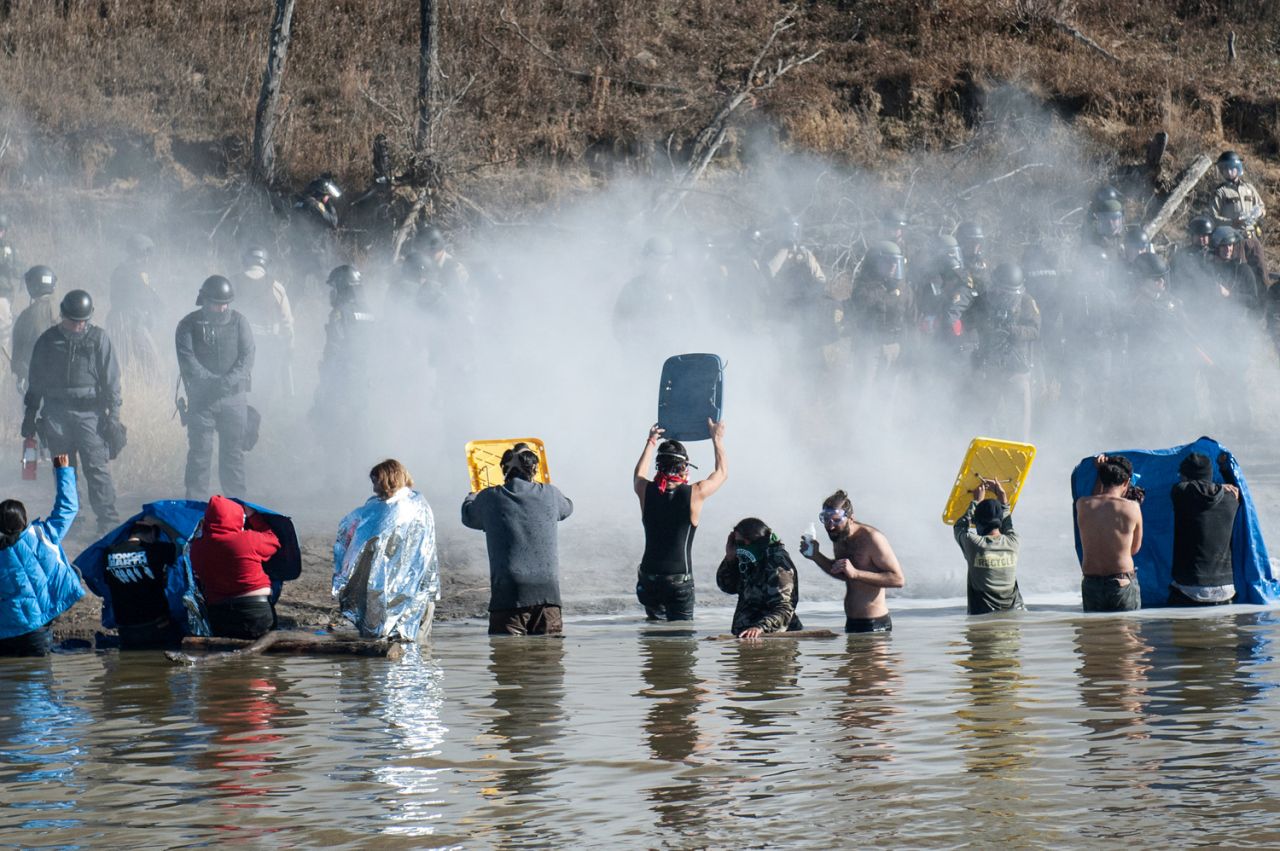
The Standing Rock Sioux have petitioned for an injunction to halt construction , and President Obama has asked the Army Corps of Engineers to re-examine the issues they have raised, suggesting that the pipeline may be re-routed to avoid the intrusion into Tribal areas. However, while deliberations are pending, construction has continued, and is now within less than a mile of the River. The protests and demonstrations have continued, attracting Police and Marshalls from the Morton County Sheriff ‘s Office. Suppression actions have proceeded in a most inhumane, brutal and unconscionable manner. As the Standing Rock Sioux have been joined by First Nations from around the country, numerous violations of human rights, constitutional rights and basic decency have occurred.

images-1

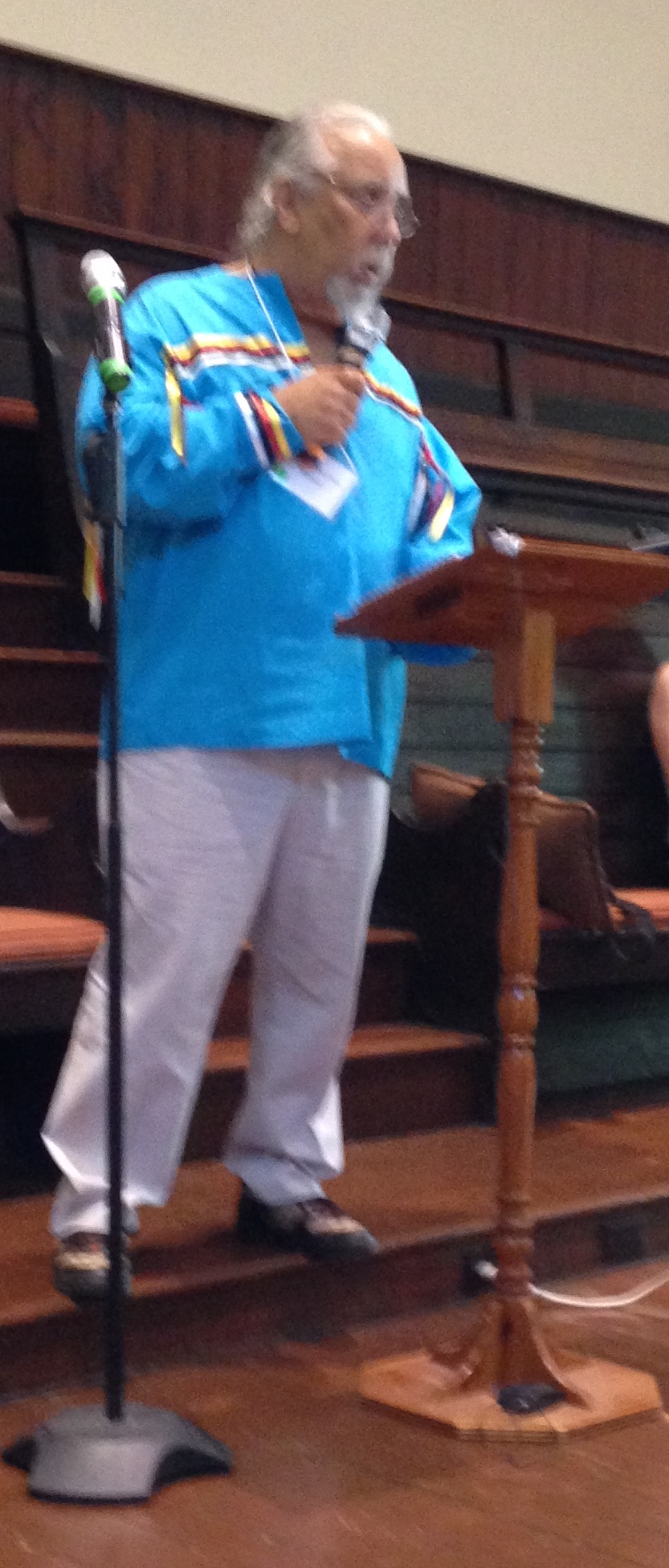
The Standing Rock Sioux position was explained by artist and tribal member Johnny Coe speaking to a gathering at Maren’s Sustainability Salon on November 12, 2016. “Our People are the Water Protectors. This has been the center of our culture for many generations. We stand between the construction equipment and the waters that give us life to prevent this danger.” He explained that the protection of a significant watershed from crude oil spillage from a 30 inch pipe intruding under the river speaks not only for the inhabitants of the Reservation but also for the life of the River itself, and the people who rely on its fresh water for miles downstream. “Crude oil and fresh water do not mix. The life giving waters must be protected from this Black Snake” (Sioux legend interpreted as oil pipelines)

The concerns are well-founded. The Energy Transfer Partners constructing the pipeline will turn over operations to Sunoco. “Sunoco Logistics (SXL.N), the future operator of the oil pipeline delayed this month after Native American protests in North Dakota, spills crude more often than any of its competitors with more than 200 leaks since 2010, according to a Reuters analysis of government data.” (http://www.reuters.com/article/us-usa-pipeline-nativeamericans-safety-i-idUSKCN11T1UW)

In addition, the same issues that supported the denial of the Keystone XL Pipeline from Canada down to the Gulf of Mexico pertain to this project. The rapid deployment of oil and building more permanent infrastructure to exploit it contributes to the build-up of greenhouse gas emissions causing climate change. The Army Corps of Engineers has taken this position: “The Army has determined that additional discussion and analysis are warranted in light of the history of the Great Sioux Nation’s dispossessions of lands, the importance of Lake Oahe to the Tribe, our government-to-government relationship, and the statute governing easements through government property.”

https://www.democracynow.org/2016/11/15/headlines/army_delays_issuing_permit_for_dakota_access_pipeline_ahead_of_global_day_of_action

The pipeline is nearly complete, awaiting only this final Army Corps of Engineers Permit. In the meantime, the Morton County Sheriff Officers continue to suppress the protest.

A Call for Action in Support of the Standing Rock Sioux:

The most concerning aspect of this situation is the blatant violation of First Amendment rights of free speech. Protest on behalf of strongly held beliefs, especially those supported by legitimate claims for legal action, should not be suppressed by police action. The people have the right to protest, on their own land, to defend their water supply. Journalists attempting to report on the protests have been jailed. The mainstream media has been silent on this issue. (https://www.theguardian.com/us-news/2016/nov/03/north-dakota-access-oil-pipeline-protests-explainer )

d37985dcaa568b12362c32427d9024a9

Second, the level of brutality evident in the actions of the Morton County Sheriff’s officers, in full military gear, with water cannons, percussion grenades, rubber bullets fired point blank into people’s faces is unjustified, immoral, and hateful. Spraying high pressure water cannon on people in 29 degree weather is mass torture. (“Father of injured pipeline protester says she may lose arm” Blake Nicholson and Amy Forliti, Associated Press, November 21, 2016. )

89b65e914c824eb2bd94da875da890df

Third, the Standing Rock Sioux are willing to put their lives on the line to protect the river from a potentially dangerous installation. They are standing in principle against the injustice of placing corporate profits and convenience over the public interest in having secure fresh water supplies. This is an environmental justice issue perpetrated over centuries of abuse of First Nations’ rights.

This is an existential battle, not only for the Standing Rock Sioux but for all people. The hydraulic fracturing that has released the Baaken Shale oil is operating under the exemption of seven federal laws designed to protect the air, water and health of the public and workers. This exemption granted in the National Energy Act of 2005 opens all of America to the permanent degradation of the environment. Oxygen-rich air, fresh water, fertile ground and the biodiversity of species that constitute the interconnected web of life are our life support system. Laws designed to limit and prevent the destruction of our common needs must be resisted and replaced with protections in the public interest.

As we face a political power shift that favors even less regulatory protection for air, water and land, we must each decide where we will make our stand. I urge your support of the Standing Rock Sioux. They hear the screams of Mother Earth and choose to stand as Water Protectors. Join their call for survival, for compassion and for respect to our common Mother Earth.

Speak out to stop the violence while the courts plod slowly through their deliberations.

Call the Morton County Sheriff’s office number: 
701-328-8118 & 701-667-3330 


Call the Department of Justice and demand they investigate and charge the Morton County Sheriff’s Department for these life-threatening attacks on peaceful unarmed protectors immediately!

Department of Justice phone numbers:
Main: 202-514-2000, press 0. (This one has been hard to get through.)
Department Comment Line: 202-353-1555


Additional Resources:

Sam Levin. “Dakota Access pipeline: the who, what and why of the Standing Rock protests” The Guardian. November 3, 2016. https://www.theguardian.com/us-news/2016/nov/03/north-dakota-access-oil-pipeline-protests-explainer

Kevin Enochs. “The Real Story: The Dakota Access Pipeline” Silicon Valley and Technology. October 26, 2016. http://www.voanews.com/a/dakota-access-pipeline/3563592.html


Leave a comment

Lessons from the Field- Decision 2016

imgresPresidential elections present an opportunity for a broad public dialogue about the issues and policies for the country, a time for debate, discussion and exploration of options. But this has been a campaign full of vicious and demeaning rhetoric, a cacophony of bitter voices masking deep fears and heartfelt worries. The opportunity has been lost for a broad public discourse on the serious issues our country faces. Civil and polite dialogue has broken down entirely showing a lack of respect for the institutions of our democracy and for the individual participants in the contest. In the name of free speech, we have abandoned reasoned debate in favor of hurled insults and degrading parodies. Some observations emerge from my canvassing conversations with hundreds of citizens.


People feel a sense of betrayal in the unrealized hopes and expectations from the Obama administration. There was such a surge of optimism, with raised expectations of massive changes within the term of the first black President. But, by design, the institutions of government buffer the pace of change, and people feel frustrated. Hopes unrealized fuel cynicism and in some cases despair and anger. Few people understand how government is intended to work, the balance of powers among the branches or the rights and responsibilities of citizens.


People fear for the future. There are many forces beyond individual control – globalization, economic shifts, drought and floods. Drawn in part from concerns about changes proposed to address global warming, the unknown future drives people to nostalgia for the past. The Clean Power Plan addressed the technology shift and fuel changes away from fossil sources, but the human and community impacts were not included in the legislation. Such matters as worker transition, community redevelopment and education fall outside the jurisdiction of the EPA enabling legislation. In a Congress where over 50% of members deny the existence of climate change or global warming, the broader policy initiatives necessary for a just and comprehensive shift are impossible to execute. A nostalgia for the heyday of coal, oil and gas development with the mist of time obscuring the problems of the early industrial age, easily grew to a cry of a War on Coal. The personalized plight of coal miners also obscures the broader issues of the treatment of workers and restoration of communities that have festered for decades. The focus on the “All of the Above” energy strategy has glossed over the devastation to the land and the life support systems that protect the clean air, fresh water and fertile ground. The Standing Rock Sioux have taken a stand for preserving the land as a sacred obligation. Their lesson is a powerful recalibration of the equation that has placed jobs at any cost over preservation of the land.

People lack empathy for their fellow citizens. They are focused on their own individual situations and have little interest in the broader common needs. The sense of a common purpose as a community or as a nation is absent. The mentality of preserving individual rights and freedom to do as they please without regard for others is prevalent. This campaign has made the use of hurtful, degrading and disrespectful language appear normal. Without a sense of mutual respect, civil society will not survive. Without recognizing and taking responsibility for inequities and injustice, we cannot make necessary changes to insure that all citizens live under the promises of the Constitution. The sense that everyone has the same rights does not come across as a personal obligation to every citizen.

So on this eve of the 2016 election, I plead once again for the higher principles of our nation to prevail. The rights offered under our Constitution are open to everyone equally, under the law. But people have taken the right of freedom of speech and right to bear arms to an extreme level, ignoring the responsibility to respect each other. These freedoms exercised without responsibility or accountability lead to chaos. A representative democracy requires citizen involvement, not just at election season, but all the time. Once in office, elected officials need to be called to account for their actions. Citizens have the obligation to make their voices heard in communications, in peaceful demonstrations, in action on legislative proposals throughout the course of the years. Elected Officials take an oath to defend and protect the Constitution, and that includes the rights of all of the citizens, the people. This concept has been perverted to include “corporations” as “Persons” but they are not living beings who breathe and bleed. The commitment to the public interest over corporate greed must be re-established as a national priority.

Citizens must take back the control of the government by caring about each other as communities, and holding elected officials accountable. The time is now to vote out people who are not serving the public good so we can start over. Democracy is not a spectator sport that occurs once every four years. It is a daily exercise of responsibility. Begin by voting on the issues, not on the undocumented rhetoric of the campaign. The fate of our nation and of the policies that may preserve life on Earth as we know it hang in the balance.


Leave a comment

Fracking: Health Effects and Worker Safety

Fracking: Health Effects and Worker Safety

By Patricia M. DeMarco

{Summary of remarks at The Battle of Homestead Foundation screening of “Gaswork” by Josh Fox on August 25, 2016}

Hydraulic fracturing (Fracking) for natural gas is touted as the centerpiece of American energy leadership for climate change and economic security. Sadly, this entire industry rests on “The Haliburton Loophole” in the Energy Policy Act of 2005, which grants exemptions from seven major federal statutes intended to protect public health and the environment, including the Safe Drinking Water Act, Clean Air Act, and Toxic Release Inventory provisions. The Fracking Responsibility and Awareness of Chemicals Act to close the Haliburton Loophole has been introduced by Senator Casey (D) PA, every year since 2011 with bipartisan support, but has been kept in committee without a hearing.

Fracking Pollution Sources:

Fracking pollution occurs at all stages of the process: site access and preparation, material transportation, drilling operations, production and processing, gas compression, pipelines, and combustion at the final point of use. Between 2005 and 2016, 137,000 wells have been drilled in 20 states. The industry operates in rural areas of the country, separating the various components of the industrial process to avoid consolidated review of environmental impacts. In many jurisdictions, as is true in Pennsylvania, local government entities are limited in what restrictions they can place on fracking activities. Unfettered by normal environmental and health protections, the industry has expanded rapidly.

In spite of industry assertions of safe practices, evidence of widespread environmental and health harm is accumulating.

  1. Climate Effects. Approximately 4% of the gas produced by fracking is lost through leaks and flaring at the well site, equivalent to 100 million tons of carbon dioxide. Fossil methane is a potent contributor to the greenhouse gases that cause climate change with a 105 times greater impact than carbon dioxide over 20 years.
  1. Surface water and groundwater pollution. Groundwater pollution occurs from well casing leaks, estimated to have a 5% per year failure rate, and leaks through the fractured rock.(Ref) Water contaminants can be mobilized from older pollution sources such as mine drainage from the hydraulic fracturing shocks. Surface water pollution can occur from several paths including discharges and spills at the well site, wastewater disposal, and transportation spills.

Water pollutants associated with fracking disharges include carcinogens such as benzene, toluene, butoxyethanol, and zylene; toxic chemicals including boric acid, methanol, dissolved methane; and 120 endocrine disrupting chemicals such as naphthalene. (Ref)

  1. Air pollution. Drilling gas wells, producing the gas, and completing the wells releases fine particulates, and volatile organic compounds. These also come from spills on site, produced water evaporation pits, flaring gas at the well site, surface transfers, compression stations and processing facilities. In addition, thousands of diesel truck trips for hauling sand, chemicals and materials contribute to local air pollution.
  1. Ground pollution. Produced water from the fracking wells, labeled “Dirty water” legally can be discharged onto the roads for dust control or ice control. Sludge from evaporation pits goes into landfills and some produced water can be added to municipal waste in landfills. The process of developing access roads and pipelines has fragmented habitat in forests and parks, degraded farmland, and contributed to land erosion. Common contaminants include heavy metals such as arsenic and lead, bromides, radioactive isotopes of radon, boron, uranium and chromium, and chlorides from heavy brine.


Hydraulic Fracturing Health Concerns

Fracking environment and health effects come from the environmental disruptions of the process, the chemicals used in the slick water hydraulic fracturing process, and the contaminants that are extracted from the shale and brought to the surface with the gas. The most pervasive health effect comes from degradation of the environment and the systems that generate fresh water, fertile ground and the biodiversity of species that support life on Earth. Fracking uses about 500,000 gallons of fresh water per well, causing stress on watersheds, domestic and agricultural water needs, especially in drought stricken areas.

About 649 chemicals are associated with the fracking process. Of these, 75% cause acute skin, eye and respiratory irritation; 40-50% affect the brain, nervous, immune and cardiovascular systems and kidney functions; and 37% are known endocrine disruptors. 25% of the most common fracking chemicals cause cancers and mutations that may take years to emerge. Those most clearly associated with fracking include silicosis, lung cancer, liver cancer, leukemia, Hodgkins lymphoma and reproductive disorders. These are especially of concern because they increase the incidence of birth defects, low birth weight, miscarriages and stillbirths. These kinds of health effects are reported at statistically significant elevated levels among populations within a mile of fracking operations, potentially affecting about 9.4 million Americans.

About 170 thousand workers in the oil and gas industry are exposed to harmful chemicals as part of their regular work experience. Fatal injuries occur at a rate seven times higher than the rate for general industrial workers. Trucking accidents happen when the driver is overcome by exposure to volatile organic compounds during transport of wastes with no cautionary hazard placards. Workers suffer from strange painful rashes and neurological disorders without any idea of what caused them. NIOSH reports that 47% of workers at 111 sites they examined were exposed to levels of fine silicone dust at ten times the allowable level. Many suffered from silicosis and lung cancers from inhaling the fine sand used for propant in fracking. Workers exposure to benzene levels far in excess of the 0.1parts per million standard for occupational exposure was found at 88% of work sites. Most of the workers in the fracking industry are not represented by a union, have no advocate for their health and safety, and often are facing few alternatives to working in dangerous and unhealthy conditions.

Because of the Haliburton Loophole, the fracking health exposures to both the public and the workers are legal, but it is not ethical or morally right to allow such a broad segment of the population to be affected so harshly.

(See https://patriciademarco.com/wp-content/uploads/2014/10/8-25-2016-fracking-health.pdf for the slides of this presentation.)


Data Sources:

OSHA Info Sheet “HAZARD ALERT: Silica Exposure during Hydraulic fracturing” March 25, 2016.   https://www.osha.gov/dts/infosheets/


2 Comments

WE Are the Clean Energy Revolution

June 24, 2016. The March for a Clean Energy Revolution filled the streets of Philadelphia from City Hall to Independence Hall with about 10,000 people from across the country marching and chanting about the issues surrounding climate change on the eve of the Democratic National Convention. The anger and frustration with a political system that has ignored or opposed actions to reverse climate change rose in waves of passionate demands: “Stop Fracking Now!” “We Are the Revolution- Go Solar Now!” “Stop fracking wealth and protect public health!” People gave voice and testimony through their presence to their outrage over laws that protect corporations’ interests over workers’ health, profit multinational corporations while destroying communities’ water, land and air, and subsidize fossil fuels while placing roadblocks for renewable energy systems.

Many of the marchers spent the previous day at the Summit for a Clean Energy Revolution at the Friends Center. Chief Perry of the Ramapough Lunaape Nation set the tone of the whole day by lifting up the pleas of over 200 indigenous peoples for all people to return to the old ways based on an ethic of respect for “our Father Sky and our Mother Earth.”

Chief Perry, Ramapaugh Lunaape Nation opens the Summit for a Clean Energy Revolution, July 23, 2016

Chief Perry, Ramapaugh Lunaape Nation opens the Summit for a Clean Energy Revolution, July 23, 2016

Powerful stories punctuated the day:

  • Robert Nehman told of the effects of sand mining that destroys formations over one million years old to grind into sand for the fracking fields in states distant from Iowa and has workers suffering from silicosis.
  •  Ashley McCray, Absentee Shawnee Tribe-Ogala Lakota Nation, spoke of her decade of protests against the threat from gas pipelines and the infrastructure of fracking that had shaken her lands for ten years with earthquakes, pipeline spills, and the noise, air and water pollution that fracking brings – protests only recognized when richer white neighborhoods were affected also.
  • Diane D’Arrigo, of the Nuclear Information Research Service, described the environmental injustice associated with nuclear power from uranium mining through the enrichment process to power plant operations and fuel management –all steps of the process produce radioactive wastes that fall disproportionately on Navaho lands, and on people in disadvantaged communities.
  • Sandra Steingraber  documented the health effects of fracking noting that 15 million Americans live within a mile of fracking operations and that incidences of asthma in these areas is four times higher than background levels. (All of the presentations will be posted by Food and Water Watch – Summit for a Clean Energy Revolution)

The Clean Energy Revolution Summit: Breakout Session #3- A Visionary Ambitious Transition Plan – with Arjun Makhijani, Russell Greene, Micah Gold-Markel and Patricia DeMarco.

Remarks of Patricia DeMarco:

Climate change is the existential issue of our time. The fact that the earth’s climate is changing rapidly in response to human actions since the Industrial Revolution presents a series of ethical and moral challenges. This Clean Energy Revolution is not a technology problem… it is an ethical problem. The laws of nature – chemistry, physics, and biology – are NOT negotiable. It is we who must change our behavior to adapt the way we interface with the natural world. The pace of change accelerates as warming of the atmosphere and increasing acidity of the oceans change the geochemistry of the Earth. We must move quickly to reverse greenhouse gas production, or life as we know it will not survive.

The technology for moving the global economy from a fossil base to a renewable energy base is already in hand. No super innovation is required to begin the conversion to a clean energy future. Climate change is essentially an ethical issue on four levels:

  1. Intergenerational justice: this generation as a moral obligation to the unborn children of the 21st century to preserve the life support system provided by the living earth – oxygen-rich air, fresh water, fertile ground and the biodiversity of species of which humans are but one part.
  2. International justice: people living in the industrialized northern hemisphere are the principal causers of the escalation in greenhouse gas emissions, but the most immediate devastating effects from sea level rise and drought are being felt most acutely by people who did not contribute much to the problem – people from island nations, equatorial countries and arctic communities.
  3. Local environmental justice: people living close to fossil fuel industries are most acutely affected by health effects from pollution, community devastation from mining and waste disposal, and safety hazards from spills, explosions and water and land contamination. Low income and disadvantaged communities suffer the impact while the profits benefit distant corporations.
  4. A just transition for workers: For the workers and retirees of the oil, gas and coal industry, the transition to a renewable and sustainable energy system presents a challenge that is not covered by bankruptcy laws. Corporations like coal companies that see a fall in their markets have bankruptcy protections to keep their shareholders whole, but the workers are “offloaded’ to shell corporations that go bankrupt leaving workers without pensions, health benefits or a way forward for their children and families. This practice may be technically legal, but it is not right!

These ethical issues must be addressed in a comprehensive way to mobilize the full might and ingenuity of our country on the problem of climate change. A change in attitude to make climate change an urgent issue for every person, every day, every way can begin to turn the American lifestyle from one of conspicuous consumption and profligate waste to one of preservation, conservation and wise resource use. An energy policy based on “all of the above” including fossil and nuclear resources is not sufficient to the magnitude of the task. If you are headed toward a cliff at 55 miles an hour, slowing to 30 miles an hour will just delay the time before you drive over the edge. We need to take a new direction in energy policy. The following actions can set a beginning for a renewable and sustainable energy base to the global economy:

  1. Leave fossil fuels in the ground. Eliminate the subsidies for fossil fuels, including investment and production tax credits, below market leasing on federal lands, federally funded research and development on fossil fuel extraction and combustion, trade advantages, and investments in fossil resource infrastructure such as pipelines, export facilities and processing facilities. Invest in land reclamation, watershed restoration and community re-development instead. Focus on efficiency improvement and retrofit for existing fossil-fueled buildings and operations.
  2. Support and promote renewable and sustainable energy systems with the full force of law. Adopt federal standards promoting passive and active solar design for all new buildings. Provide technical assistance and community development grants for renewable energy systems on all public buildings. Stabilize the business environment for renewable energy with permanent investment and production tax credits for renewable resources and the associated infrastructure to support American manufacture and production of components.
  3. Plug the “Haliburton Loophole” immediately to curtail the harm to workers and communities from its exemptions for hydraulic fracking from the Clean Air Act, the Safe Drinking Water Act, the Resource Conservation and Recovery Act, and worker protections under Occupational Safety and Health Administration. No industry should be allowed to operate under suspension of basic public health protections.
  4. Establish a “Superfund” for displaced coal miners and fossil fuel industry workers. The pension benefits, health benefits and four years of retraining with salary support for families can redirect the human capital of workers with dignity and respect. Bankruptcy protections must provide for workers first, not only stockholders.


Addressing climate change will require empathy for the plight of people most acutely affected, whether they are next door, across the ocean, or yet to be born. It is time to stand up and demand an energy policy that protects our children and their grandchildren rather than the corporate greed of fossil fuel developers. The solutions are at hand. We need only the courage and commitment to pursue them as rapidly as possible, not as slowly as is expedient. Be the leader among those you reach. WE are the Clean Energy Revolution!

Hear the NPR interview here: https://stateimpact.npr.org/pennsylvania/2016/07/24/clean-energy-advocates-urge-dnc-to-ban-fracking-promote-renewable-fuels/

Marching with friends from Marcellus Outreach Butler

Marching with friends from Marcellus Outreach Butler


1 Comment

Green Roofs: A National Policy to Help Address Climate Change

Roof of Chicago City Hall

Roof of Chicago City Hall

Since 2009 the City of Toronto has required commercial and industrial new buildings to have green roofs. France recently adopted a law requiring new commercial and industrial buildings to have at least partial green roofs and solar panels. This kind of policy direction helps to move the climate change response incrementally forward. As more and more buildings comply with these laws, the detailed refinements in response will begin to emerge.

In the US, many buildings are adopting green roofs as part of a sustainability strategy, but the response is scattered, and financing is an issue in many areas.  The standards and initiatives vary tremendously among the 50 states.

Here is a summary of the benefits of green roofs compiled by the Union of Concerned Scientists

Benefits of Green Roofs

There are so many benefits to green roofs. Here are just a few:

  1. Adding natural beauty and major aesthetic improvement to buildings, which in turn increases the investment opportunity.
  2. Helping contribute to landfill diversion by prolonging the life of waterproofing membranes, using recycled materials, and prolonging the service of heating, ventilation, and HVAC systems through decreased use.
  3. Green roofs assist with storm water management because water is stored by the substrate, then taken up by plants, and thus returned to the atmosphere through transpiration and evaporation. They also retain rainwater and moderate the temperature of the water and act as natural filters for the water that does run off. They delay the time at which runoff occurs, which results in decreased stress on sewer systems during peak periods.
  4. The plants on green roofs do a great job of capturing airborne pollutants and other atmospheric deposition. They can also filter noxious gasses.
  5. They open up new areas for community gardens, commercial and recreational space in busy cities where this space is generally quite limited.

Combining green roofs with solar installations on rooftops has been tested and shown to be mutually beneficial.  See the installations at Scalo Solar, for example. Here the Sunscape rooftop in Crafton PA, acts as a “showroom” for various configurations of solar arrays and technologies, including several versions of green roof installations. The various arrangements are fully instrumented and monitored to compare efficiency and effectiveness. The data stream is available to university students in Pittsburgh for research.images


Leave a comment

The Voice of the Earth Rising

As 2015 comes to a close, we mark a rare congruence of awareness and a call to action on climate change. In advance of the COP-21 talks in Paris, the leaders of all of the world’s major religions have called for true stewardship of the Earth.  The Encyclical of Pope Francis, Laudato Si

 http://w2.vatican.va/content/francesco/en/encyclicals/documents/papa-francesco_20150524_enciclica-laudato-si.html,

the Islamic Declaration on Global Climate Change http://islamicclimatedeclaration.org/islamic-declaration-on-global-climate-change/

and the Universal Declaration of the Rights of Mother Earth from the People’s Climate Conference in Cochabamba,  https://pwccc.wordpress.com/programa/

calls to action resound with increased urgency. The COP-21 Accord, though non-binding, united the voices of 195 nations to strive for a 2 degree ceiling, with many advocating a goal of a 1.5 degree limit, in temperature rise by mid-century.

imagesIt is my hope for the new year that we can recognize the critical importance of the living Earth. We hear the voice of the Earth not in words but in the songs of birds and of whales; in the intricate ballet between flowers and pollinators; in the exhalation of forests and phytoplankton; and the sweep of landscapes. Earth speaks also in pain as forests are felled; oceans become acidic; mountaintops are scraped off; and the carbon dioxide of human energy production and agriculture pollute the air and water.

As we celebrate our Holidays and make plans for the New Year, may we remember that we are more alike in our humanity than different in cultures, religions or customs. May we reach out to work together to preserve and restore the life support systems of the living Earth- fresh water, clean air, fertile ground and the biodiversity of species that constitute the global web of life. May we work together for justice and equity as we face the necessary transitions from despoiling to preserving the resources of the Earth.

To my Colleagues who have helped me in so many ways this year as my manuscript has come together, I offer thanks for gifts beyond measure. Thank you for all you are doing to build a Pathway to Our Sustainable Future. May we all hear and embody the great power of the voice of the Earth. The children of the 21st century deserve our fullest effort to preserve our beautiful living Earth. To my grandchildren, and the nieces and nephews of my family, I solemnly promise my whole life to protecting your future.

Buon Natale!